
Quartz vs Mechanical: Which Should You Actually Buy?
Quartz vs Mechanical: Which Should You Actually Buy?
Written by Dr. Adam Fleddermann, Founder & CEO of Fleddermann von Rieste, who designs every watch and oversees manufacturing and operations.
Most articles about quartz vs mechanical are written by people who only sell one of them, which tells you something about how much the conclusion was ever in doubt. We make both. Two Swiss quartz models and the rest mechanical watches, all hand assembled here at our Indiana watch company, and I’d be perfectly happy selling you either one.
So here’s my honest answer up front. Quartz is the better timekeeper and it isn’t close. Mechanical is the better thing to hand down. Almost everything else is preference, and preference is a legitimate reason to buy a watch.
Let me show my work.

How they actually differ
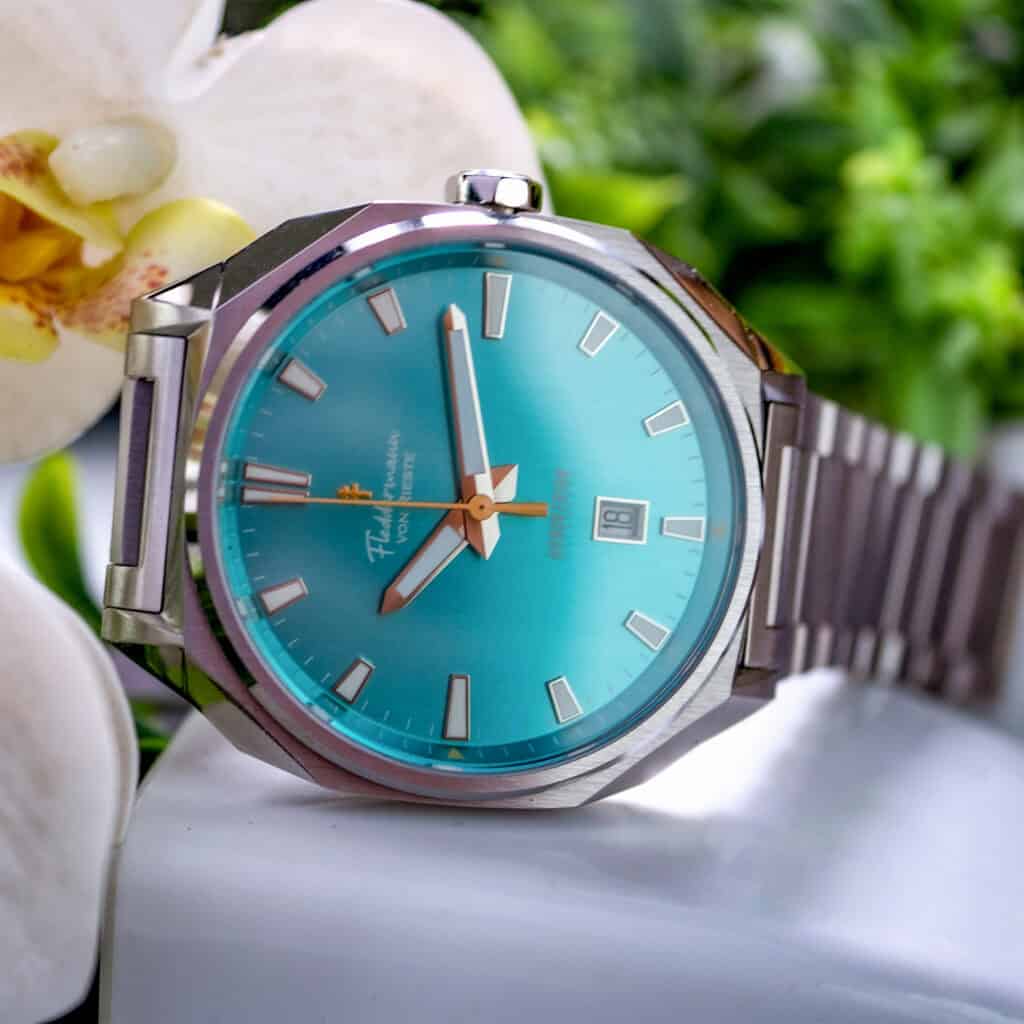
A quartz movement runs on a battery. Current passes through a tiny quartz crystal cut to vibrate at a very precise frequency, a circuit counts those vibrations, and a small motor advances the hands. It’s an elegant piece of engineering and it’s why your $30 drugstore watch keeps better time than a Rolex.
A mechanical movement runs on a coiled mainspring. You wind it, the spring unwinds through a train of gears, and a balance wheel swings back and forth to meter the energy out at a steady rate. Hundreds of tiny parts, no electronics anywhere. It’s essentially a machine from the 1700s, refined for three centuries.
Mechanical splits into two: hand-wound, where you turn the crown yourself, and automatic, where a weighted rotor winds the spring as your wrist moves. An automatic watch is still mechanical. It just has a rotor doing your job for you.
Accuracy: quartz wins, and it's not a contest
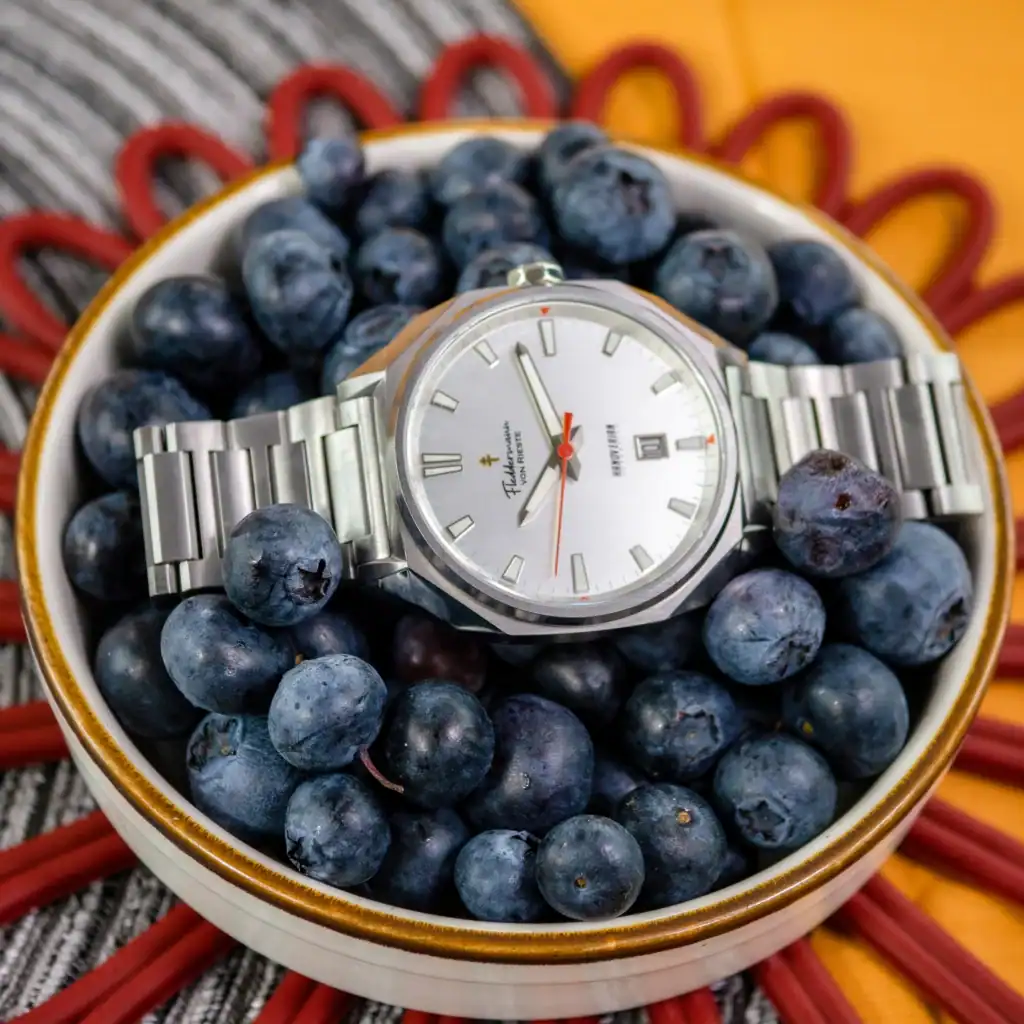
A good mechanical watch keeps time to within a few seconds a day. Ours are hand-regulated by Adam Parrish, an AWCI-certified watchmaker in Kokomo, to run within about five seconds a day, which is genuinely good and takes real skill to achieve.
A cheap quartz watch will beat that by an order of magnitude, drifting seconds per month rather than per day.
There’s no argument here and I’m not going to construct one. If accuracy is what you want, quartz is the answer, and anyone who tells you a mechanical watch is more accurate is selling something. What I’d add is that most people never notice a few seconds a day. You set it, you wear it, and by the time it matters you’ve glanced at your phone anyway.
Longevity: mechanical wins, for a specific reason
This is where it flips, and the reason is narrower than people assume.
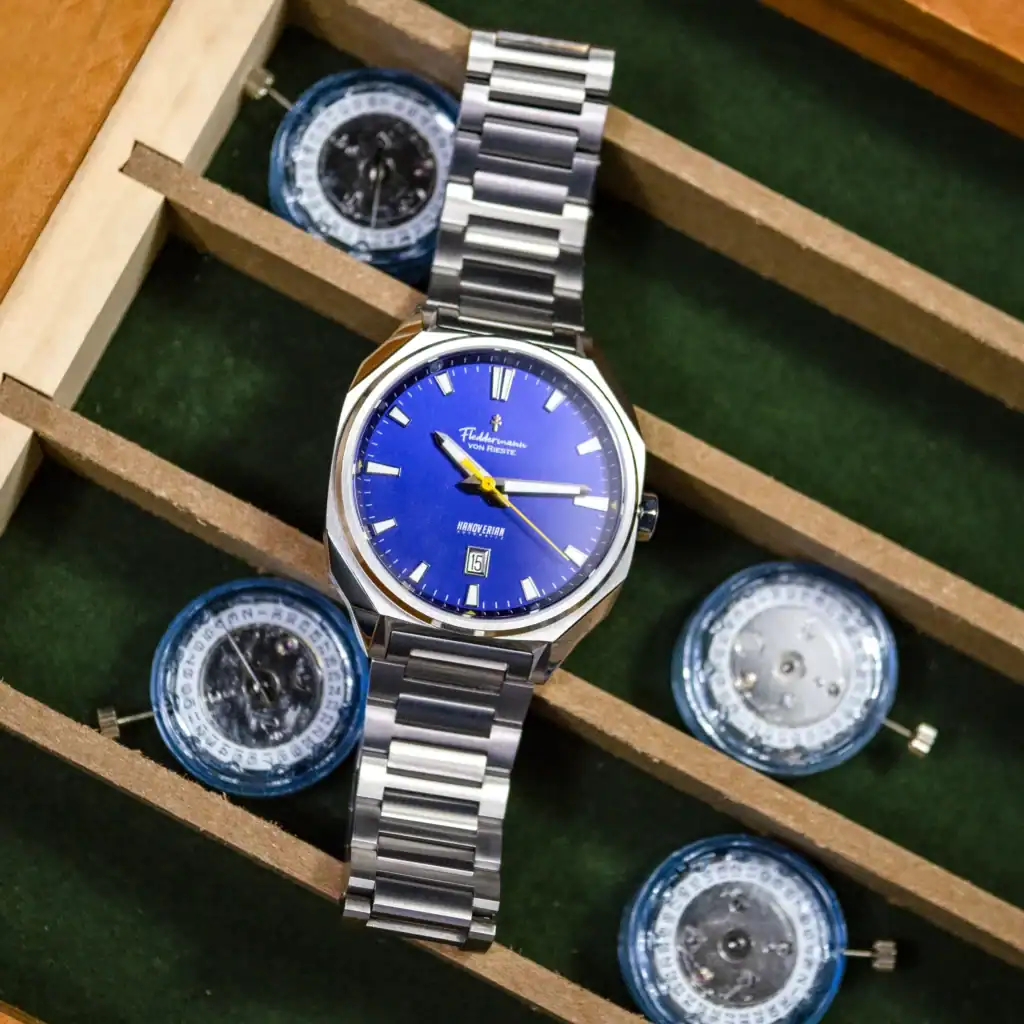
Both kinds can be serviced. A mechanical movement can be cleaned, oiled, and rebuilt essentially forever, because every part inside it is a physical part somebody can make or replace. That’s how hundred-year-old pocket watches still run.
A quartz movement can be serviced too, but past a certain point the fix is replacing the movement rather than repairing it. Circuits aren’t rebuildable the way a gear train is. That’s a transplant more than a repair.
So if your goal is specifically heirloom watches, the kind of watches to pass down to your kids and have somebody’s grandson open the case in 2075, mechanical is the safer bet. Not because quartz is disposable, but because a mechanical movement is repairable by anyone with the training, indefinitely, without needing a part that stopped being made in 1998.
Thickness, which nobody talks about and should
Here’s an argument for quartz you almost never see in print.
An automatic movement needs a rotor, and a rotor needs room to swing. That adds real height to a watch. On a larger case nobody notices. On a smaller watch, that same movement makes the whole thing sit tall and top-heavy in a way that looks wrong and wears worse.
That’s exactly why our ladies’ Hanoverian is quartz. An automatic version would be noticeably thicker, and the proportions would suffer for it. Choosing quartz there wasn’t about saving money. It was the only way to get the watch to sit right on a wrist.
Anybody who tells you quartz is always the compromise hasn’t tried to design a thin watch.
Price, and the chronograph problem
The other honest reason is cost, and the chronograph is the clearest example.
A mechanical chronograph, the kind with a stopwatch built into the movement, is one of the more complicated things in watchmaking. Automatic chronographs with genuinely good calibers start around $2,000 and climb steeply from there. That’s not markup, it’s what the movement costs.
A Swiss quartz chronograph gives you the same function, better accuracy, and a fraction of the price. That’s why our Zeitfahren chronograph is quartz and sells at $499. I’d rather put a real American chronograph watch on your wrist now than tell you to wait five years and save for the mechanical version. Call it an affordable luxury watch alternative if you like, though I’d just call it arithmetic.
That’s the whole thinking behind attainable legacy watches. If the price keeps the watch off your wrist, none of the rest of it matters.
What doesn't change between them
Worth being clear about what quartz doesn’t cost you here.
Every watch we make gets the same case and the same glass. Every one is a sapphire crystal watch in 316L stainless steel, rated to 10 ATM, which means rain or a swim is a non-event. Same two-year warranty. All of them are American assembled watches, put together by hand in Indiana.
The difference is what’s inside. We use Ronda Swiss quartz movements in the two quartz models, Japanese automatics, and Swiss mechanicals, which makes most of what we build an American watch with Swiss movements or Japanese ones depending on the model. Adam and his apprentices hand-regulate the automatics and the mechanicals. They don’t regulate the quartz, because quartz doesn’t need it and pretending otherwise would be theater.
Maintenance differs too, and in quartz’s favor day to day. A battery can be swapped at any jeweler in town. A mechanical watch wants a proper service every several years from someone who knows what they’re doing, which for our watches means back to the bench in Kokomo.
So which should you buy?
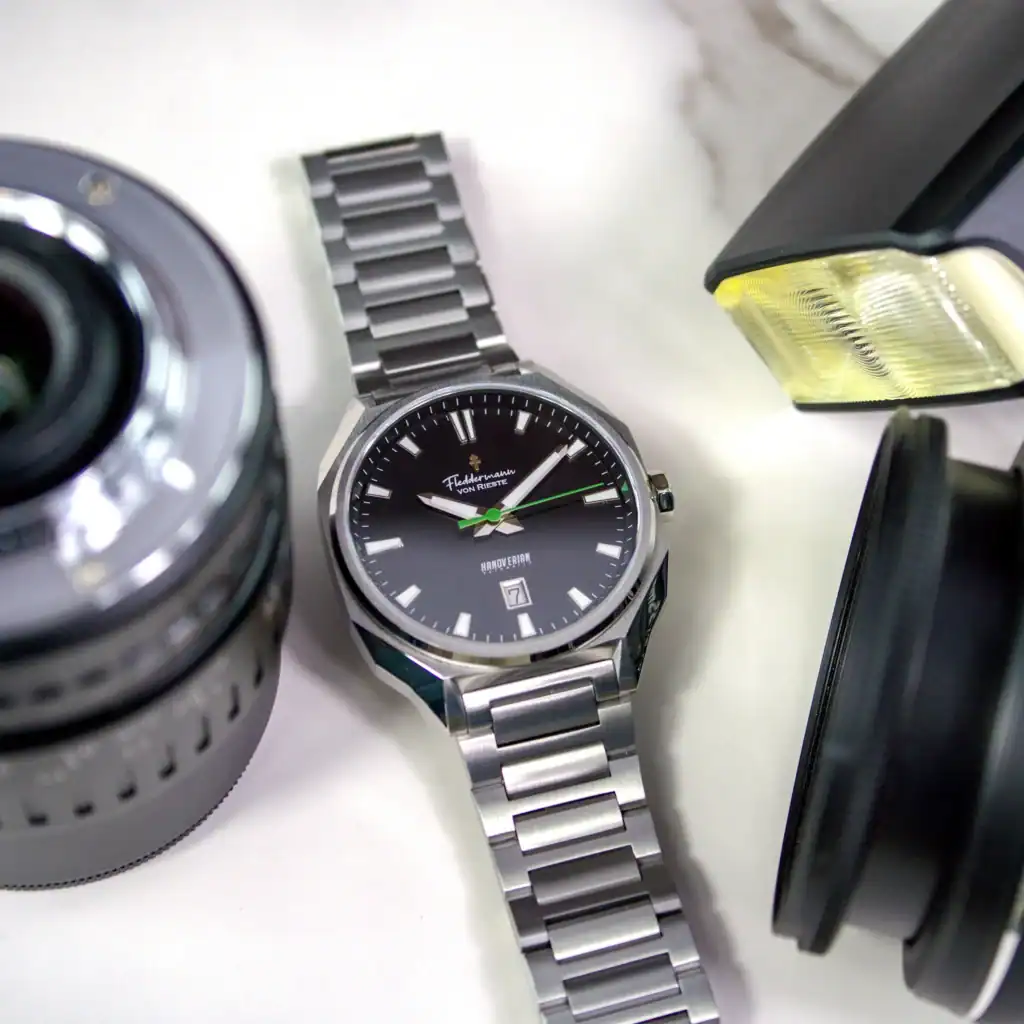
Four questions, and they sort most people quickly.
Is this a watch you intend to hand to somebody? Buy mechanical. That’s the one real answer in this whole post.
Do you want a chronograph without spending $2,000? Buy quartz. The mechanical version is a wonderful thing and it is not worth waiting years for. An affordable mechanical watch exists; an affordable mechanical chronograph mostly doesn’t.
Is it a smaller watch where proportion matters? Quartz, most likely, for the thickness reasons above.
Do you want a machine on your wrist, or a tool? This is the honest heart of it. Some people like knowing there’s a mainspring winding down and a balance wheel ticking away with no electricity involved. Other people find that faintly ridiculous and want the thing to just tell time. Neither view is wrong and I’ve got both kinds of customer.
If you’re still torn, buy the cheaper one first. It’ll teach you which kind of person you are faster than any article can.
Where we land
We’re an independent American watchmaker in Indiana, a family owned watch company, and we make both because both are honest answers to real questions. The two Swiss quartz models start the line at $499. The mechanicals go up from there, and every model but one is an American made watch under $1,000, which is a deliberate ceiling and not an accident.
We may not be your grandfather’s watch. But with time, we hope to be your grandson’s.
If the heirloom argument landed, the Hanoverian is our everyday automatic watch and the most straightforward mechanical we make. If the chronograph argument landed, that’s the Zeitfahren. Or write me at adam@fvrwatch.com and tell me what you actually want the watch to do. That’s a better question than quartz or mechanical, and I’m happy to talk you out of the more expensive one.

Dr. Adam Fleddermann, Founder & CEO
Dr. Adam Fleddermann founded Fleddermann von Rieste after growing up watching his father care for a watch passed down through generations of the family. He designs every watch and oversees the brand’s global supply chain, operations, and manufacturing, working alongside an AWCI-certified watchmaker and his team who lead the hand-assembly of every timepiece in Indiana.
