
The Story Behind the Names: Hanoverian, Zeitfahren, Munchner
The Story Behind the Names: Hanoverian, Zeitfahren, Munchner
Written by Dr. Adam Fleddermann, Founder & CEO of Fleddermann von Rieste, who designs every watch and oversees manufacturing and operations.
People ask about the names more than almost anything else, and I understand why. You land on an Indiana watch company selling American assembled watches, and the models are called the Hanoverian, the Zeitfahren, and the Munchner. It reads like somebody sat in a room and picked German words because German words sound like watchmaking.
That’s not what happened. Every name on our dials points at something real, mostly at a family that came from one place and ended up farming in another. Here’s where each one came from, including the one I’d change if I could go back.
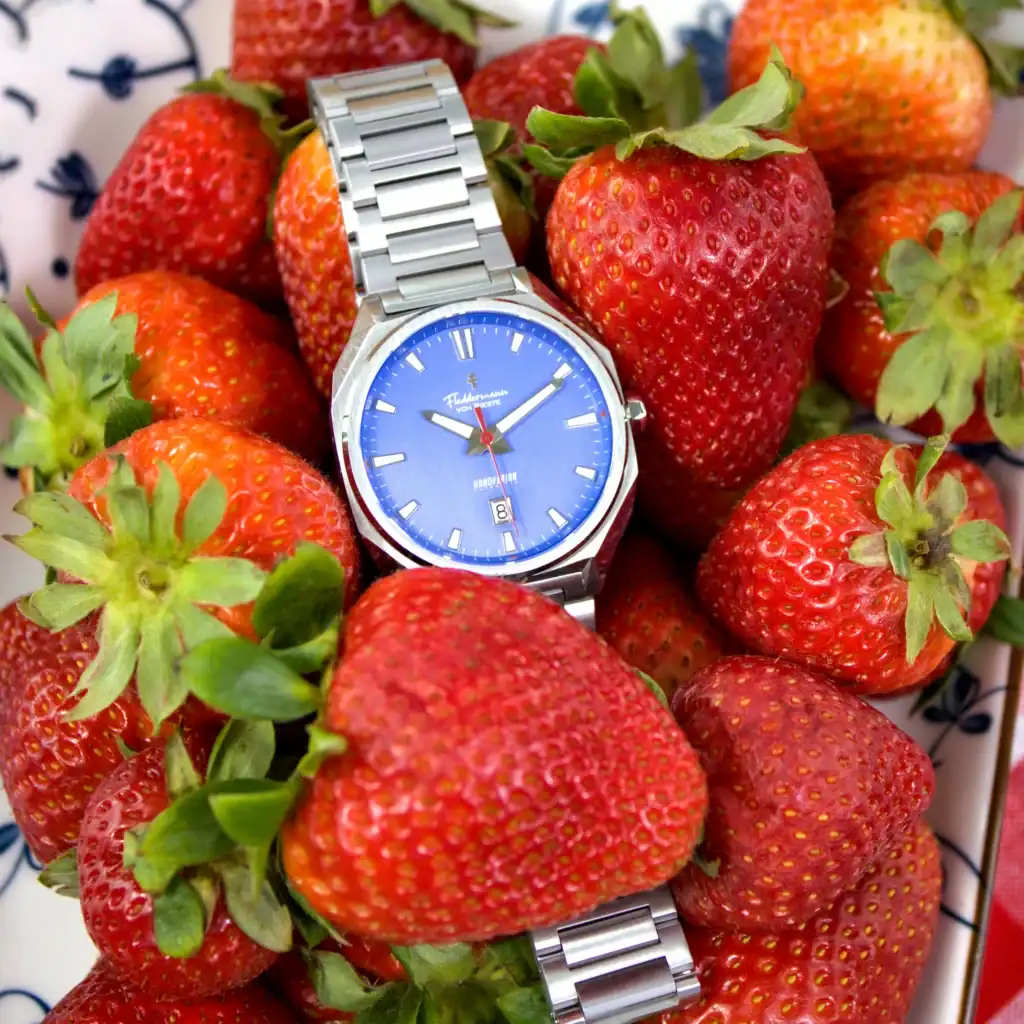

The Hanoverian: a horse, a kingdom, and a great-grandfather with standards
My great-grandfather Bernard took real pride in his Belgian draft horses. That’s a detail my family still repeats about him, which tells you it mattered.
Understand what that meant on a farm in the first half of the last century. Horses were the equipment. Buying good ones cost more up front and paid you back over years of work, and plenty of people around him bought cheaper animals and spent the difference on repairs and frustration. Bernard didn’t. That instinct, spend once and spend properly, is the closest thing this family has to a founding principle, and it’s the reason a watch company exists at all.
So the name points two directions at once. It nods to the horses, and it nods to the Kingdom of Hanover, the German state this family came out of before there was any Indiana in the story.
Fair warning to anyone who knows horses: a Hanoverian is its own breed, and Bernard’s were Belgians. I’m not going to pretend otherwise. The name honors the standard he held, not the specific bloodline in his barn.
The Hanoverian is our 41mm everyday automatic watch, and it’s the American sport watch the rest of the line grew out of. The Hoosier Heritage editions are Hanoverians. The Chase Briscoe edition is a Hanoverian. The SAR Semiquincentennial collection marking America’s 250th is built on it too. If one watch carries this company, it’s that one, and like everything we build it’s an American made watch under $1,000.
That price is the point, not an apology for it. Bernard’s whole approach was buying the good version once, and attainable legacy watches are the same idea aimed at a wrist instead of a barn. Watches to pass down shouldn’t require a decision you have to justify to your spouse.
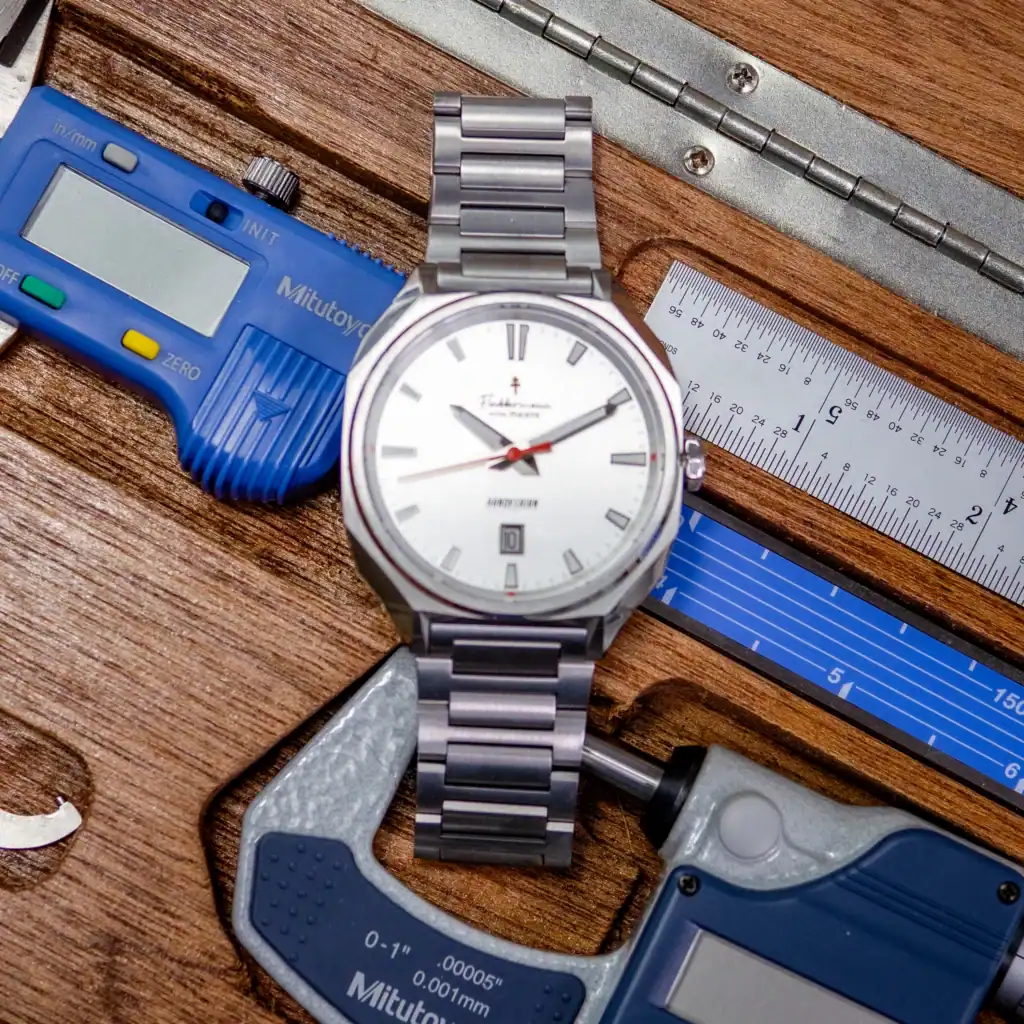
The Zeitfahren: German for time trial
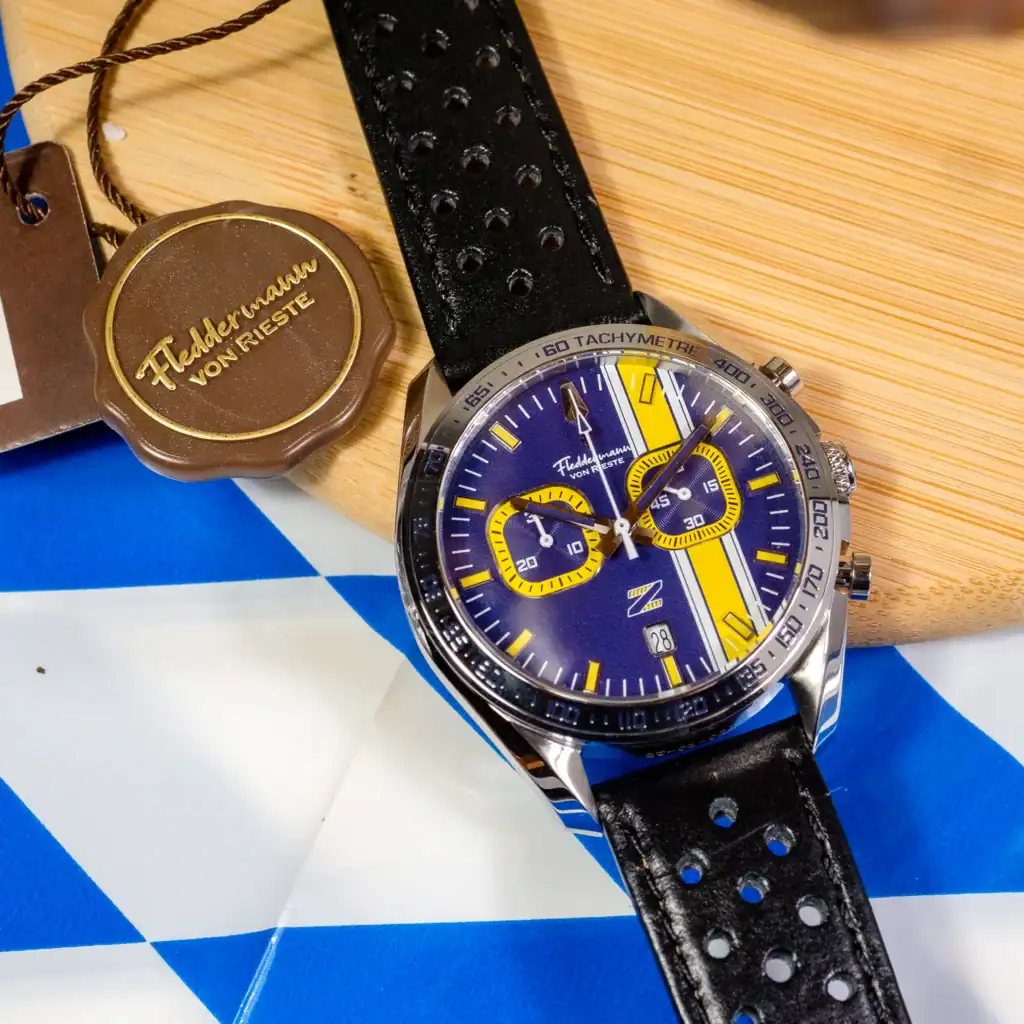
Zeitfahren means time trial. Not a metaphor, not a coined word, just the plain German term for the discipline where a rider or driver goes out alone against the clock with nobody to draft off and nowhere to hide.
That’s what a racing chronograph is for, so the name is close to literal.
There’s an Indiana layer under it too. This is a state where racing is genuinely part of the culture rather than a marketing theme somebody bolted on. One of our two selling seasons is built around the milk-in-victory-lane tradition, which is about as Hoosier as it gets. A racing chronograph from an Indiana shop isn’t a stretch. It’s local.
The Zeitfahren is our American chronograph watch, and it runs a Ronda Swiss quartz movement at $499. That makes it an American watch with Swiss movements in the most literal sense, assembled in Indiana around parts we didn’t pretend to manufacture. I’ve written elsewhere about why quartz was deliberate here: a mechanical chronograph movement worth having starts around $2,000, and I’d rather put a real chronograph on your wrist now than have you save for five years.
The Munchner: Munich, and a watch that had to be fun
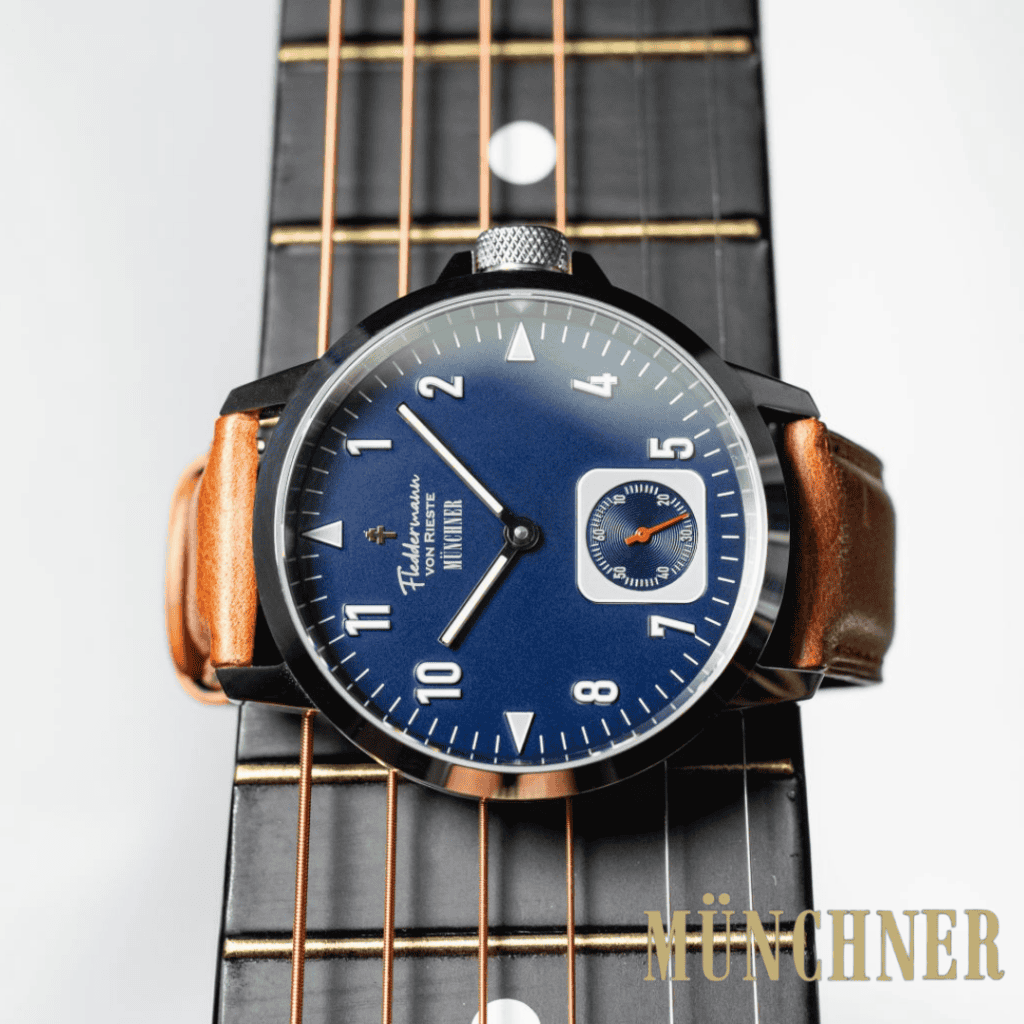
The Munchner is named for Munich, and it’s the most straightforwardly German name we use.
It’s our small seconds watch, a hand-wound mechanical watch at $849 in a dress case. Small seconds means the running seconds sit in their own subdial rather than sweeping from the center. It’s an older way of laying out a dial, it reads as quieter and more considered, and it’s the detail people notice last and like most. Same sapphire crystal watch construction and 10 ATM as everything else we assemble in Indiana. As affordable mechanical watch territory goes, $849 for a hand-built American watch with a Swiss movement is not a bad place to stand.
Munich is also where our fall season points. Watchtoberfest runs from mid-September through the end of October, complete with a commemorative stein, and that’s the same well the Munchner draws from. German heritage worn openly rather than as costume, which is a line I take seriously. There’s a version of this brand that leans into lederhosen and I would rather close the company than build it.
The rest of the line, briefly
The Einheit is our dress watch, and Einheit is German for unity. The Hoosier Heritage editions are Indiana limited runs of the Hanoverian, named exactly what they are, because “Hoosier” needs no translation in this state and no explanation outside it. They’re also the ones people buy as Indiana made gifts, and they turn up a lot as a graduation watch gift or a gift watch for son heading off somewhere. A watch that says where he’s from travels well.
The SAR Semiquincentennial editions each take their name from a Revolutionary-era flag or alliance: Independence, Marquis, Continental, Declaration. Those are the only names in the line that come from American history rather than German geography, which is fitting for a collection marking 1776.
Why German names on an American made watch brand
Fair question, and the honest answer has two parts.
The first is that we’re a family owned watch company run by a German American family, and the name on the dial says so. Fleddermann von Rieste isn’t a brand somebody workshopped. It’s what this family is called. A German American watch with German model names is consistent with that rather than decorative, and I’d feel differently about it if the heritage weren’t real.
The second part is where I’ll criticize my own decision. German names are harder. They’re harder to spell, harder to search for, and harder to say out loud in a jewelry store, and every one of those is a real cost for a small independent American watchmaker trying to get found. A German inspired watch name is not the efficient choice. Somebody looking for an everyday automatic is not typing “Zeitfahren” into anything.
I made the trade anyway, because the alternative was inventing names that tested well and meant nothing. This whole company is built on the premise that what’s actually true beats what sounds good, and that premise doesn’t get to apply only when it’s convenient. Plenty of American watch brands pick a name off a list. We had one already, and an American watch company that borrows its heritage isn’t one I’d want to run. If you go looking at USA made watches you’ll find plenty of good ones with easier names, and I’d tell you to buy those before I’d tell you to buy a story that wasn’t true.
If you’ve ever wondered why we’re not called something easier, that’s why.
One more thing about names
The company itself is Fleddermann von Rieste, and the story behind that one is longer than this post and involves an ancestor whose name changed spelling somewhere along the way, which happens to a lot of German American families. I’m still nailing down the details before I put them in writing, which is maybe the most on-brand sentence in this whole piece.
When I’ve got it right, I’ll tell it properly.
We may not be your grandfather’s watch. But with time, we hope to be your grandson’s.
If you want to see what the names are attached to, the Hanoverian is where most people start, and the Munchner is the one for people who like a small seconds dial and winding something every morning. Both are hand assembled watches, built here, and meant to be among the heirloom watches somebody in your family argues over eventually. Or email me at adam@fvrwatch.com and ask about a name I skipped. I’ll tell you the real answer, including when the real answer is that it just sounded right.

Dr. Adam Fleddermann, Founder & CEO
Dr. Adam Fleddermann founded Fleddermann von Rieste after growing up watching his father care for a watch passed down through generations of the family. He designs every watch and oversees the brand’s global supply chain, operations, and manufacturing, working alongside an AWCI-certified watchmaker and his team who lead the hand-assembly of every timepiece in Indiana.
