
What a hand regulated watch is, why many skip it, and how our AWCI-certified watchmaker in Kokomo, Indiana, regulates every mechanical watch we sell.
October 15, 2026
Written by Dr. Adam Fleddermann, Founder & CEO of Fleddermann von Rieste, who designs every watch and oversees manufacturing and operations.
If you’ve shopped for a watch lately, you’ve probably noticed that everybody claims craftsmanship. It’s printed on the box, the website, and the little card that comes with it. So let me try to show you instead of telling you. Every mechanical watch we sell is a hand regulated watch, adjusted by a certified watchmaker at a bench in Kokomo, Indiana, before it ships. That one step is a big part of what we mean when we say our watches are built above their price point. Here’s what regulation actually is, why most watches at this price skip it, and who’s doing it for us.
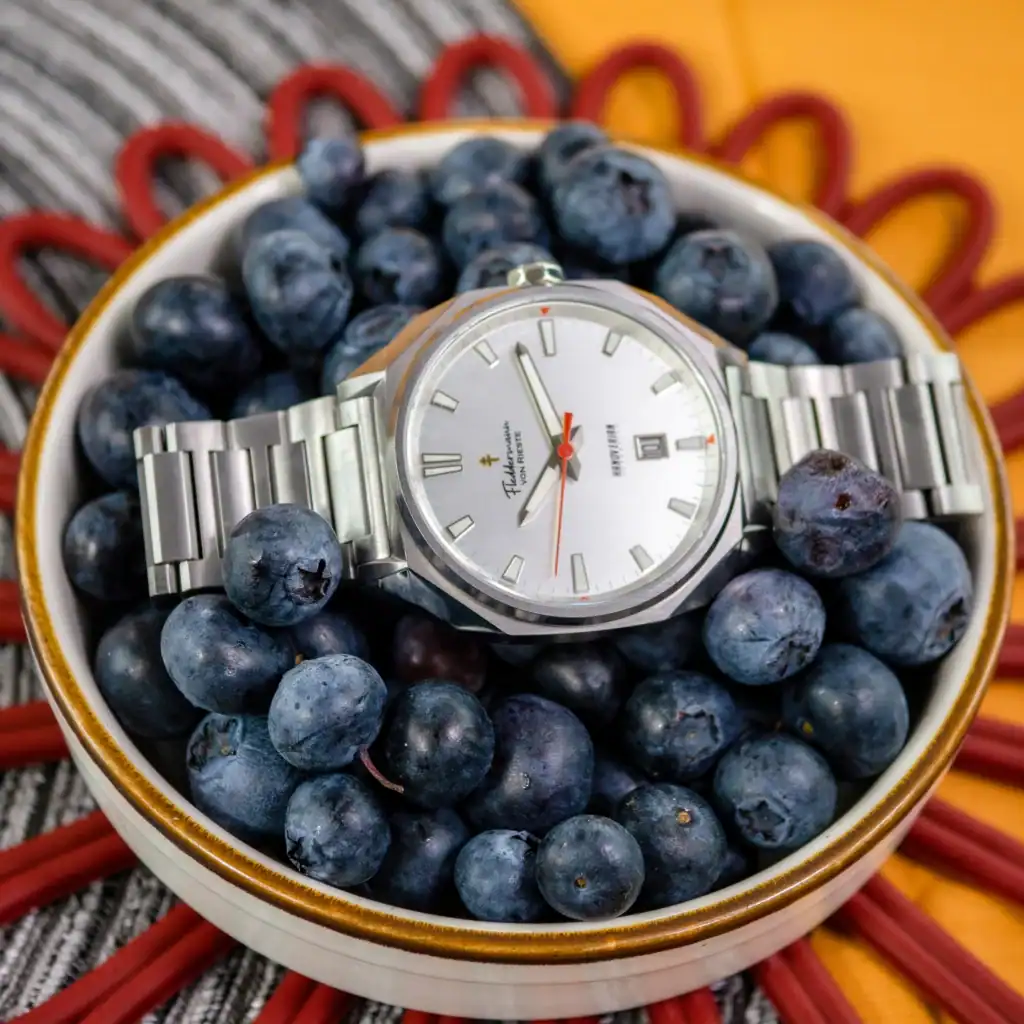

What Is a Hand Regulated Watch?
A mechanical watch keeps time with a balance wheel swinging back and forth at a steady rate. The speed of that swing decides whether your watch runs fast, slow, or right on. Regulation is the job of adjusting that rate by hand, so the watch keeps better time than it did when it arrived.
It sounds simple, and in principle it is. In practice, it takes a trained watchmaker, a timing machine, and patience. The watch has to be checked in several positions, like dial up, dial down, and crown up or down, because gravity pulls on the balance differently in each one. A watch that runs perfectly lying flat on a desk can drift once it’s on your wrist. A good watchmaker adjusts until the watch behaves well across positions, not just in one.
Why a Movement Needs Regulating at All
Here’s something the industry doesn’t advertise much. A mechanical movement doesn’t leave its maker keeping perfect time. It leaves keeping time within a range, and that range can be fairly wide.
Take a couple of the most popular automatic movements out there. Seiko’s workhorse NH35 has a published out of the box accuracy range of about 20 seconds slow to 40 seconds fast per day. Miyota’s 9015 is published out of the box at about 10 seconds slow to 30 seconds fast. Those are both good, honest movements. They’re used in plenty of watches from brands I respect, and we use Miyota ourselves. But a range like that means one watch might run nearly perfect while the next one gains half a minute a day. Plenty of brands ship them exactly as they arrive, and at their price, that’s a fair choice.
We don’t. Our watchmaker adjusts every mechanical movement we sell to run within about five seconds a day and tests it in multiple positions before it leaves his bench. For a point of comparison, the Swiss chronometer standard, COSC, allows 4 seconds slow to 6 seconds fast per day. We’re not claiming chronometer certification, since that’s a formal testing program we don’t go through. But it gives you a sense of the neighborhood we’re aiming for.
A quick honest note on our quartz models: quartz movements keep time electronically, so they don’t get regulated the way a mechanical watch does. They’re assembled and checked on the same bench, by the same people, before they ship.
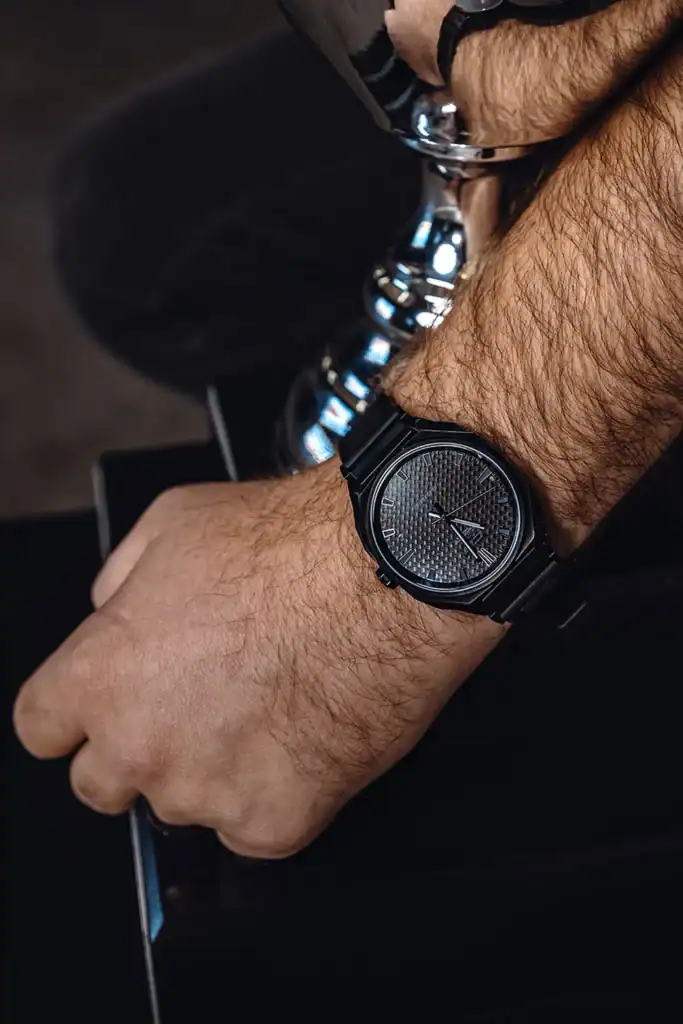
Meet the Bench in Kokomo
The person doing this work is Adam Parrish, an AWCI-certified watchmaker in Kokomo, Indiana. AWCI is the American Watchmakers-Clockmakers Institute, and its certification is a real credential earned through hands-on testing. Adam works alongside his apprentice, Tanner, at Kokomo Watch Company.
When components arrive, Adam’s bench builds the watch. That means fitting the movement to the case, setting the hands, casing it up, regulating it, testing it, and then deciding whether it’s ready to leave. That last part matters more than it sounds. There’s a real person putting his judgment on every watch, and he can say no.
It also means something down the road. When your watch needs service in ten or fifteen years, it doesn’t disappear into a warehouse or a service center overseas. It goes back to the same bench in Kokomo that built it. Every watch carries a two-year full warranty, and that service relationship is a big part of why we believe these can be heirloom watches.
And I’ll add this, because it’s true: Tanner being there matters to me. One of our family’s values is lifting up the next generation. Watchmaking is a trade that needs young people learning it at a real bench, and it’s good to see that happening in Indiana.
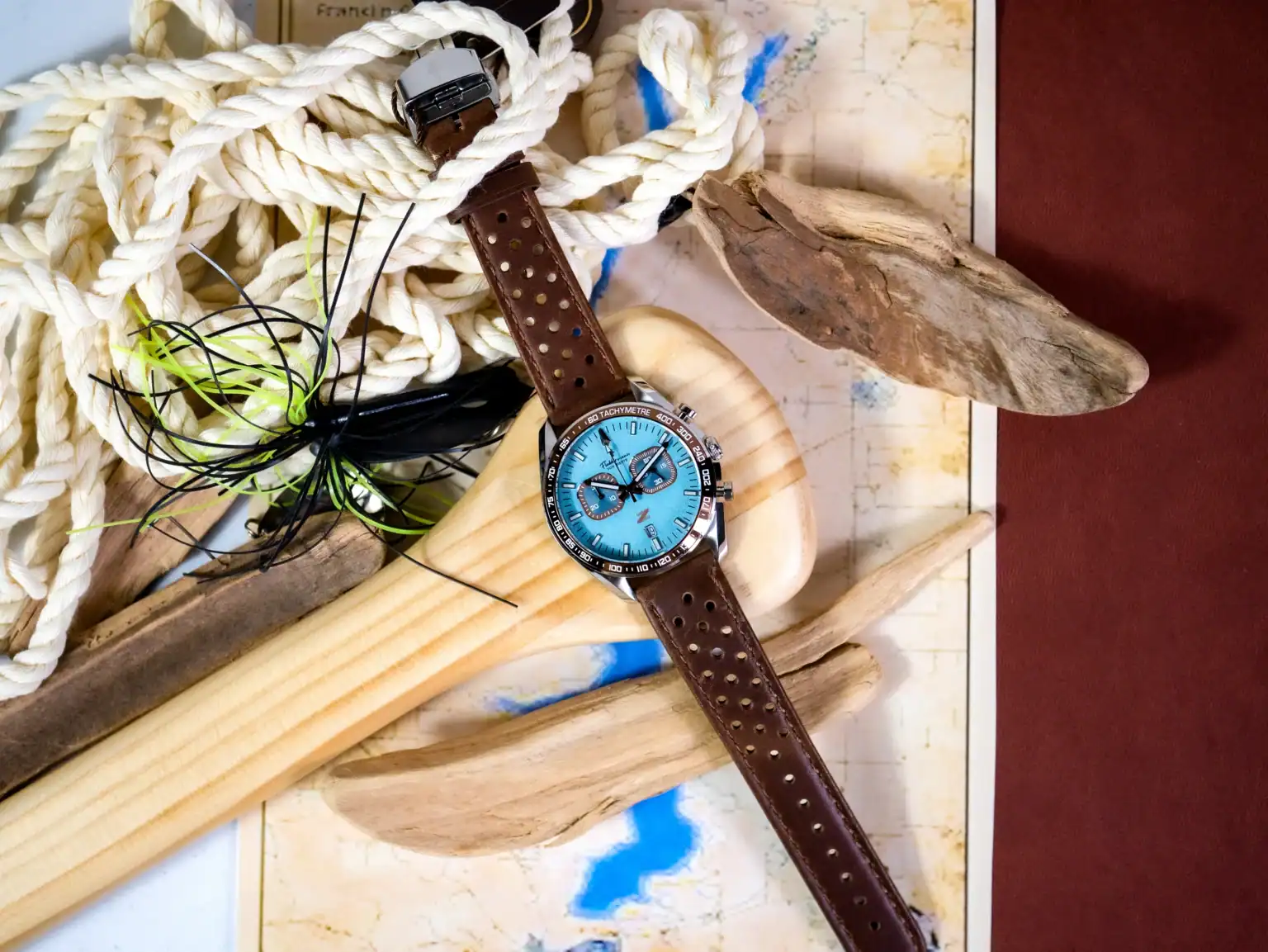
Why Kokomo, and Why Indiana
Kokomo has a long history of making things. It calls itself the City of Firsts, and it’s where Elwood Haynes built one of America’s earliest automobiles in the 1890s. Haynes also did pioneering work on stainless steel alloys, which feels like a fitting bit of history for a town now putting together 316L stainless steel watches. Indiana is a manufacturing state, and we’re proud to be part of that story in our own small way.
It’s personal for me, too. My dad co-founded a tool and die shop in Batesville back in the 1970s, and I worked there through school. Tool and die is a trade where “close” doesn’t count. A part is right or it isn’t. That standard came with me to the watch infdustry, and it’s a big reason regulation was never something we were willing to skip.
A Made in Indiana Watch? Here’s the Honest Version
If you searched for a made in Indiana watch, I want to be straight with you about what we are. Our watches are assembled and hand regulated in Indiana. The movements come from Japan and Switzerland, and components like the sapphire crystal and steel case aren’t made here either. So we don’t claim “Made in USA,” because that phrase has a legal meaning and we wouldn’t meet it.
What happens in Indiana is the part that turns a box of parts into a watch you can trust: the assembly, the regulation, the testing, and the service. If full domestic manufacturing is what you’re after, RGM in Pennsylvania makes movements in the United States, and they’ve earned their reputation. What we offer is an Indiana watch company, a family owned watch brand, and a real watchmaker you can trace your watch back to.
What Hand Regulation Gets You
So what does all this add up to on your wrist?
- Better everyday accuracy. Tighter timekeeping means less resetting and more trust in what the dial says.
- Two of the same model should behave like the same watch, not like distant cousins.
- Someone accountable. A named, certified watchmaker checked your watch, and service goes back to him.
- A watch built to be passed down. Heirloom watches have to keep running for the next person. That starts with being set up right the first time.
None of this makes us a luxury brand, and we don’t want to be one. It’s just the right way to build attainable legacy watches, heirlooms from the first time on your wrist. We may not be your grandfather’s watch, but with time, we hope to be your grandson’s.
See What Comes Off the Bench
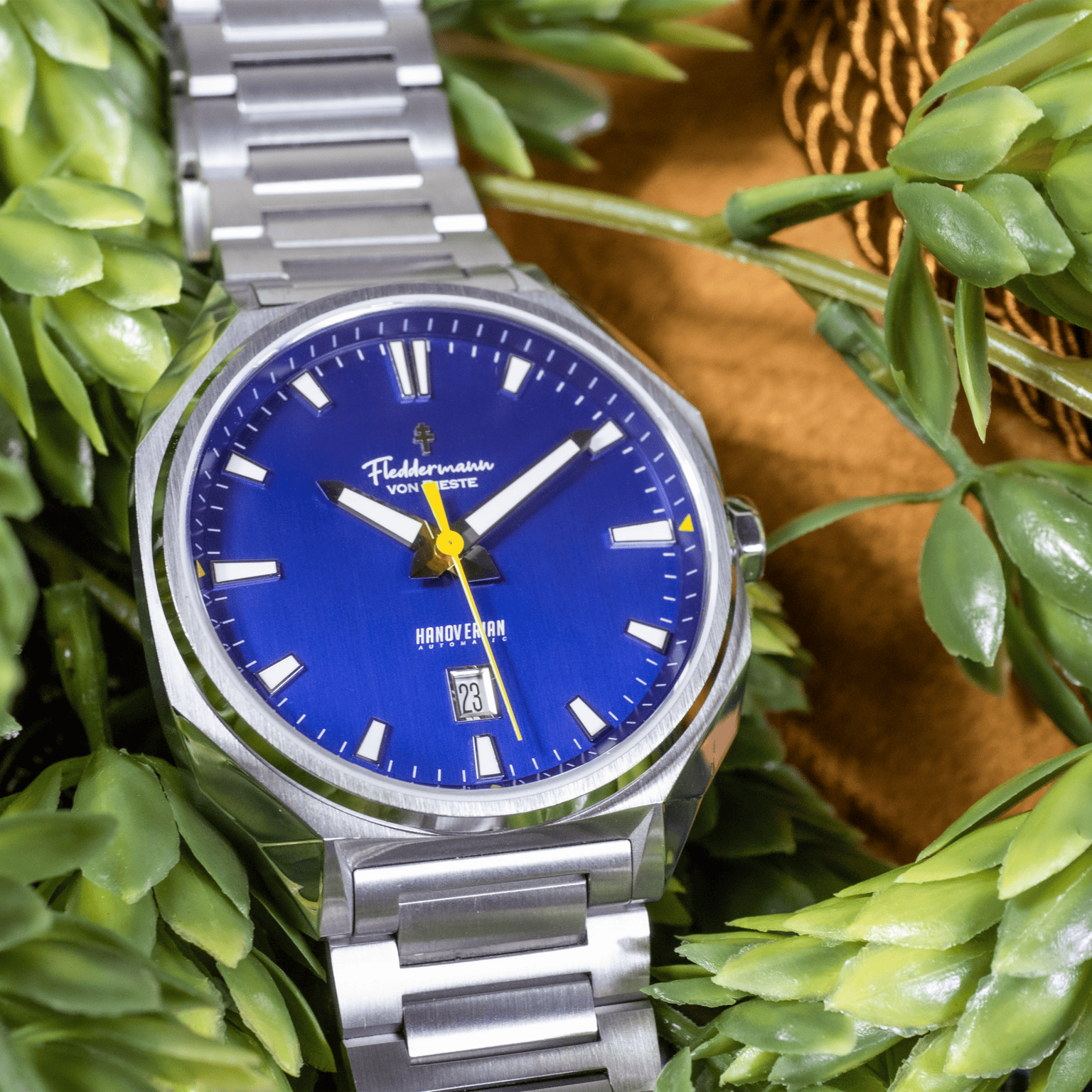
If you’d like to see what Adam’s bench turns out, take a look at the Hanoverian, our 41mm everyday automatic watch. And if you’ve got questions about regulation, movements, or anything else, just email me at adam@fvrwatch.com. I read every one.
.

Dr. Adam Fleddermann, Founder & CEO
Dr. Adam Fleddermann founded Fleddermann von Rieste after growing up watching his father care for a watch passed down through generations of the family. He designs every watch and oversees the brand’s global supply chain, operations, and manufacturing, working alongside an AWCI-certified watchmaker and his team who lead the hand-assembly of every timepiece in Indiana.
