
Dress watch vs sport watch: the real differences, how to choose, and a look at the Einheit and Hanoverian from an Indiana watch company.
October 22, 2026
Written by Dr. Adam Fleddermann, Founder & CEO of Fleddermann von Rieste, who designs every watch and oversees manufacturing and operations.
If you’re buying your first good watch, or buying one for somebody else, this question comes up fast. Dress watch vs. sport watch. One looks right with a suit and the other looks right on a boat, and most of us spend our days somewhere in between. So which one should you get? I’ll walk through the real differences, where the line has gotten blurry, and how to pick. I’ll also be upfront that we make both kinds, the Einheit and the Hanoverian, so I’m not trying to steer you one way or the other.

What Is a Dress Watch?
A dress watch is built to be quiet. It’s meant to look good with a jacket and tie, slide under a shirt cuff, and not draw much attention to itself. The classic traits:
- A clean, simple dial. Usually just hours and minutes, maybe small seconds or a date. No bezels full of numbers.
- A slimmer, more modest case. Traditionally on the smaller side, with a polished finish.
- A leather strap. Often black or brown, to match your belt and shoes.
- Less emphasis on toughness. Older dress watches often had little water resistance, since nobody planned to swim in one.
If you want a picture in your head, think of the kind of plain, elegant watches you see on old-school bankers and lawyers. Watches like the Patek Philippe Calatrava and the Cartier Tank have defined the look for generations, and you’ll see their influence all over the category, at every price.
What Is a Sport Watch?
A sport watch is built to be used hard. The category grew up around diving, flying, and racing, and it still carries that DNA:
- A sturdier case. Usually a bit larger and more robust, often with brushed surfaces that hide scratches.
- More water resistance. Designed to handle a swim, and in the case of dive watches, a lot more than that.
- Legibility first. Bold hands and markers, plenty of lume for reading in the dark.
- Bracelets and rubber straps. Things that don’t mind getting wet or sweaty.
- Tool features. Rotating bezels, tachymeters, or chronographs.
The Rolex Submariner and the Omega Speedmaster are the icons most people picture. At the more affordable end, Seiko’s sports watches have introduced a lot of folks to mechanical watches, and they deserve credit for it.
Dress Watch vs. Sport Watch: The Real Differences
Put side by side, it mostly comes down to three things.
Where you’ll wear it. A dress watch shines at weddings, funerals, church, interviews, and the office. A sport watch shines outdoors, on vacation, at the lake, and on weekends. Both look fine at a Friday fish fry.
How rough your days are. If you work with your hands, garden, coach, or chase kids around, a sport watch will shrug off more of it. A dress watch rewards a little more care.
What you want it to say. A dress watch says “I showed up for this.” A sport watch says “I’m ready for whatever.” Neither is better. They’re just different moods.
The Line Is Blurrier Than It Used to Be
Here’s the thing the old rules don’t account for: modern watches are a lot tougher than they used to be. Plenty of dress watches today have sapphire crystals and real water resistance, and plenty of sport watches look perfectly at home with a sport coat.
That’s true of ours. Every watch we make, dress or sport, has a 316L stainless steel case, a sapphire crystal, and 10 ATM water resistance, which is generally considered fine for swimming. So picking a dress watch from us doesn’t mean picking a fragile one. The difference is mostly in the look, the feel, and the strap.

Meet the Einheit, Our Dress Watch
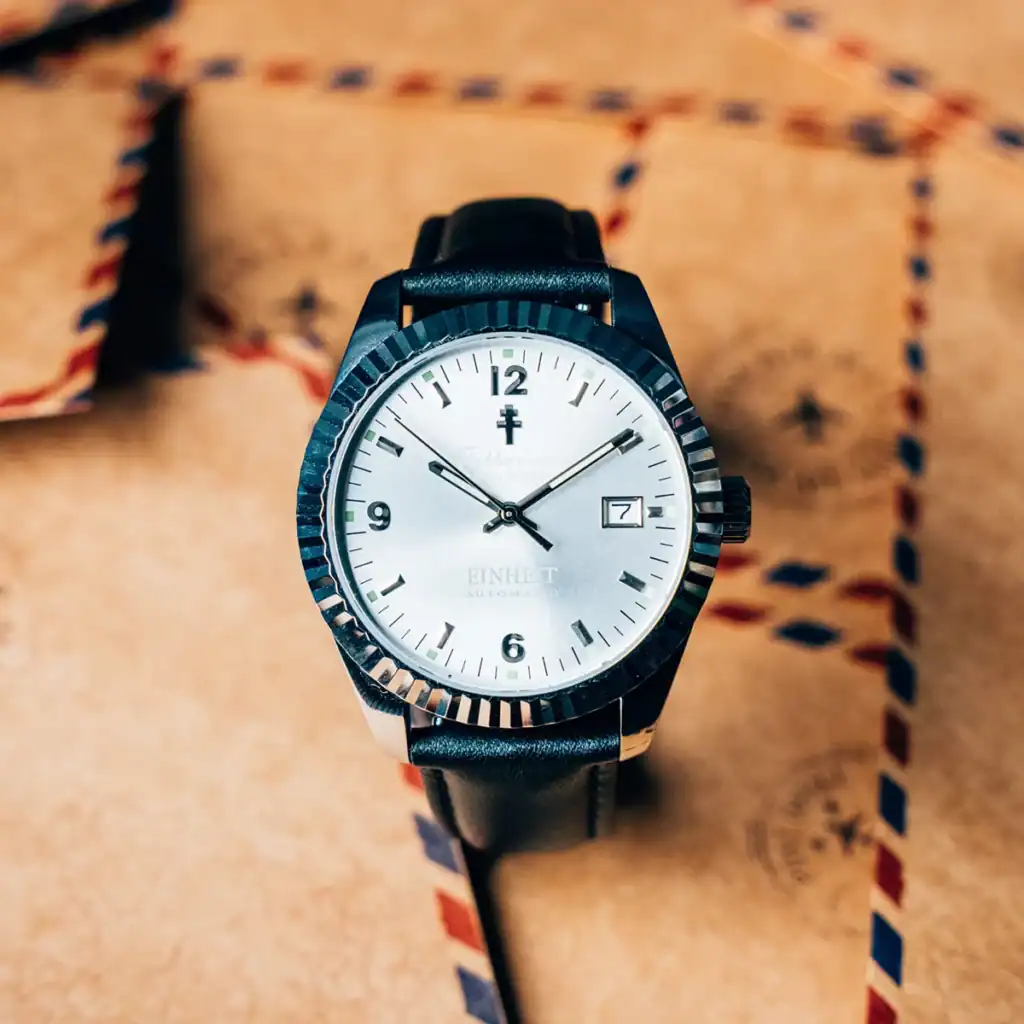
“Einheit” is German for “unity,” and the name is the whole idea behind the watch. It has a 40mm polished stainless steel case, and each side of the case carries four cast lines that meet at a point. Those lines stand for families coming together, the merging of the families that give each of us our own legacy. It’s the kind of detail you might not notice at first and then can’t stop noticing.
On top, a fluted bezel frames a sunburst dial that plays nicely with the light. It wears on an Italian leather strap with a stainless steel butterfly clasp, and it comes in four colors: Celebration Champagne, Noble Blue, Nightfall Black, and Legacy Silver.
I’ll be honest about the Einheit’s personality. It’s dressy, but it isn’t stiff. It looks right at a wedding and doesn’t look out of place with jeans. If you’re looking for a gift watch for a son, a groomsman, or a graduation watch gift for somebody heading into their first real job, it was pretty much designed for that.
Meet the Hanoverian, Our Sport Watch
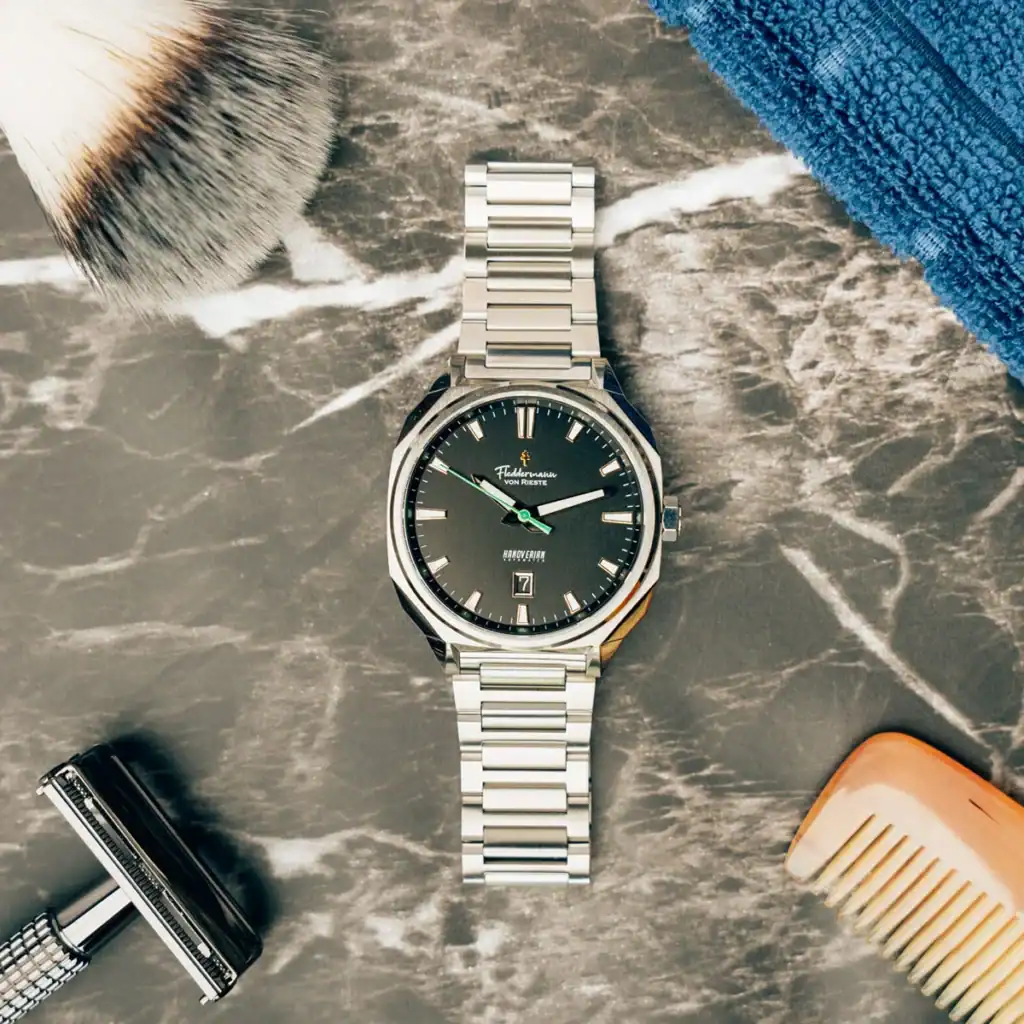
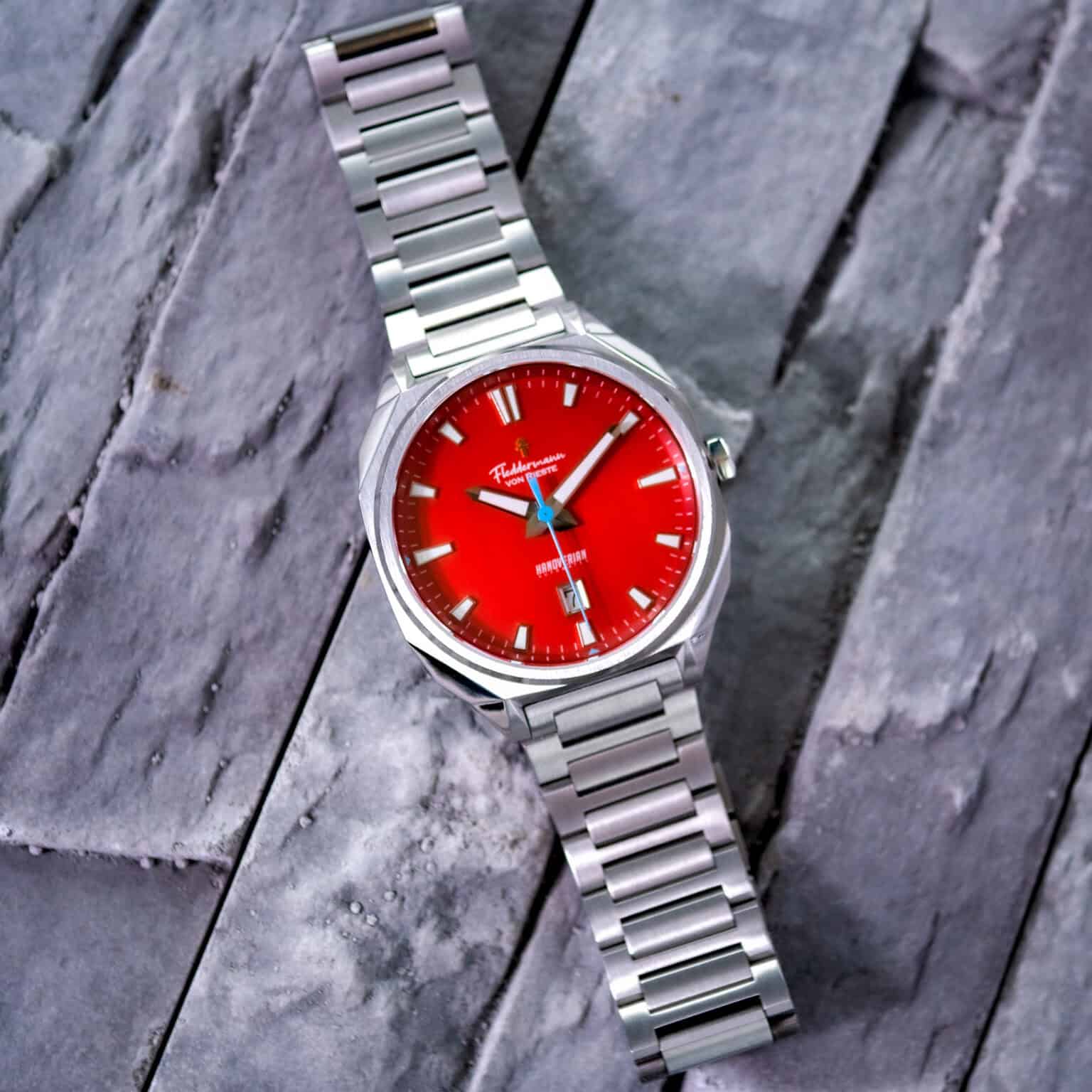
The Hanoverian, while our second model, is really the watch the rest of our line grew out of. It’s our 41mm everyday automatic watch, meaning it winds itself as you wear it. It’s named for the Hanoverian horses and the old Kingdom of Hanover, with a nod to my great-grandfather Bernard, who took real pride in his Belgian draft horses and believed in buying quality once.
It’s an American sport watch in the most practical sense: built to be worn every day and not babied. It’s also the base for our limited editions, including the Hoosier Heritage, the Chase Briscoe edition, and our SAR 250th Anniversary collection. So if you like the Hanoverian’s shape, you’ve got a lot of ways to make it your own.
So Which Do You Need?
Here’s how I’d think about it.
If you’re only going to own one watch, get a sport watch. A good sport watch can be dressed up far more easily than a dress watch can be dressed down. Swap to a leather strap, and a Hanoverian will get you through most weddings just fine. That’s why I think of it as the best everyday automatic watch in our lineup.
If you wear a jacket most days, or the watch is for a big occasion, get a dress watch. The Einheit will look right at the moments people remember, and those tend to be the moments a watch ends up tied to.
If you’re starting a collection, you’ll probably want one of each eventually. A dress watch and a sport watch cover almost everything life throws at you. Plenty of folks add a third, like a chronograph or a small seconds watch such as our Munchner, once they catch the bug.
If it’s a gift, think about the person, not the category. Picture where they’ll actually wear it. A farmer, a coach, or a mechanic will probably get more out of a sport watch. Somebody in a courtroom or behind a pulpit might prefer a dress watch.
Either Way, Buy the One That Gets Worn
The best watch to hand down isn’t the fanciest one. It’s the one that got worn, the one with the most stories on it. Heirloom watches come from years of use, not years in a drawer. So pick the one that fits the life you actually live.
Whichever you choose, every watch we make is assembled and hand-regulated in Indiana by an AWCI-certified watchmaker in Kokomo, with a two-year full warranty and service that goes back to the same bench. That’s what we mean by attainable legacy watches, heirlooms from the first time on your wrist. We may not be your grandfather’s watch, but with time, we hope to be your grandson’s.
You can see the Einheit and the Hanoverian on our site, or try them on at one of our authorized jewelers. And if you’re torn between the two, just email me at adam@fvrwatch.com. Tell me a little about who it’s for, and I’ll give you my honest take.
.

Dr. Adam Fleddermann, Founder & CEO
Dr. Adam Fleddermann founded Fleddermann von Rieste after growing up watching his father care for a watch passed down through generations of the family. He designs every watch and oversees the brand’s global supply chain, operations, and manufacturing, working alongside an AWCI-certified watchmaker and his team who lead the hand-assembly of every timepiece in Indiana.
