
Your First Mechanical Watch: A Plain-English Guide
Written by Dr. Adam Fleddermann, Founder & CEO of Fleddermann von Rieste, who designs every watch and oversees manufacturing and operations.
Let’s get the awkward part out of the way. Your phone keeps better time than any mechanical watch ever made, including ones that cost more than a truck. If accuracy is the goal, you already own the winner and it’s in your pocket.
So why buy one at all? Because it’s a small machine that runs on a wound spring and nothing else, because somebody built it and somebody can fix it, and because in fifty years it can still be running while the phone is landfill. That’s the pitch. If it lands, this guide will get you to a good first mechanical watch without the vocabulary problem that makes this hobby feel like a members-only club.
I build watches for a living, so discount my opinions accordingly. I’ll tell you where we fit at the end, and I’ll name plenty of watches that aren’t ours along the way.
A quick word on quartz
A quartz watch runs off a battery and a vibrating crystal. It’s more accurate, cheaper to make, and asks nothing of you but a battery every few years. A mechanical watch runs on a wound mainspring, drifts a few seconds a day, and can be serviced essentially forever.
If you want the most accurate thing on your wrist, buy quartz and don’t let anybody make you feel bad about it. Both are correct, and they answer different questions. I’ll write a whole separate post on quartz vs mechanical and which you should buy in the future so stay tuned for that.
Mechanical vs automatic: the difference nobody explains
This is the single most confusing bit of vocabulary in watches, and it confuses people because the industry uses the word two different ways.
Strictly speaking, mechanical is the umbrella. Any watch running on a wound mainspring instead of a battery is a mechanical watch. Underneath it sit two types.
Hand-wound, also called manual, means you turn the crown yourself. Usually a few turns each morning, and the watch runs off that until tomorrow. Nothing inside winds it but you.
Automatic, also called self-winding, means there’s a weighted rotor in the back that swings as your wrist moves and winds the mainspring as you go. Wear it daily and it never stops. An automatic is still a mechanical watch. It just has a rotor doing the job your fingers would otherwise do.
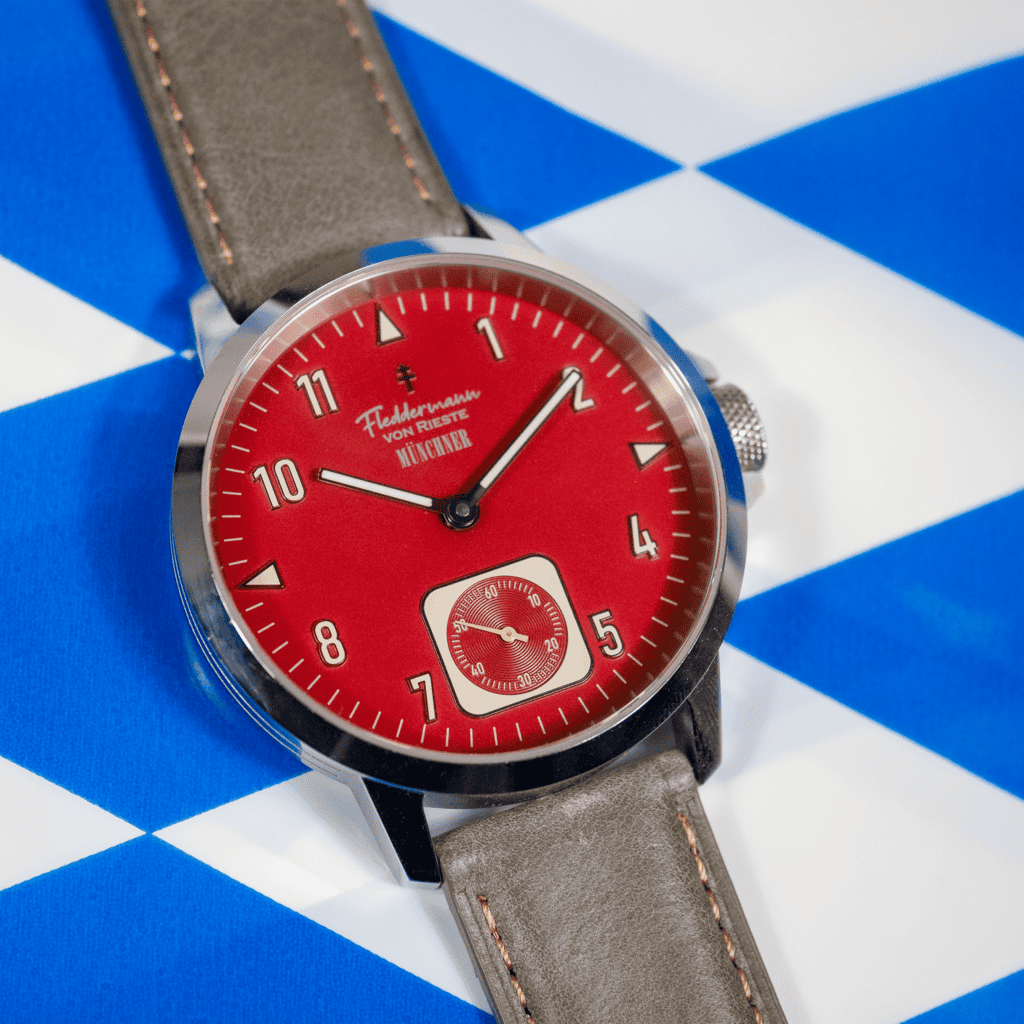
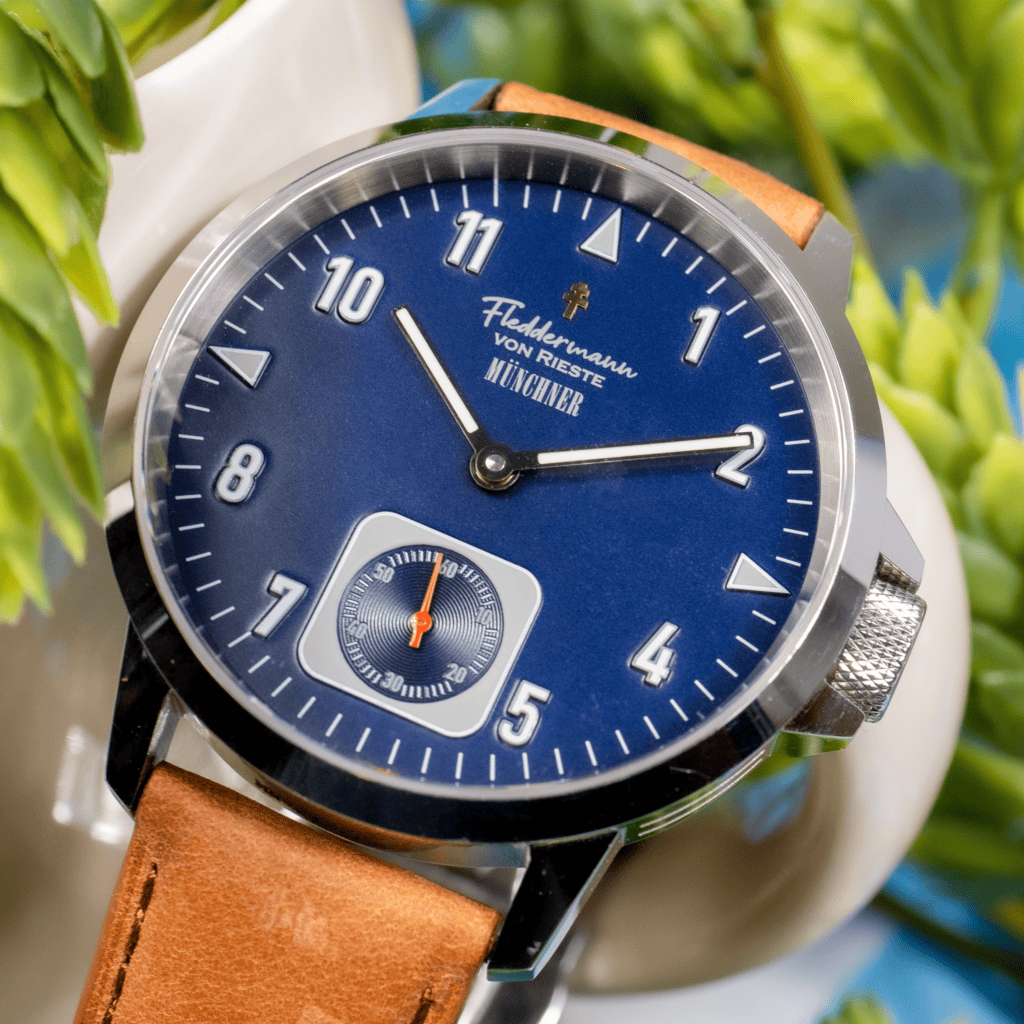
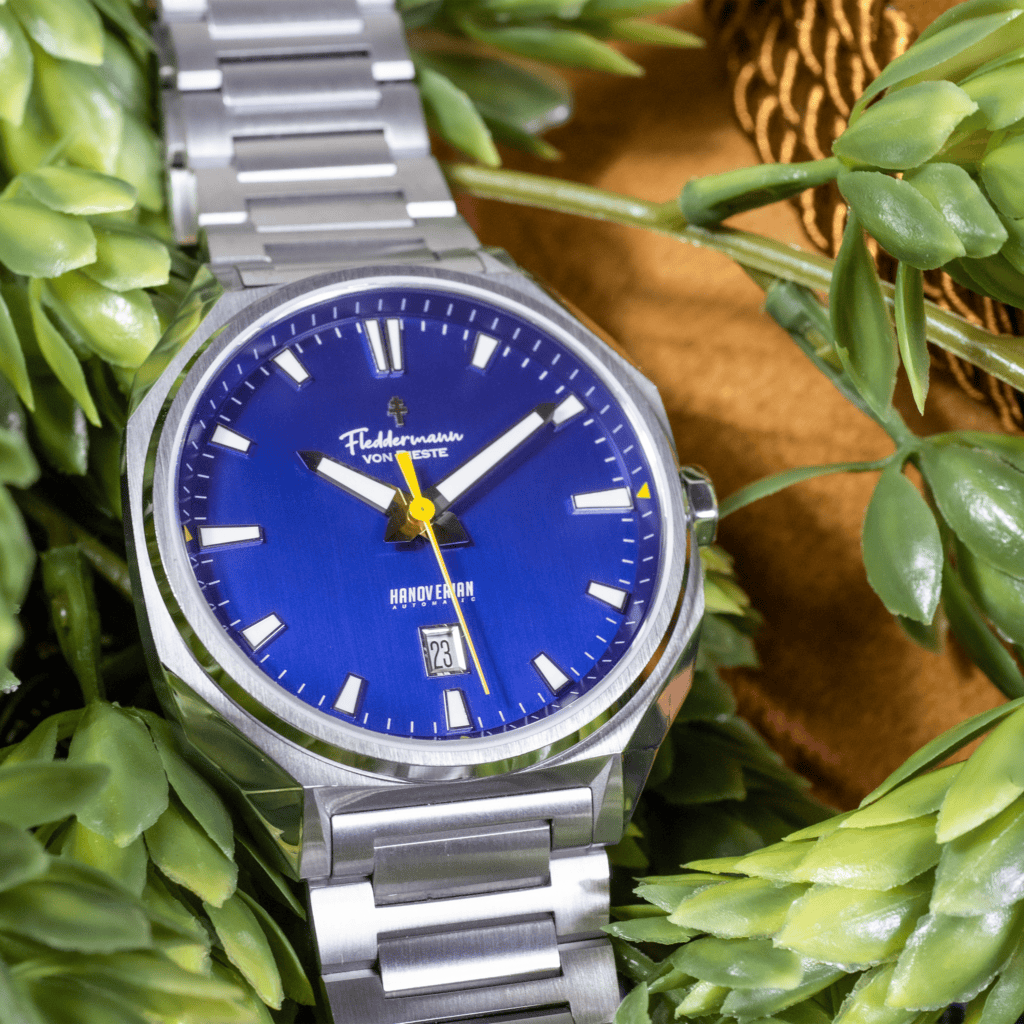
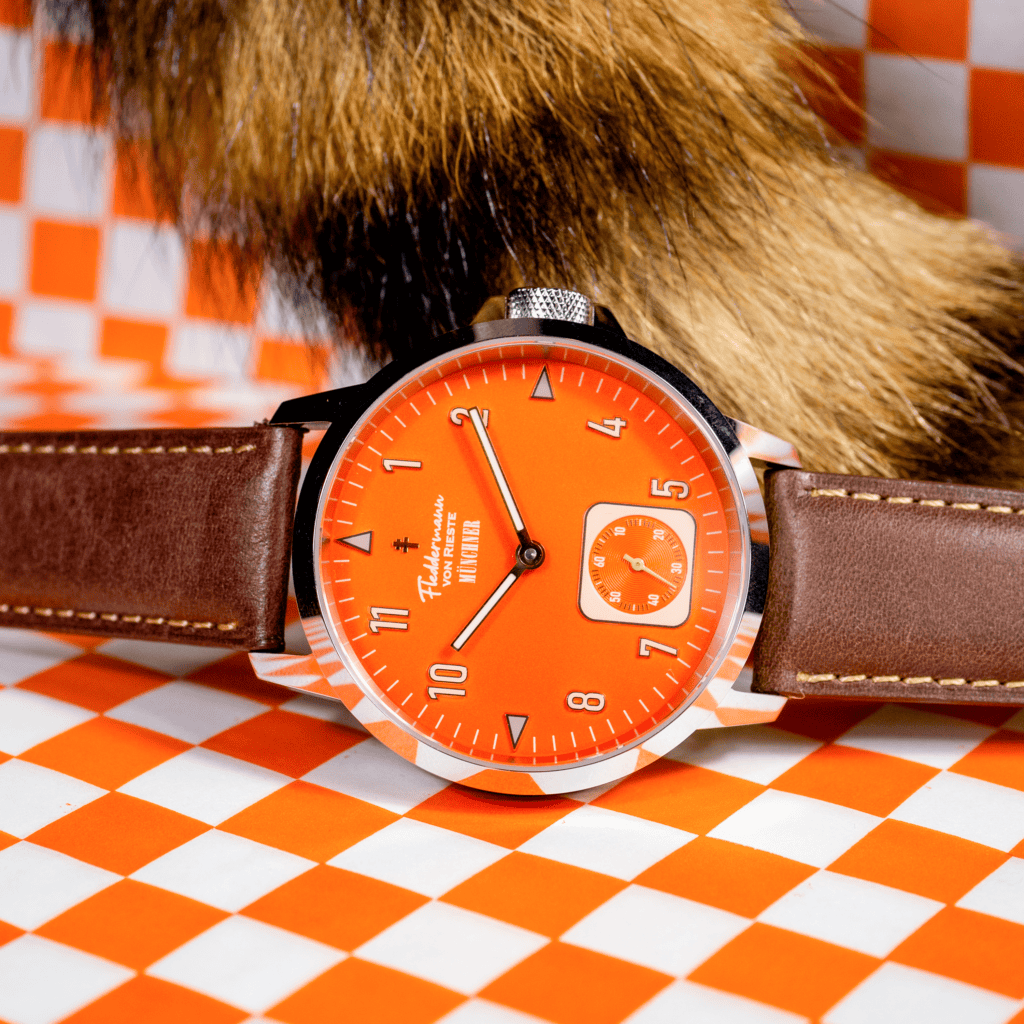
Now the part that trips people up. In everyday shop talk, people often say “mechanical” to mean hand-wound specifically, as the opposite of automatic. Both usages are common and neither is wrong, so when a spec sheet says mechanical, ask which they mean. We do it ourselves: the Munchner is our hand-wound and the Hanoverian is an automatic, and both are mechanical watches.
Which should you start with? I’d point most first-time buyers to an everyday automatic. It’s the lowest-friction version of the experience. You put it on, it runs, and the winding happens as a byproduct of you living your life. Hand-wound is a genuinely lovely ritual, thirty seconds with your coffee, and plenty of people prefer the connection to it. It’s just a ritual you have to actually keep.
One thing nobody warns you about: an automatic that sits in a drawer for two weeks and stops has not broken. Give the crown thirty turns and it’ll wake right up.
What actually matters on the spec sheet
Most of a spec sheet is noise. Four things are worth your attention.
The crystal. This is the glass over the dial, and the material is worth caring about. Sapphire is the hardest of the common options and shrugs off the everyday scuffs that turn mineral glass hazy in a year or two. A sapphire crystal watch costs a bit more and stays looking new far longer. Acrylic scratches easily but polishes out with a bit of compound, which some people genuinely prefer. Mineral glass is the middle option and my least favorite of the three.
The case metal. 316L stainless steel is the sensible default. It resists corrosion, takes a beating, and can be refinished decades from now. Anything vaguer than a stated alloy is a red flag.
Water resistance. The numbers on watch dials are close to a scam, so here’s the translation. 3 ATM, sometimes written 30m, means splash resistant. Do not swim in it. 5 ATM handles hand-washing and rain. 10 ATM means you can swim without thinking about it. 20 ATM and up is dive territory. If you’re asking whether your watch is water resistant enough to swim, the practical floor is 10 ATM, and gaskets age, so a twenty-year-old watch deserves a pressure test first.
The movement. Ask who makes it. Common workhorses in the affordable mechanical watch space come from Miyota and Seiko in Japan, Sellita and ETA in Switzerland, and a handful of Chinese manufacturers doing better work than their reputation suggests. Our SAR editions, for instance, run a Miyota 9-series. There is nothing wrong with a well-made stock movement, and a brand that won’t tell you what’s inside is telling you something.
What to spend on your first mechanical watch
Less than you think, and here’s the honest ladder.
Under $200 gets you a reliable Japanese automatic. Not a compromise, not a starter toy, just a real mechanical watch with a plain finish. Around $300 to $500 buys better finishing, a sapphire crystal, and more considered design. From roughly $500 to $1,500, where most of the best automatic watches under $1000 conversation happens, you’re paying for materials, assembly care, and whether a person regulated the movement by hand rather than shipping it as it arrived.
Past that you’re mostly buying finishing and brand, and those are real things to want. Just know what you’re buying.
My actual advice depends on a question only you can answer: do you already know you want a mechanical watch, or are you finding out?
If you’re finding out, buy cheap first. A $200 automatic will teach you more in three months than any amount of reading, and if it turns out you’d rather wear nothing on your wrist, you’re out $200 instead of a grand.
If you already know, buy the one you’ll keep. Most people who go cheap first end up buying twice, and the second purchase is the one they wanted all along. There’s no prize for having served an apprenticeship on a watch you don’t love.
Where to look, including plenty of places that aren't us
The most-recommended first mechanical watch in the world is a Seiko 5, and it deserves that. Decades of proven movements, priced so low it’s almost unreasonable. If you asked me at a party and I had no stake in it, that’s the answer I’d give. Orient, which Seiko owns, does similar work with dressier design. Hamilton sits a step up and makes some of the best-value Swiss mechanicals going, especially the field watches. Tissot and Certina are worth a look too.
On the American made watch brand side, RGM in Pennsylvania actually manufactures movements here, which is rare and remarkable. Weiss in Nashville has pushed hard on domestic components. Vortic in Colorado builds wristwatches around restored antique American pocket watch movements, and Shinola assembles at scale in Detroit.
None of those recommendations cost me anything to make. This is a hobby with a lot of good options and very few bad ones at this point.
Where we fit
We’re a small independent American watchmaker in Indiana. We don’t manufacture our own movements, and almost nobody at our prices does. What we do is assemble here and hand-regulate every mechanical movement. Adam Parrish, an AWCI-certified watchmaker in Kokomo, sits down with each one, adjusts it to run within about five seconds a day, and tests it in multiple positions before it ships. That’s the step that gets skipped when a brand is racing to a price.
Everything we build uses 316L steel, a sapphire crystal, and 10 ATM water resistance, with a two-year warranty and service that comes back to the same bench in Kokomo. Every watch we make is American assembled. The line starts at $500, and all but one model lands under $1,000. The Munchner, our hand-wound, is $849. That’s real money and I won’t pretend it isn’t, but it’s the same neighborhood as the Swiss watches above, and it’s a watch a person in Indiana actually sat down with. We sell through independent jewelers, so you can put one on your wrist before deciding, which matters more than any spec on this page.
We may not be your grandfather’s watch. But with time, we hope to be your grandson’s.
If you want a look at where we’d start somebody, the Hanoverian is our 41mm everyday automatic and the most straightforward watch we make. If the hand-wound ritual sounds more like you, that’s the Munchner. Or write me at adam@fvrwatch.com with whatever question you didn’t want to ask in a forum. I’ll give you a straight answer, even when the answer is a Seiko.

Dr. Adam Fleddermann, Founder & CEO
Dr. Adam Fleddermann founded Fleddermann von Rieste after growing up watching his father care for a watch passed down through generations of the family. He designs every watch and oversees the brand’s global supply chain, operations, and manufacturing, working alongside an AWCI-certified watchmaker and his team who lead the hand-assembly of every timepiece in Indiana.
