
From crown to caseback, every part you need to know before your first purchase
October 13, 2026
Written by Dr. Adam Fleddermann, Founder & CEO of Fleddermann von Rieste, who designs every watch and oversees manufacturing and operations.
If you’ve ever read a watch review and felt like it was written in a foreign language, you’re in good company. Watch people love their jargon. Lugs, bezels, complications, beats per hour. None of it is complicated once somebody explains it plainly, so that’s what we’re doing here. Consider this your watch parts explained guide, a beginner’s glossary you can come back to any time a word trips you up. We’ll go from the outside in, the same way you’d get to know a watch in your hand.
Where it helps, I’ll point to our own watches as examples, but everything here applies to any watch from any brand.
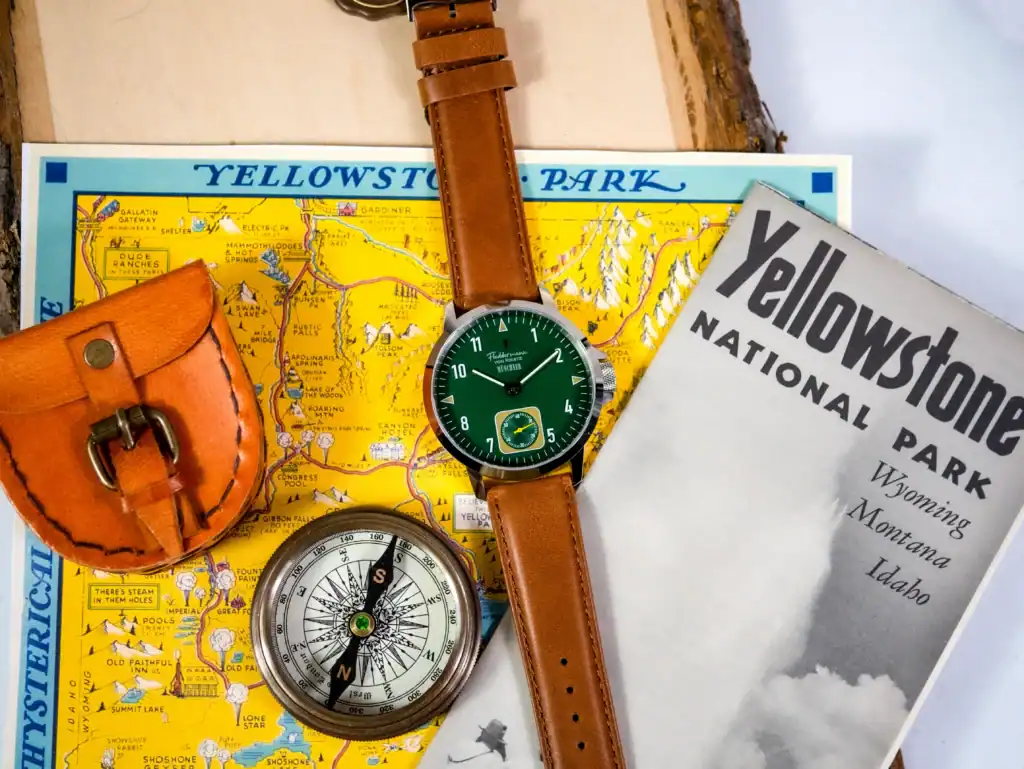
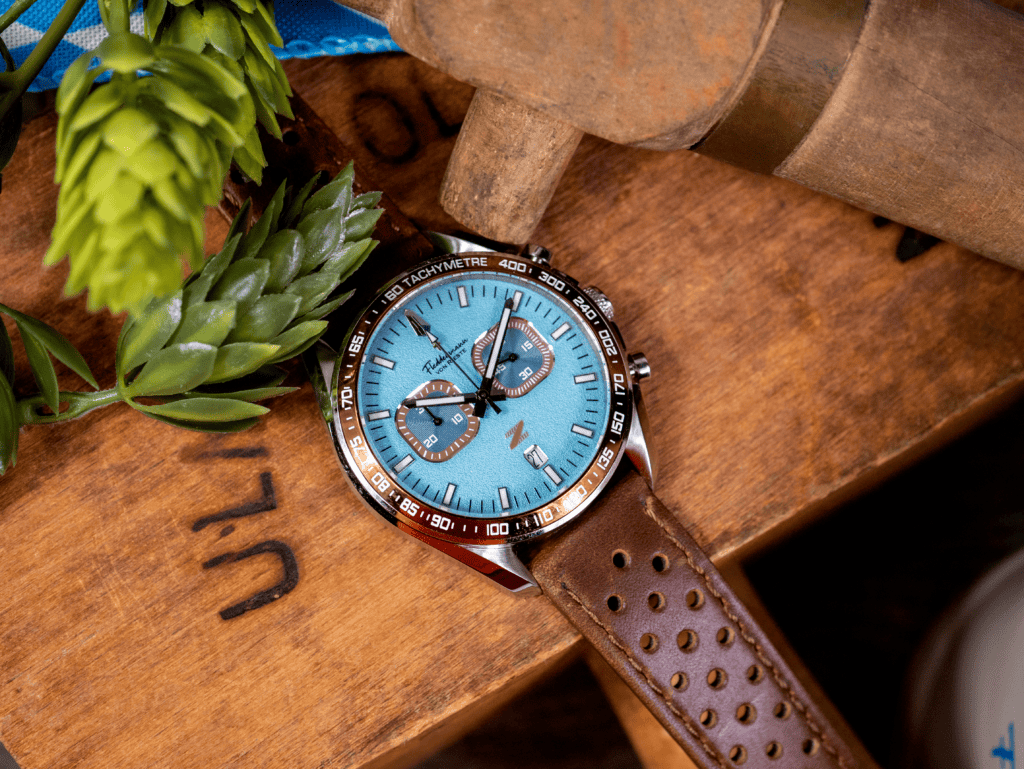
Watch Glossary: The Outside of a Watch
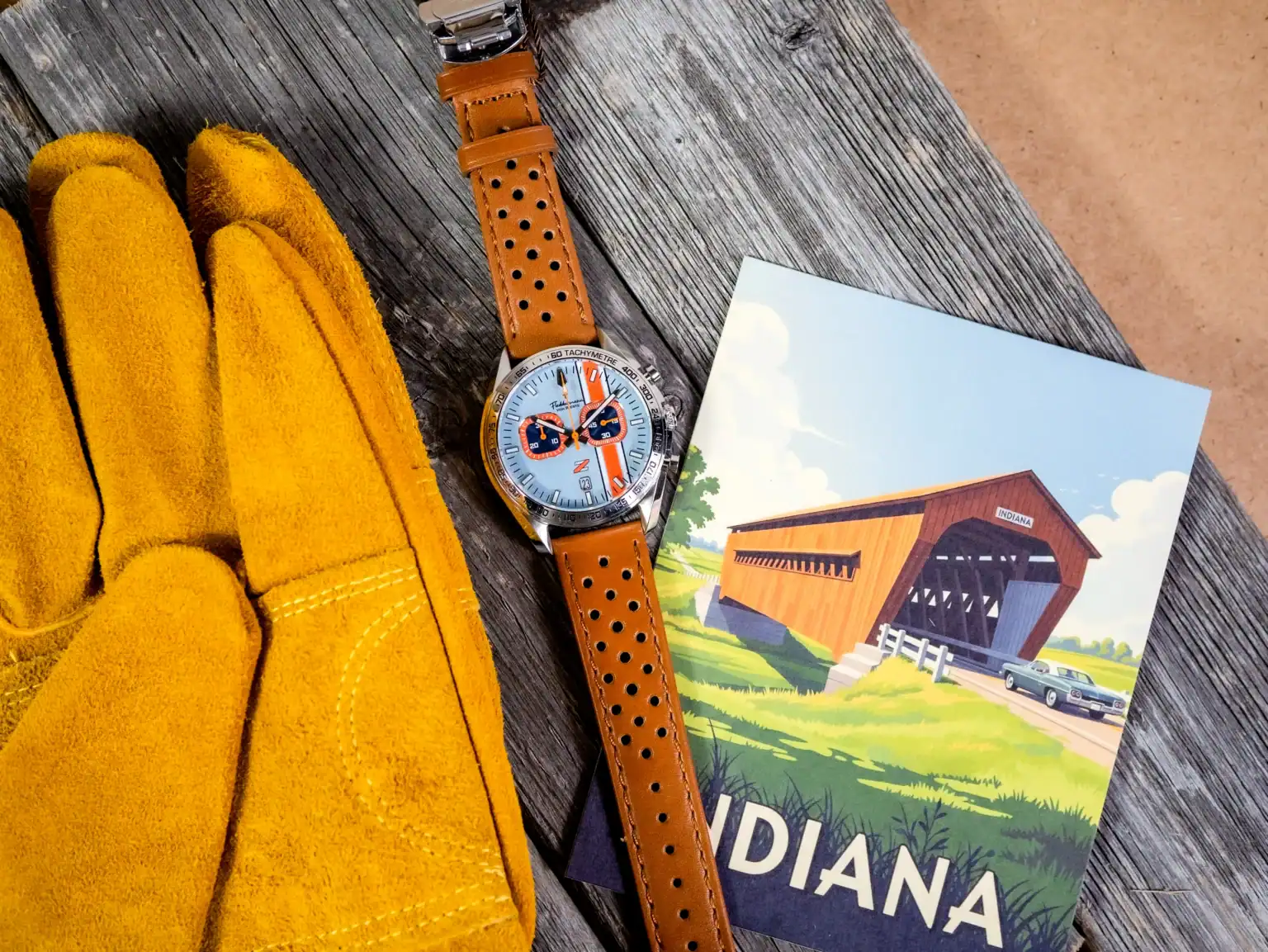
Case. The metal housing that holds everything together. It’s measured by diameter in millimeters, not counting the crown. Our Hanoverian is 41mm, and our Zeitfahren chronograph is 40mm. For most wrists, somewhere between 38mm and 42mm is a comfortable everyday size.
316L stainless steel. The most common case material on good watches, and the one we use. The “L” means low carbon, which helps it resist corrosion. It’s tough, it holds a polish, and it can be refinished decades from now.
Crystal. The clear cover over the dial. There are three main kinds. Acrylic is cheap and scratches easily but can be buffed out. Mineral glass is a step up. Sapphire crystal is a lab-grown material that’s extremely scratch resistant, which is why we put it on every watch we make. If you’re shopping for a watch to pass down, a sapphire crystal watch is worth insisting on.
Bezel. The ring around the crystal. Sometimes it’s just decoration. Sometimes it does a job, like the rotating timing bezel on a dive watch, or the tachymeter scale on a racing chronograph like the Zeitfahren.
Crown. The little knob on the side, usually at three o’clock. You pull it out to set the time and date, and on a hand-wound or automatic watch, you turn it to wind the mainspring. Some crowns screw down to help keep water out.
Pushers. The buttons on either side of the crown on a chronograph. The top one starts and stops the timer, and the bottom one resets it.
Lugs. The four little arms that stick out from the case and hold the strap. The distance between them is called the lug width, and it’s the number you need when you buy a replacement strap.
Caseback. The back of the case. A solid caseback is plain metal. An exhibition caseback has a sapphire window, so you can watch the movement work. Our SAR Semiquincentennial editions have one, with the SAR logo engraved on the rotor where you can see it.
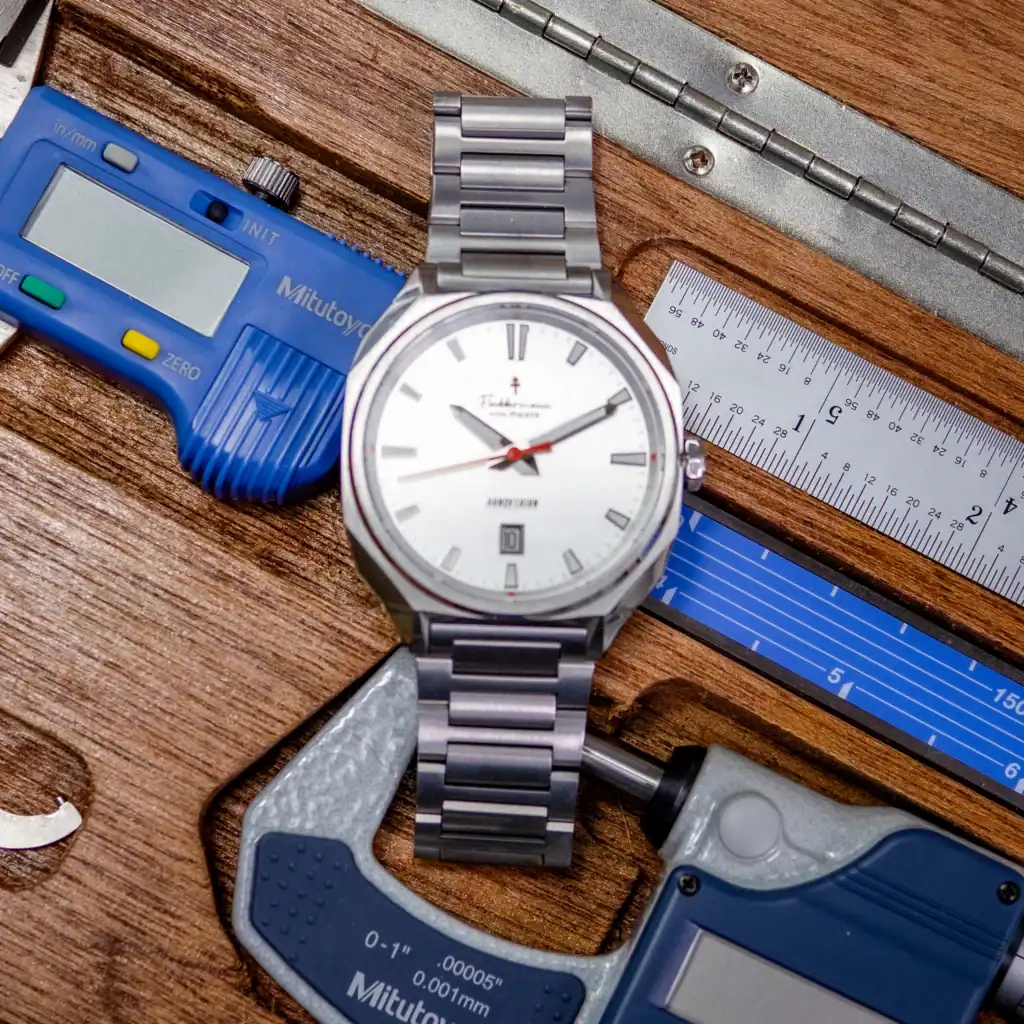
The Face of a Watch
Dial. The face of the watch, where all the information lives. Dials can be painted, textured, sunburst, or printed with a design. Our Zeitfahren has an asphalt-textured dial, a nod to the racetrack.
Indices. The hour markers on the dial. They can be numerals, simple lines, or raised pieces applied to the dial, which catch the light better than printed ones.
Hands. Hour, minute, and seconds, plus any extras. Hand shapes have names too. Dauphine hands are long, tapered, and faceted, like the ones on our Marquis edition.
Lume. Short for luminous material, the glow-in-the-dark paint on the hands and markers. Super-LumiNova, made in Switzerland, is one of the best known, and it’s what we use on the Zeitfahren.
Subdials. The smaller dials within the main dial. On a chronograph they count elapsed minutes and hours. On other watches, a subdial may just show running seconds.
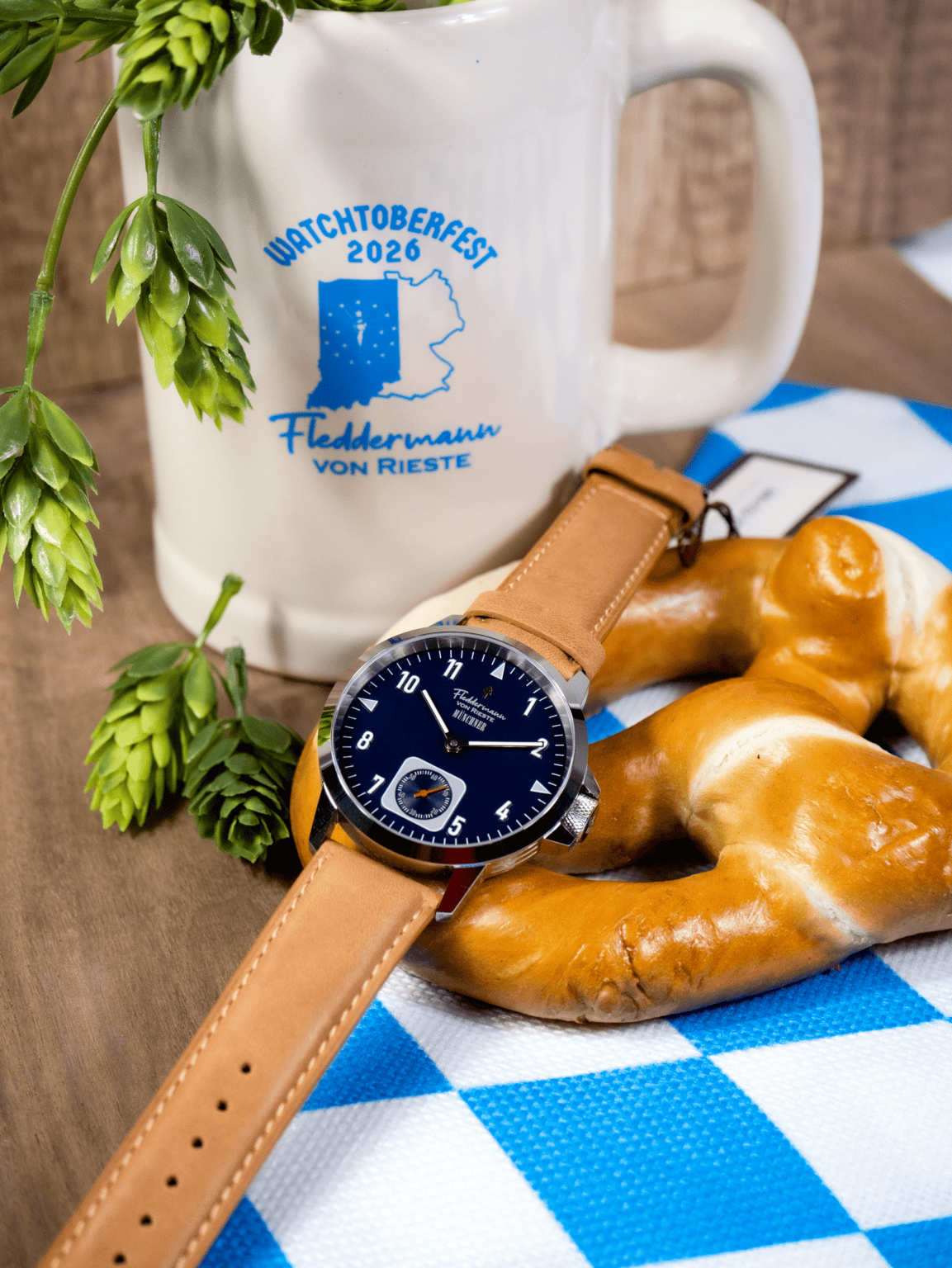
Small seconds. A seconds hand that lives in its own little subdial, usually near six o’clock, instead of sweeping from the center. It’s a classic dress watch look, and it’s the defining feature of our Munchner small seconds watch.
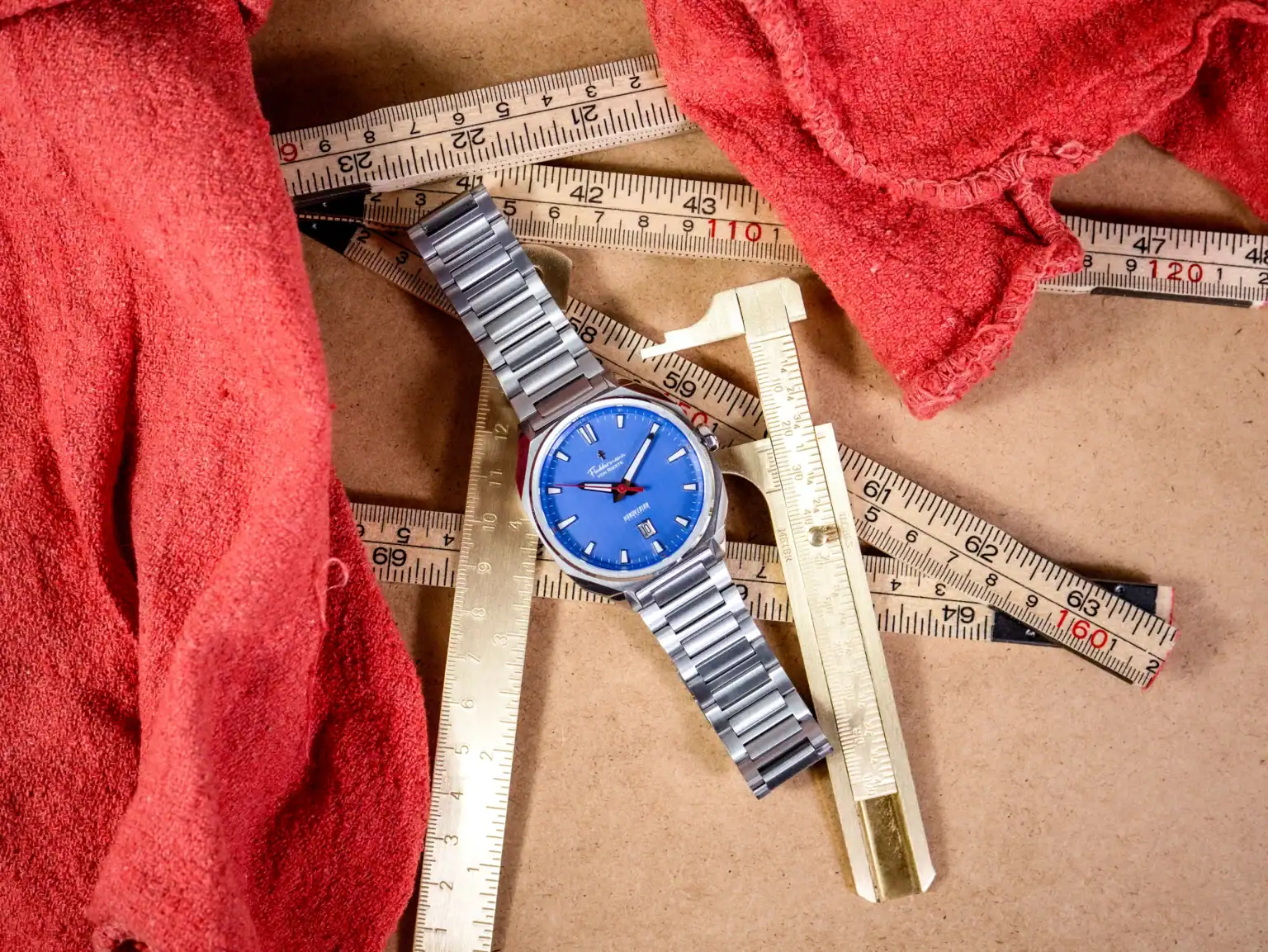
Inside the Watch: The Movement
Movement. The engine of the watch, sometimes called the caliber. It’s what actually keeps time. Very few brands at any price make their own movements. Most buy them from specialists. At our end of the market, you’ll see a lot of Miyota and Seiko movements from Japan, and Swiss movements from makers like Sellita and Ronda. We use Miyota in our SAR editions and a Swiss Ronda quartz movement in the Zeitfahren, and we’re happy to tell you which movement is in any watch we sell.
Quartz. A battery-powered movement that uses a vibrating quartz crystal to keep time. It’s very accurate, low maintenance, and affordable. You’ll know a quartz watch by its seconds hand, which usually ticks once per second.
Mechanical watch. Any watch powered by a wound spring instead of a battery. A mechanical watch has no electronics at all, just springs, gears, and a lot of clever engineering. Its seconds hand sweeps smoothly instead of ticking.
Hand-wound. A mechanical watch you wind yourself by turning the crown, usually once a day. Some folks find it a nice little morning ritual.
Automatic watch. Also called a self-winding watch. It’s a mechanical watch with a weighted rotor that spins as your wrist moves, winding the mainspring for you. Wear it every day and it keeps itself going. The Hanoverian, our everyday automatic watch, works this way.
Rotor. The half-moon weight inside an automatic watch that swings with your motion and winds the watch. On an exhibition caseback, it’s the part you see moving.
Mainspring. The coiled spring that stores energy in a mechanical watch. Winding tightens it, and it slowly lets that energy out to run the watch.
Power reserve. How long a fully wound mechanical watch will run on its own before it stops. Most automatics will run a day or two off the wrist.
Balance wheel and escapement. The heartbeat of a mechanical watch. The balance wheel swings back and forth at a steady rate, and the escapement releases the mainspring’s energy in tiny, even steps. Together, they’re what turn a spring into a clock.
Beat rate. How fast the balance wheel swings, measured in vibrations per hour. A higher beat rate generally means a smoother seconds hand and steadier timekeeping. Many modern movements run at 28,800 vibrations per hour, which is where the high-beat Miyota 9-series in our SAR editions runs.
Jewels. Tiny synthetic rubies used as bearings at the busiest points in a movement. They reduce friction and wear. More jewels isn’t automatically better, so don’t let a big jewel count sell you on its own.
Terms You’ll Hear When Shopping
Complication. Anything a watch does beyond telling hours, minutes, and seconds. A date is a complication. So is a chronograph.
Chronograph. A watch with a built-in stopwatch. It uses pushers and subdials to time events without disturbing the regular time.
Regulation. Fine-tuning a movement so it keeps better time. A new mechanical movement leaves the factory running within a range, and a watchmaker adjusts it and checks it in several positions to dial it in. Every one of our watches is assembled and hand-regulated in Kokomo, Indiana, by Adam Parrish, an AWCI-certified watchmaker, and his apprentices. It’s the step most brands skip when they’re chasing a price, and it’s the step we’re proudest of.
Water resistance. How well a watch keeps water out, usually listed in ATM, bar, or meters. Our watches are rated to 10 ATM, which is generally considered fine for swimming. Keep in mind the rating comes from lab testing, and old gaskets wear out, so get the seals checked when your watch is serviced.
Service. A cleaning, oiling, and adjustment of a mechanical movement, usually recommended every several years. A watch that can be serviced is a watch that can be passed down. Ours are serviced by the same Kokomo shop that assembled them.
Watch Parts Explained: Why It Matters
You don’t need to memorize any of this to enjoy a watch. But knowing the parts helps you tell the difference between a watch built to last and one built to look good in a photo. Sapphire over mineral glass. A movement that can be serviced. A case that can be refinished. A real person who regulated it. Those are the things that make a watch an heirloom, and they matter far more than any logo.
That’s the whole idea behind what we build at Fleddermann von Rieste. We’re a family owned Indiana watch company making attainable legacy watches, heirlooms from the first time on your wrist. We may not be your grandfather’s watch, but with time, we hope to be your grandson’s.
If you want to dig a little deeper into what’s ticking inside, our watch movements page breaks down what powers each of our watches. And if a term here still has you scratching your head, just email me at adam@fvrwatch.com. I’m always happy to talk watches.

Dr. Adam Fleddermann, Founder & CEO
Dr. Adam Fleddermann founded Fleddermann von Rieste after growing up watching his father care for a watch passed down through generations of the family. He designs every watch and oversees the brand’s global supply chain, operations, and manufacturing, working alongside an AWCI-certified watchmaker and his team who lead the hand-assembly of every timepiece in Indiana.
