
Is Your Watch Water Resistant Enough to Swim?
Written by Dr. Adam Fleddermann, Founder & CEO of Fleddermann von Rieste, who designs every watch and oversees manufacturing and operations.
Here’s a question I get more than almost any other, usually right before somebody jumps in a pool with a watch they’re not sure about. Short answer, check the rating, not the word “waterproof,” because that word doesn’t actually mean anything on a watch. Nothing is waterproof. Water resistant is the honest term, and how resistant depends entirely on the number.
The ratings, plainly
Water resistance is measured in ATM, short for atmospheres, which is a way of describing pressure rather than depth, though depth is the easier way to think about it.
Below 3 ATM, keep it dry. That covers a splash of rain, nothing more. A watch rated at this level wasn’t built with water in mind at all.
At 3 ATM (30 meters), you can handle rain and washing your hands, but that’s about it. Don’t shower in it, and don’t swim.
At 5 ATM (50 meters), showering and light swimming are usually fine, though I wouldn’t push it much further than that.
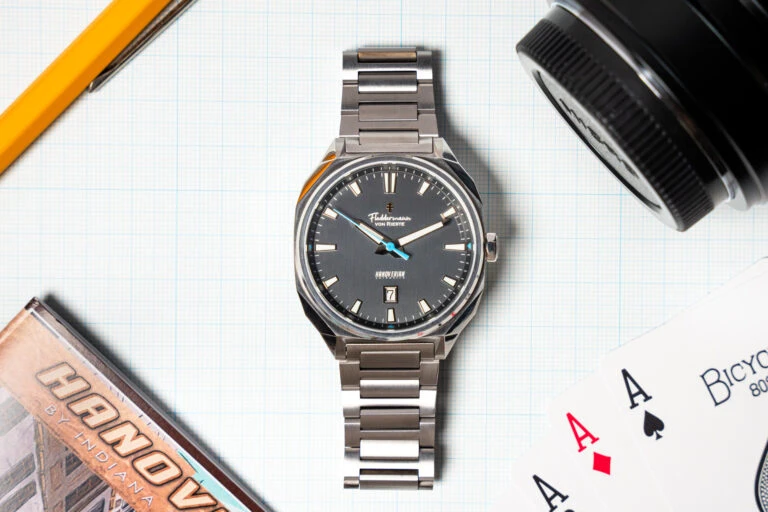
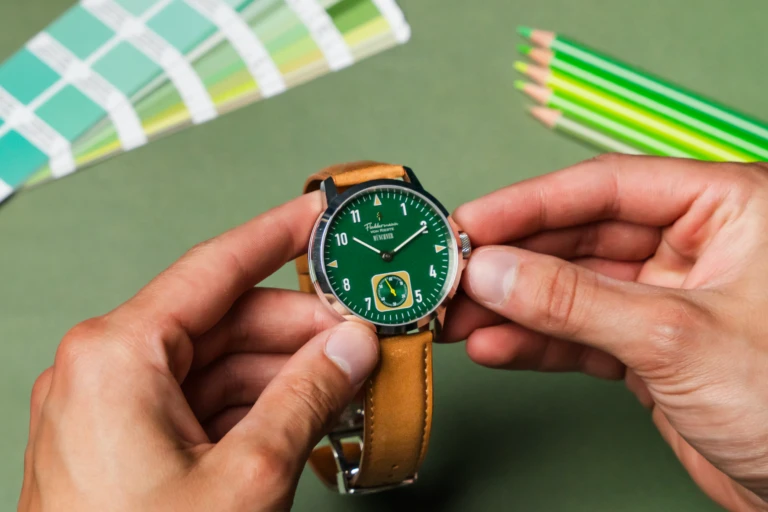
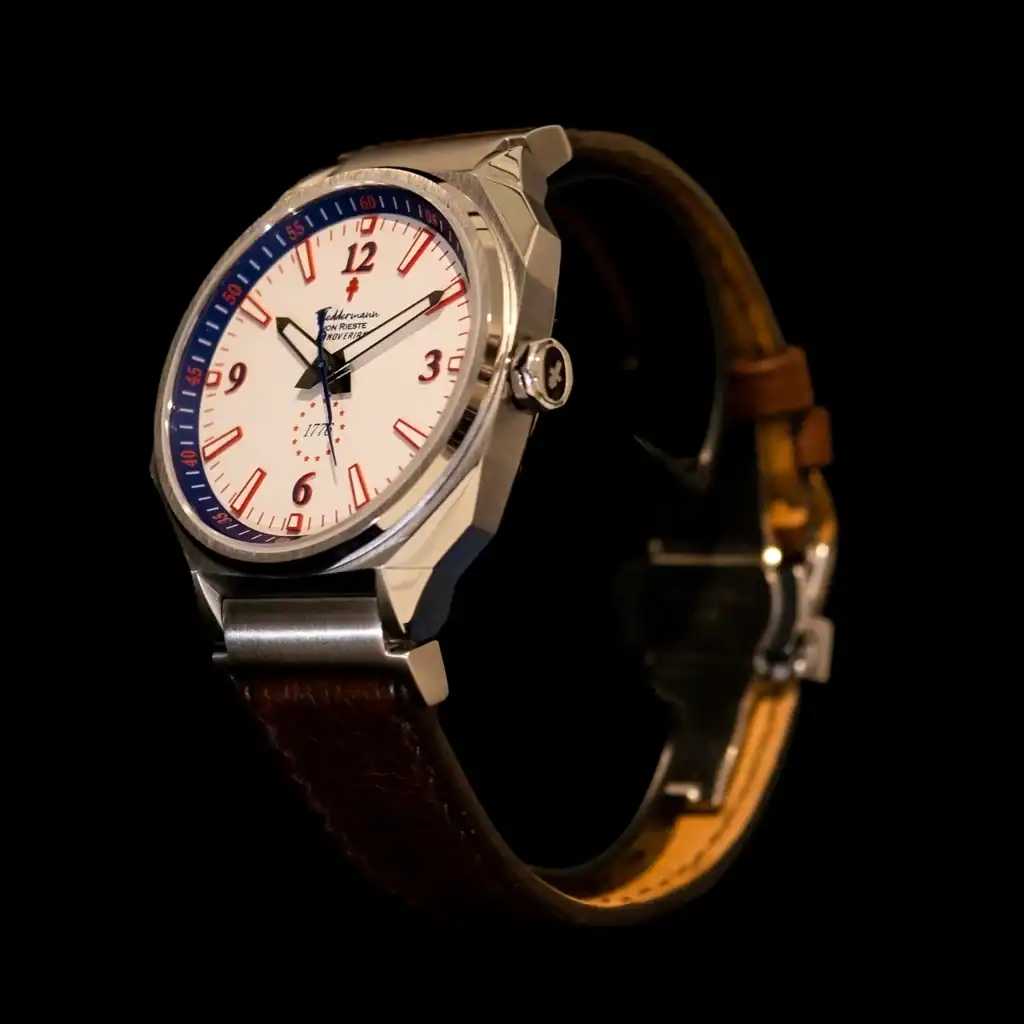
At 10 ATM (100 meters), which is where every Fleddermann von Rieste watch sits, swimming, showering, and everyday water exposure are all non-events. That’s the Hanoverian, the Zeitfahren, the Munchner, and the Einheit, every one of them rated to 10 ATM as a baseline, not an upgrade.
Above that, you’re getting into dedicated dive watch territory, 20 ATM and up, built for actual scuba work rather than a lake in the summer. We’re not making that claim, and I won’t pretend our watches belong in that category. Ten ATM is built for a real life, not a dive log.
The part almost nobody tells you: ratings expire
This is the honest caveat, and I’d rather you hear it from me than find out the hard way. Water resistance depends on gaskets, small rubber seals around the crown and caseback, and gaskets age. They dry out, they compress, they stop sealing the way they did when the watch was new.
If a watch hasn’t been serviced in five or ten years, treat its rating as expired regardless of what the caseback says. A ten-year-old watch rated to 10 ATM isn’t necessarily still a 10 ATM watch. That’s not a flaw specific to us, it’s true of every mechanical or automatic watch on the market, and it’s exactly why regular service matters more than the number stamped on the back.
Every Fleddermann von Rieste watch carries a two-year full warranty, with real service handled through Kokomo Watch Company, the same bench where Adam Parrish and his apprentices hand-regulate every movement we sell. Full terms live at vonrieste.com/warranty.
Why we build to 10 ATM as standard, not as an upsell
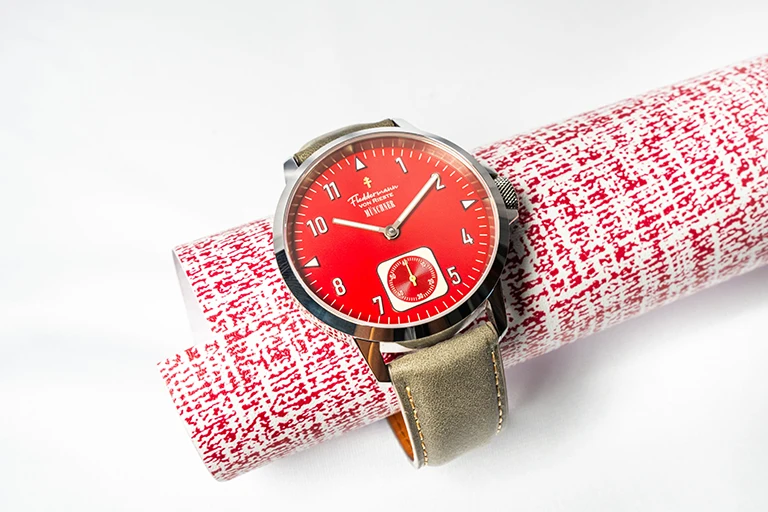
Some brands treat water resistance as a spec you pay more for. We don’t. Every watch we assemble, hand-assembled and regulated here in Indiana, uses the same 316L stainless steel case and sapphire crystal, rated to 10 ATM across the board. It’s part of building an American assembled watch meant to survive an actual life rather than a display case. A watch that can’t handle a swim or a rainstorm isn’t one you’ll wear daily, and a watch you don’t wear daily is never going to become one of the watches to pass down that this whole company is built around.
Frequently Asked Questions
What does 10 ATM water resistance actually mean?
It means the watch is rated to withstand pressure equivalent to 100 meters of depth under laboratory test conditions, which in practical terms covers swimming, showering, and everyday water exposure without concern. It is not a dive certification.
Can I shower with my watch?
At 10 ATM, yes, showering is fine. At lower ratings, 3 ATM or below, I’d avoid it. Heat and soap can also be harder on gaskets over time than plain water, so even at 10 ATM, it’s a fine habit, not a requirement.
How do I know if my watch’s water resistance is still good?
Age and service history are the best indicators. If it’s been more than five years since the gaskets were checked or replaced, have it serviced before trusting the original rating, regardless of what the caseback says.
Is 10 ATM enough for snorkeling or diving?
For light snorkeling near the surface, generally yes. For actual scuba diving, no. Dive watches are built and certified separately, typically starting at 20 ATM, and we don’t market our watches for that use.
Where to go from here
If durability that actually gets worn is what you’re after, the Hanoverian is our everyday automatic and the easiest place to start. I also wrote a longer piece on what makes a watch an heirloom, which touches on this same idea, that a watch built to survive daily life is worth more than one built to sit in a drawer.
Or just email me at adam@fvrwatch.com if you’ve got a specific watch and you’re not sure where it stands. I’ll tell you straight.

Dr. Adam Fleddermann, Founder & CEO
Dr. Adam Fleddermann founded Fleddermann von Rieste after growing up watching his father care for a watch passed down through generations of the family. He designs every watch and oversees the brand’s global supply chain, operations, and manufacturing, working alongside an AWCI-certified watchmaker and his team who lead the hand-assembly of every timepiece in Indiana.
