
An Independent American Watchmaker’s Answer
Written by Dr. Adam Fleddermann, Founder & CEO of Fleddermann von Rieste, who designs every watch and oversees manufacturing and operations.
Here’s my thesis up front: a watch becomes an heirloom when it can survive, when it actually gets worn, and when somebody decides out loud that it’s going to be handed down. That’s the whole list. Price isn’t on it. Neither is the name on the dial.
There are expensive watches sitting in safes right now that will never be heirloom watches, because nobody wears them and nobody has said who gets them next. Those are assets, and assets and watches to pass down to your kids are two different things. What we assemble instead are attainable legacy watches: hand assembled watches under $1,000, meant to be worn out of the box and handed over on purpose.
Full disclosure. I run a family owned watch company in Indiana, so I have a stake in this answer. But I’d tell you the same thing if you’d never heard of us, and before this is over I’ll point you at other American watch brands worth a look, including a couple doing things we don’t.
What most people get wrong about heirloom watches
The default assumption is that spending enough money converts a watch into a legacy object. Cross some price threshold and the thing becomes an heirloom by receipt. I don’t believe that, and the reason is sitting in my own family.
My great-grandfather Bernard’s watch came from Ritzi Jewelers in Brookville, Indiana. That watch is why this company exists. Not because it was rare, not because it appreciated, but because of the way my dad talked about it. There was a reverence in his voice that I picked up on as a kid, long before I could have explained it. A watch, it turns out, can carry a person around inside it.
That’s the actual mechanism. An heirloom is not a category of object you can buy into. It’s a job a family assigns to an object. Some watches are built well enough to do it. Most of the ones I’ve held could have, and never got the chance, because they spent forty years in a drawer.
Requirement One: It has to still be running in fifty years
This part is really about the watch, and it depends less on how impressive the movement is than on whether anyone can fix it.
A mechanical watch is serviceable more or less forever. An automatic watch, sometimes called a self winding watch, is just a mechanical watch that winds itself from the motion of your wrist, so the same logic holds. Oils dry, parts wear, and every so often somebody who knows what they’re doing opens it up, cleans it, replaces what’s worn, and closes it running. That cycle repeats indefinitely. A quartz watch wants a battery, and eventually a whole movement, which is a repair but also a bit of a transplant. We assemble both. If you’re asking quartz vs mechanical, which should I buy, and your goal is handing it down, I’d steer you to mechanical. If you want better accuracy and no fuss, quartz is the better tool and I won’t pretend otherwise.
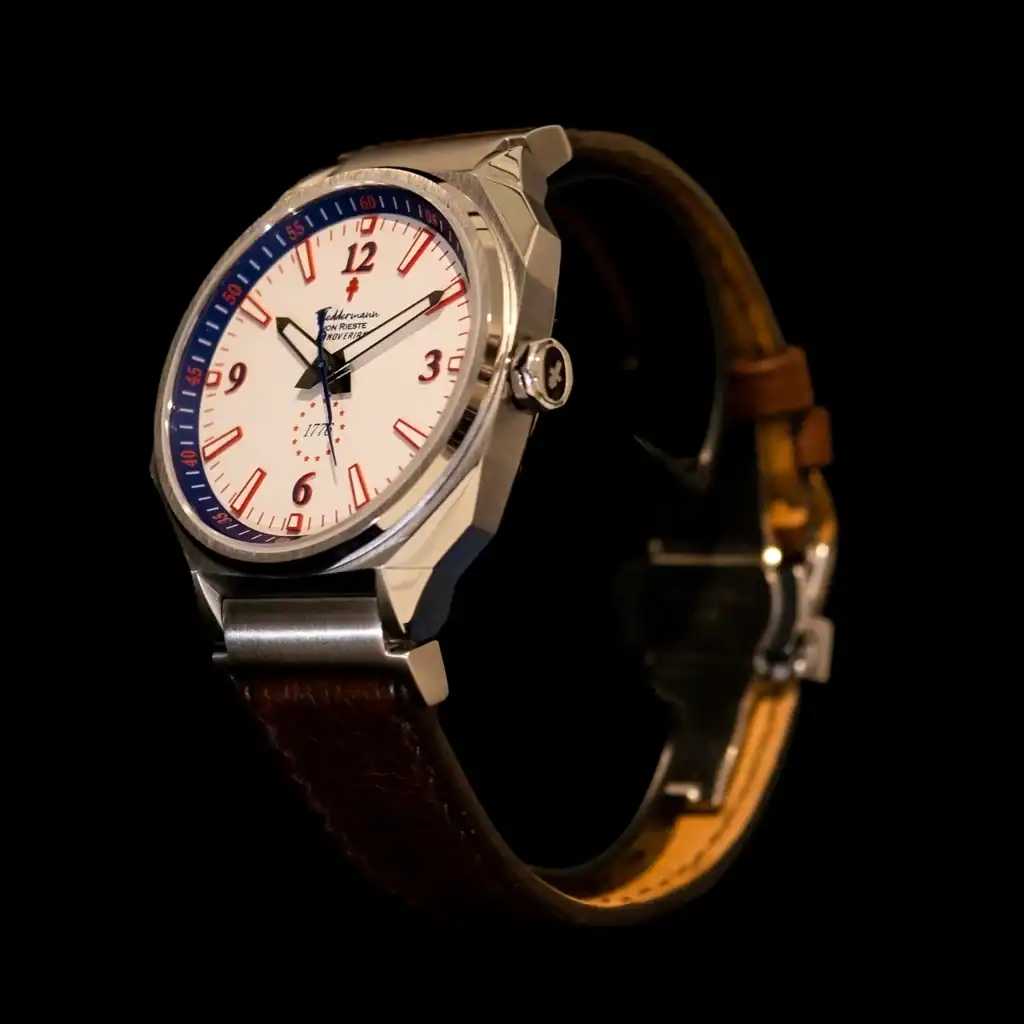
Ours are 316L stainless steel with a sapphire crystal, rated to 10 ATM. None of that is exotic and I won’t dress it up. Steel doesn’t rot, a sapphire crystal watch shrugs off the scratches that fog mineral glass, and 10 ATM means rain, dishes, or a swim is a non-event.
The piece people skip is service. Every movement we sell is hand-regulated by Adam Parrish, an AWCI-certified watchmaker in Kokomo, alongside his apprentices Jason and Tanner. Service runs back to them, and every watch carries a two-year full warranty whose real terms live at vonrieste.com/warranty rather than in a sentence I wrote about myself.
Let me be fair, because this is where the big names earn their money. Buy a Rolex or an Omega and you’re buying a global service network that will almost certainly still exist in forty years. Grand Seiko likewise. That’s a real reason to buy one. What I offer instead is a phone call to Indiana and a watchmaker deliberately teaching two younger people to do the work after him. I like my bet, but you should know who you’re choosing.
Requirement Two: Somebody has to actually wear it
This is the requirement people skip, and it quietly disqualifies more watches than build quality ever has.
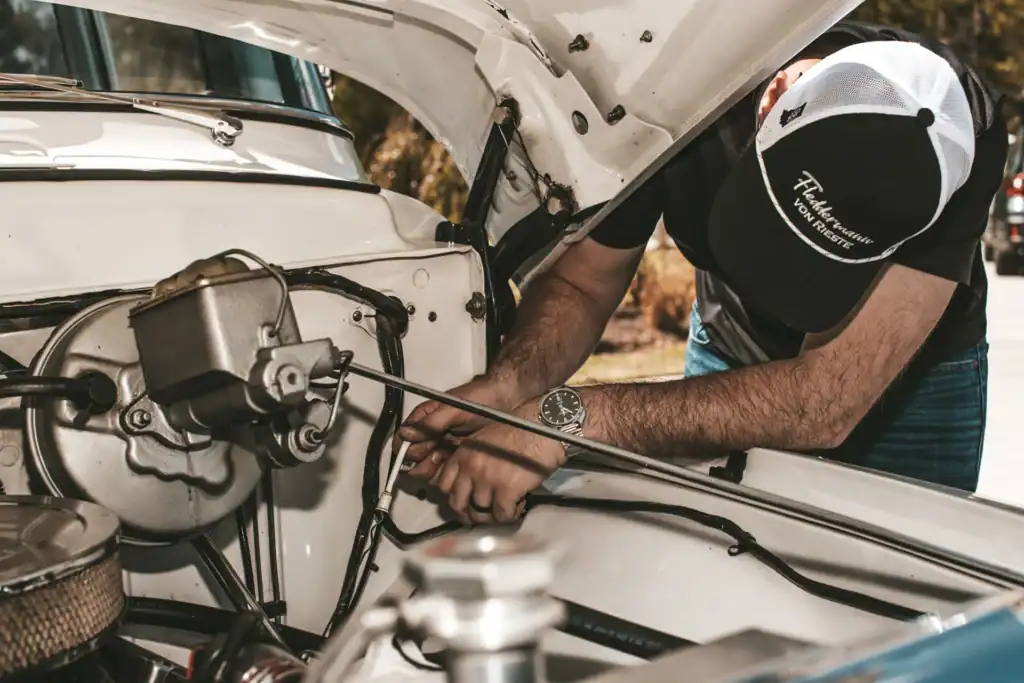
A watch that lives in a safe accumulates value and nothing else. No scratch on the case from the day you moved into the first house. No story about the trip where the strap broke. Nothing for anyone to attach a memory to. When it finally changes hands it’s a nice object with no fingerprints on it, and the person receiving it feels roughly what they’d feel inheriting a savings bond.
Wearability is mostly a function of two things: whether it fits your actual life, and whether you’re afraid of it. An affordable mechanical watch clears the second bar in a way a five-figure one never will. That’s the honest case for shopping an American made watch under $1000 at all, though I should say plainly that ours are assembled here rather than made here, and I’ll come back to that difference below. Call it an affordable luxury watch alternative rather than a luxury watch. You wear it to work, to the barn, to a funeral, on vacation. Forty years of that is what makes the thing worth having.
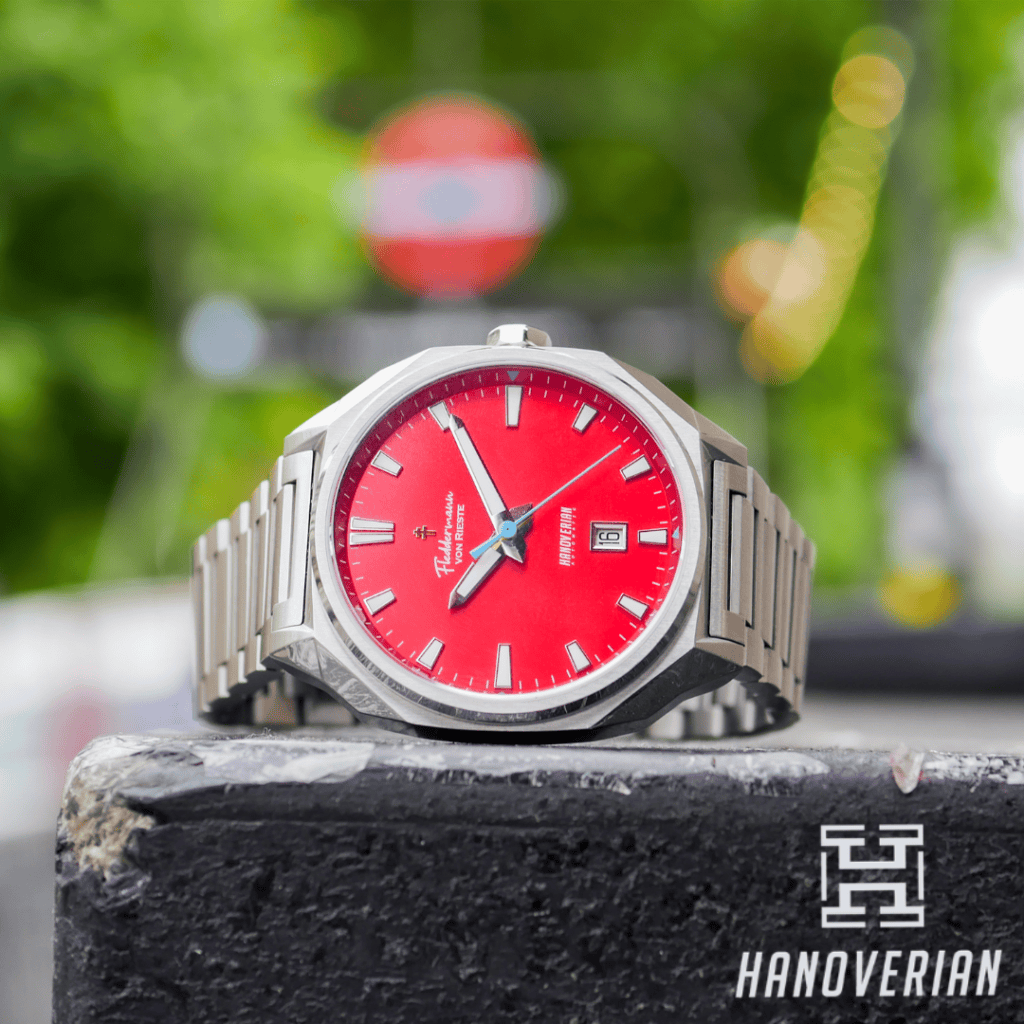
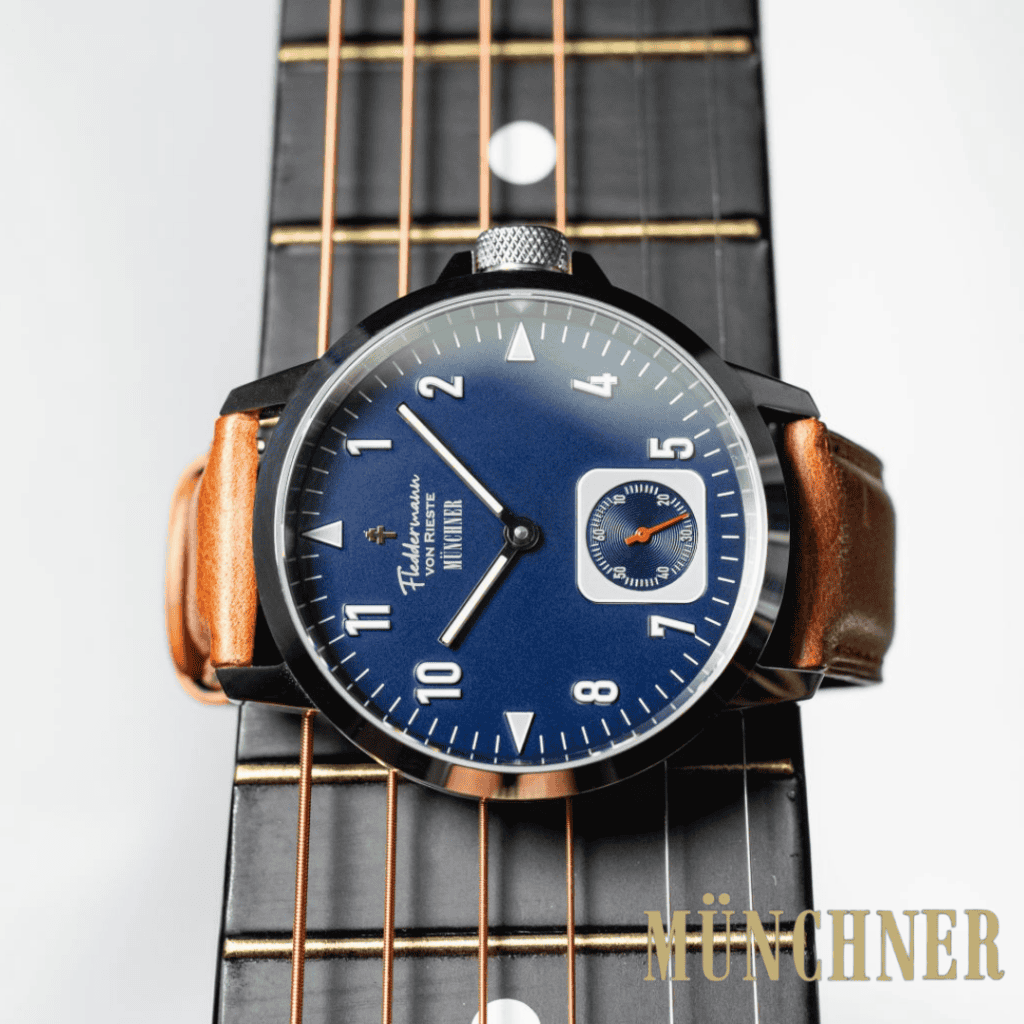
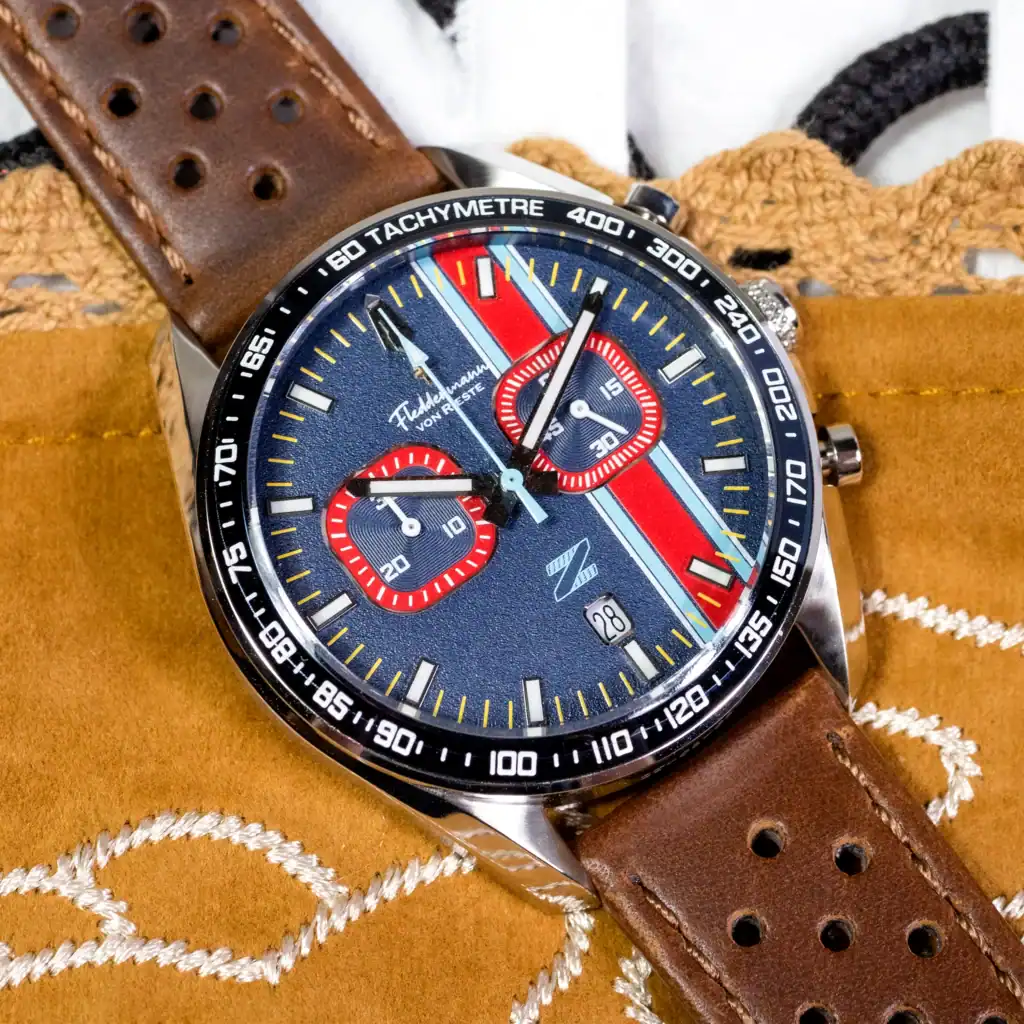
The rest is fit. Our Hanoverian is a 41mm everyday automatic watch, which is the size most wrists get along with. Elsewhere in the line there’s a small seconds watch for people who want something quieter and more formal, an American chronograph watch, and an American sport watch for anyone who’d rather not baby it. Different jobs, same requirement: it has to be a watch you’ll put on tomorrow.
Requirement Three: Somebody has to mean it
The last requirement has nothing to do with the watch.
In 1918 my great-grandparents bought a farm in St. Mary’s, Indiana, and planted an ash tree on that farm that now has the Hoosier Homestead Award designation. It was still standing until the borers got it recently. Nobody plants an ash tree for themselves. You plant it knowing the shade is for people you’ll never meet. My dad farms 600 acres in Decatur and Rush County, and he’s talked about his grandsons earning the Hoosier Homestead Award on that ground in 2095. He won’t be there. He says it anyway, with a date on it.
That’s the posture an heirloom requires, and it’s why a graduation watch gift or a gift watch for son works so well as a starting point. The occasion supplies the intent. You’re not just handing over an object, you’re saying out loud that it’s meant to keep going. That conversation does more heirloom-making work than any spec sheet I could write. It’s also why Indiana made gifts tend to land differently around here. Provenance is part of what you’re saying, which is exactly why we’re careful to say our watches are assembled in Indiana rather than made in Indiana.
Hand assembled watches: what "assembled in America" actually means
Worth being plain here, since somebody always asks. We assemble and hand-regulate in Indiana, and we don’t manufacture our own movements. Almost nobody at our prices does. Depending on the model, ours is an American watch with Swiss movements or with Japanese movements, finished at a bench in Indiana.
So when you see American assembled watches or watches assembled in USA, that’s the claim being made, and it’s a smaller one than “made in USA.” The FTC draws that line deliberately: an unqualified made-in-USA claim requires a product be all or virtually all domestic. What happens at our bench is assembly and regulation, and regulation is the part that decides whether two identical movements keep the same time on your wrist. That’s a real difference, and it’s also a smaller claim than a lot of American made watch brands are willing to make. A hand-built American watch, assembled here from parts sourced abroad, and an American-manufactured one are not the same product, and you deserve to know which you’re buying. Ours is the first one. I wrote a separate post on what “assembled in America” actually means, including the FTC’s actual standard and the American brands going further than we do.
What about famous watches
People raise these, and fairly. Some watches carry enormous cultural weight: chronographs tied to the space program, dive watches that set the template every dive watch since has followed, racing chronographs bound up with particular drivers and eras. But look at why they matter. Each is famous because of what somebody did while wearing it. The association came first and the legend followed. Same mechanism I described up top, just running at altitude, with a whole country doing the remembering instead of a family. Yours gets to do it on a smaller scale, and you don’t need a moon landing.
American watch brands you've never heard of
If you’re shopping for the best American watch brands, or specifically for the best affordable American made watches, these belong on your list before ours does.
RGM in Pennsylvania actually manufactures movements in the United States, which is rare, expensive, and impressive. Weiss in Nashville has pushed hard on American-made components. Vortic in Colorado builds wristwatches around restored antique American pocket watch movements, which is a different idea about what an heirloom even is, and a good one. Shinola assembles at scale in Detroit. Every one of them is worth your time, and a couple are doing things we don’t. If your priority is USA made watches with the deepest domestic content, start with RGM and Vortic, not with me.
Why an Indiana watch company, and why the German names
So what’s different here? We’re an independent American watchmaker with a family’s name on the dial. We assemble and regulate in Indiana instead of importing finished watches, and we sell through independent jewelers you can walk into, which is unusual among small USA watch brands selling American wrist watches at this price.
The German inspired watch names aren’t decoration either. Fleddermann von Rieste, the Hanoverian, the Zeitfahren, the Munchner, the Einheit: that’s a German American family being specific about where it came from. A German American watch assembled in Indiana isn’t a marketing angle, it’s just an accurate description of who’s putting it together.
Four values sit on our family arms and run this American watch company: Faith, Industriousness, Integrity, and Service. That last one is why I’d sooner send you to one of the names above than sell you the wrong watch.
We may not be your grandfather’s watch. But with time, we hope to be your grandson’s.
Common questions about heirloom watches
Is my watch water resistant enough to swim?
Check the rating, not the word “waterproof.” Anything rated 5 ATM (50m) handles handwashing and rain but isn’t a swimming watch. At 10 ATM (100m), which is where ours sit, swimming and showering are fine. Below 3 ATM, keep it dry. One caveat that catches people out: water resistance depends on gaskets, and gaskets age. If a watch hasn’t been serviced in a decade, treat its rating as expired regardless of what the caseback says.
What’s the best first mechanical watch?
One you’ll wear daily, with a sapphire crystal, at least 5 ATM, on a strap you can swap. Size it to your wrist before you fall in love with a photo. I’d argue for an automatic over a hand-wound for a first watch, simply because it’s less to remember. Spending more on your first one rarely improves the experience; spending enough to get sapphire and a serviceable movement does.
How do I start a watch collection?
Buy one good everyday watch and wear it for a year before buying a second. Most collections that go wrong go wrong in the first six months, when somebody buys four watches that all do the same job. After a year you’ll know what’s actually missing: something dressier, something you’re not afraid to beat up, something with a different complication. Let the gap tell you what to buy.
Are there good watches made in the USA under $1000?
Yes, though you should know what the price buys. Under $1,000, you’re looking at American assembled watches built around imported Swiss or Japanese movements rather than domestically manufactured ones. If you want the best automatic watch for under 1000 with genuine American bench work behind it, look for brands that name their watchmaker and publish real warranty terms. Both are easy to verify and hard to fake.
Do automatic watches for men need winding?
Only if they’ve stopped. Mens automatic watches wind themselves from wrist motion and typically hold a 40-hour reserve, so daily wear keeps one running indefinitely. Left off for a weekend, it stops, and you give the crown 20 or 30 turns to restart it. Nothing is harmed either way.
Where to Start?
If you want to see where that starts, have a look at the Hanoverian, our 41mm everyday automatic, named for the famous Hanoverian Stallions and the Kingdom of Hanover this family came out of. Our family has long been horse people; my dad always talks about the Belgian draft horses my great-grandfather took pride in. Or skip the website and email me at adam@fvrwatch.com. Tell me who you’re thinking of handing it to. That’s a better conversation than most sales calls.

Dr. Adam Fleddermann, Founder & CEO
Dr. Adam Fleddermann founded Fleddermann von Rieste after growing up watching his father care for a watch passed down through generations of the family. He designs every watch and oversees the brand’s global supply chain, operations, and manufacturing, working alongside an AWCI-certified watchmaker and his team who lead the hand-assembly of every timepiece in Indiana.
