
Breaking down the most popular watch complication, from racetrack origins to everyday wear
October 1, 2026
Written by Dr. Adam Fleddermann, Founder & CEO of Fleddermann von Rieste, who designs every watch and oversees manufacturing and operations.
Here’s a confession from a guy who makes watches: plenty of chronographs spend their whole lives with the stopwatch never started. So if you’ve been wondering what is a chronograph watch, and whether you’d ever use one, you’re asking exactly the right question. Let’s walk through what a chronograph does, how it works, the honest case for and against owning one, and where our own American chronograph watch, the Zeitfahren, fits in.
What Is a Chronograph Watch?
A chronograph is a watch with a stopwatch built in. That’s really it. It tells the time like any other watch, and it can also measure elapsed time on its own without disturbing the time of day.
The name comes from Greek: chronos for time and graph for writing. Some of the earliest versions, built in the early 1800s, actually dropped a tiny dot of ink on the dial to mark how long something took. We’ve come a long way since then, but the idea hasn’t changed.
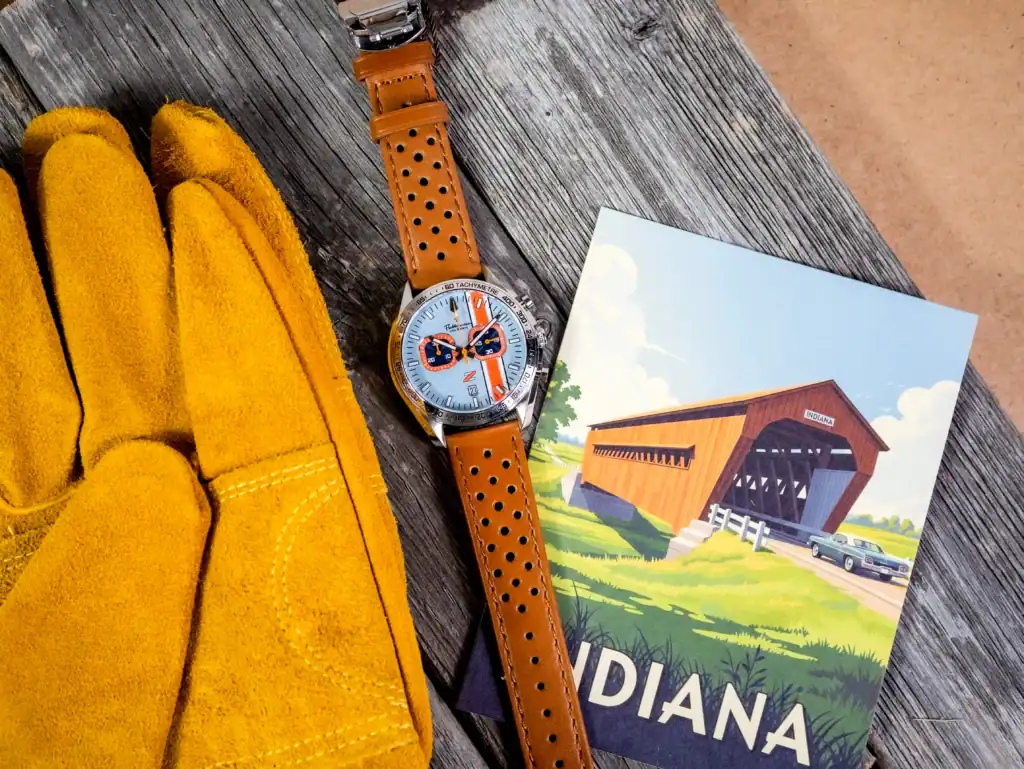
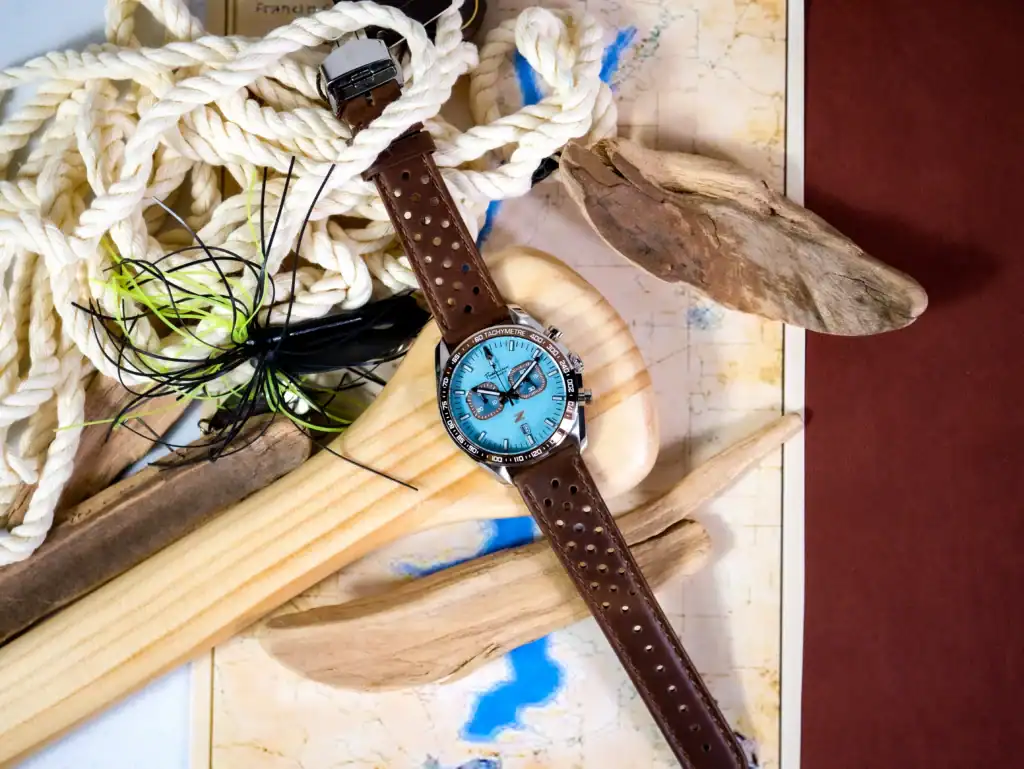
You can usually spot a chronograph by its pushers, the two buttons sitting on either side of the crown. The top one starts and stops the timer. The bottom one resets it. The big center seconds hand does the sweeping, and the small subdials keep track of elapsed minutes, and sometimes hours.
How a Chronograph Works
There are two main ways to build one.
A mechanical chronograph runs on springs and gears, either wound by hand or by the motion of your wrist in an automatic watch. When you press the start pusher, a clutch connects the chronograph mechanism to the running movement. It’s one of the most complicated things a watchmaker works on, with a lot more parts than a simple three-hand automatic. That complexity is beautiful, and it’s also why mechanical chronographs cost more to buy and more to service.
A quartz chronograph runs on a battery and a quartz crystal, with small motors driving the hands. It’s more accurate day to day, lighter on maintenance, and far more affordable. You give up the sweep and the romance of a mechanical movement, but you gain a watch you can grab and go with.
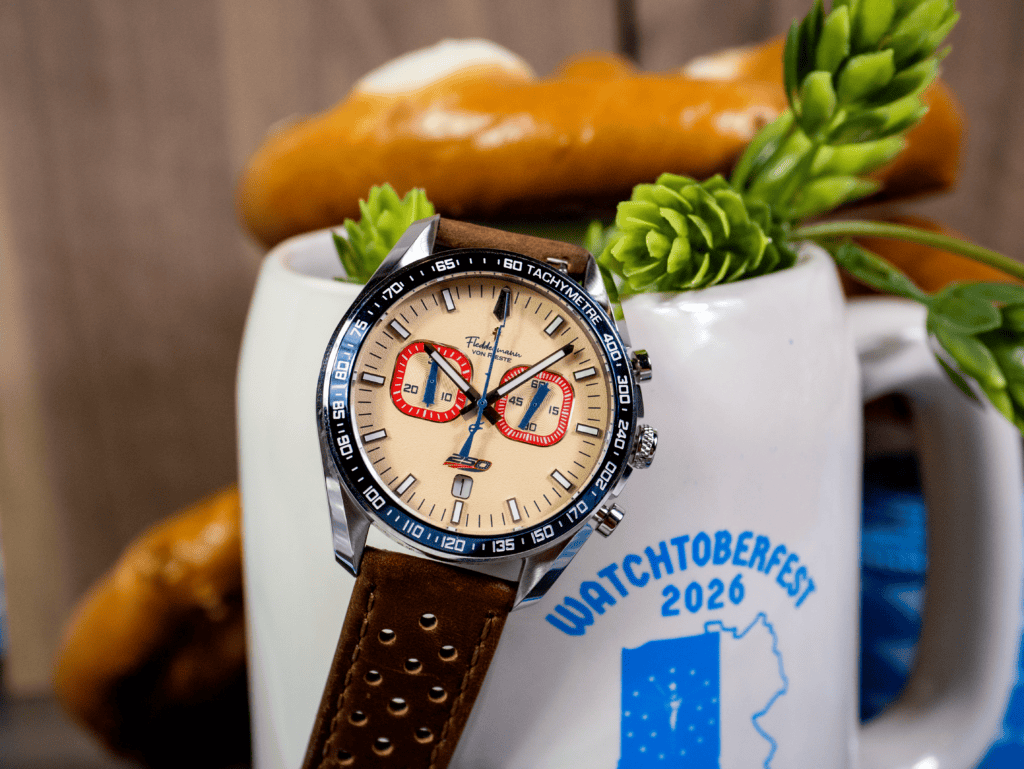
Many chronographs also carry a tachymeter, the scale printed around the bezel or dial edge. Start the chronograph as you pass one mile marker, stop it at the next, and the number the seconds hand points to is your speed in miles per hour. It works with kilometers too. It’s a racing tool at heart, and honestly, it’s fun to use on the interstate from the passenger seat.
Which one should you actually buy
Neither is objectively better. It depends on what you want out of wearing the watch.
If you want a watch you barely think about, one that just works day to day without a daily ritual attached to it, automatic is the easier choice. That’s exactly why the Hanoverian, our everyday automatic sport watch, tends to be where most first-time buyers start.
If you like the idea of a small daily habit, winding the watch each morning as part of getting ready, or you want the slimmest possible case for a dress watch, hand-wound is worth considering. The Münchner, our small seconds watch, is hand-wound, and that choice was deliberate, tied to its more traditional design and its slimmer dress-watch proportions.
What People Actually Use a Chronograph For
Chronographs grew up around motorsports and aviation, and the famous ones carry that history. The Rolex Daytona takes its name from the racing at Daytona Beach. The Omega Speedmaster became known as the Moonwatch after flying with NASA astronauts. Here in Indiana, we don’t need anybody to explain why timing laps matters. We’ve got the Indianapolis 500 in our backyard.
But most of us aren’t pit crew chiefs. In real life, a chronograph might be more likely used for:
- Timing steaks on the grill or pasta on the stove
- Keeping an eye on the parking meter
- Clocking your kid’s 40-yard dash or a lap around the track
- Timing laps, for real, at a track day or a karting outing
- Settling the family argument about how long it actually takes to get to Grandma’s
None of that requires a chronograph. Your phone can do all of it. But there’s something satisfying about pressing a real button and watching a hand start moving, without unlocking a screen full of notifications first.
Do You Actually Need a Chronograph Watch?
Honest answer: nobody needs one. Nobody needs a watch at all anymore, if we’re being strict about it. So the better question is whether a chronograph is the right watch for you.
A chronograph makes sense if:
- You love motorsports or anything with a start line and a finish line
- You like a sporty watch that still dresses up with a sport coat
- You’ll actually enjoy pressing the pushers, even if it’s just for the grill
- You want an everyday watch with a little more going on than three hands
You might skip it if:
- You want a thin, clean dress watch that slides under a shirt cuff
- A busy dial with subdials and a tachymeter just isn’t your style
- You want the simplest possible automatic watch to live with every day
If that second list sounds like you, no hard feelings. Our Munchner small seconds watch and the Einheit dress watch are built for exactly that person, and the Hanoverian is our everyday automatic sport watch.
Quartz vs Mechanical: Which Chronograph Should You Buy?
This is where a lot of folks get stuck, so let’s be fair about it.
If you want a mechanical chronograph, there are good options across the price range. Swiss brands like Hamilton and Tissot make automatic chronographs that are widely respected, and at the top end, watches like the Speedmaster are legends for a reason. You’ll pay more for mechanical, and you should plan on periodic service, because all those parts need cleaning and oil over the years.
If you want a quartz chronograph, Seiko and Citizen make solid, honest ones, often for less than we charge. We’d be fibbing if we said otherwise.
So where do we land? The Zeitfahren is a quartz chronograph, and we’ll say that plainly. It uses a Swiss Ronda 5021D quartz movement, which means reliable timekeeping, a dependable chronograph function, and nothing to wind or fuss with. What you’re paying for beyond the movement is everything around it, and the people who put it together.
The Zeitfahren: Our American Chronograph Watch
“Zeitfahren” is German for “time trial,” and the watch is built with that racing spirit in mind. Here’s what’s true about it:
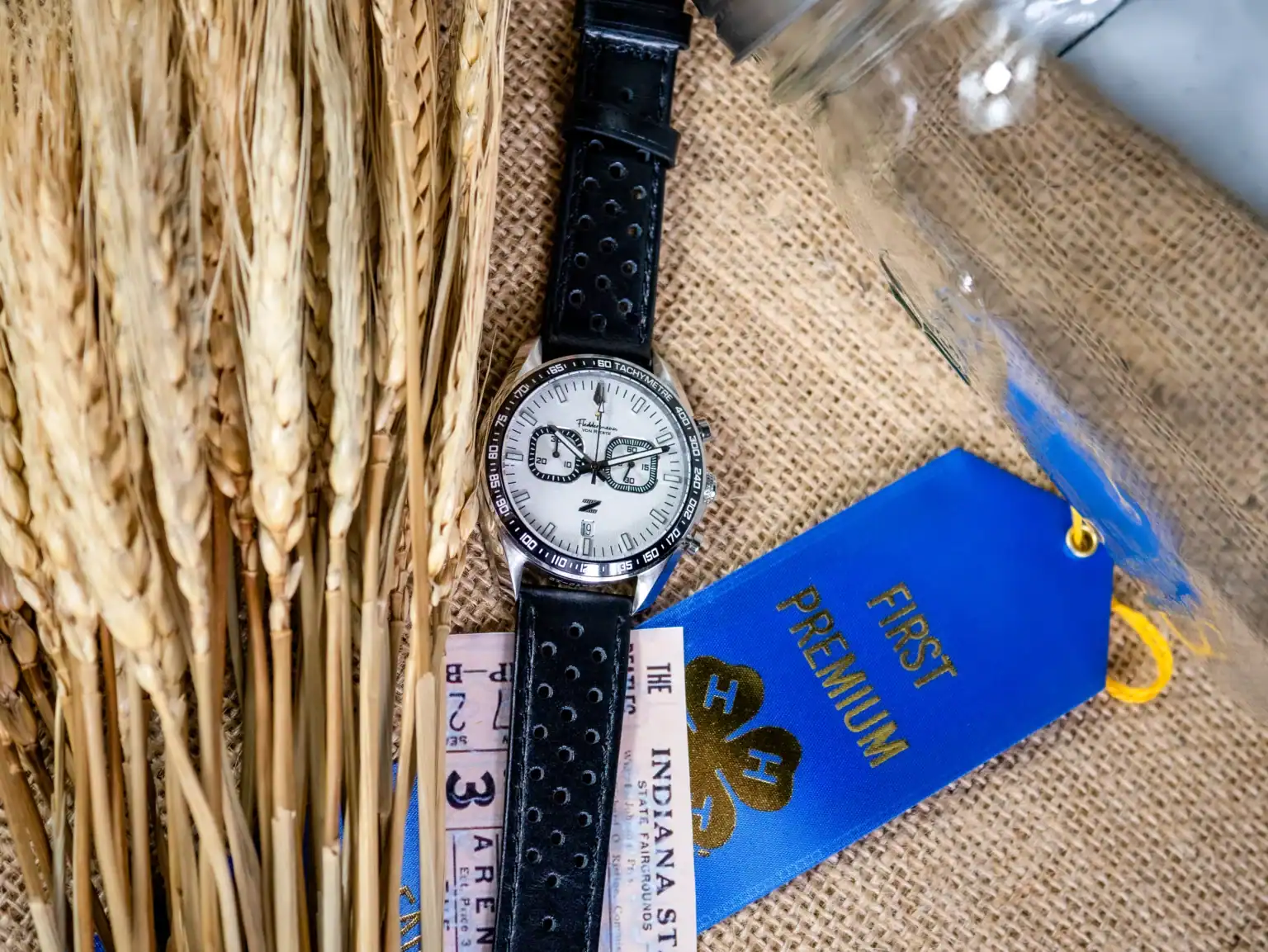
- 40mm polished 316 stainless steel case
- Swiss Ronda 5021D quartz chronograph movement
- Tachymeter bezel and a date window at six
- Scratch-resistant sapphire crystal
- Asphalt-textured dial with Swiss Super-LumiNova
- Leather rally strap
- 10 ATM water resistance
- Dial colors inspired by classic racing liveries, including Trackside White, Frosted Beryl, Endurance Blue, Apex Blue, Rally Blue, and Overdrive Orange, plus 250th Anniversary editions in white and cream
Every Zeitfahren is hand assembled in Kokomo, Indiana, by Adam Parrish, an AWCI-certified watchmaker, and his apprentices at Kokomo Watch Company. That same shop handles service, and every watch carries a two-year full warranty. So it’s an American watch with a Swiss movement, assembled a couple of hours up the road from where my family has farmed for over a century, not on the other side of the world.
We’re a family owned watch company and an independent American watchmaker. We may not be your grandfather’s watch, but with time, we hope to be your grandson’s.
What Makes a Chronograph an Heirloom?
My great-grandfather Bernard had a watch from Ritzi Jewelers in Brookville, and it’s a big part of why this company exists. It wasn’t precious because of what it cost. It mattered because of who wore it and how long it stayed in the family.
That’s the way we think about heirloom watches. A watch becomes worth passing down when it’s built well, when it can be serviced for decades, and when someone wears it long enough to leave a few stories on it. A chronograph is a great candidate, because it gets used. Every steak timed and every lap clocked is part of the story you hand down, which also makes it a pretty good gift watch for a son or a graduation watch gift.
The Bottom Line
A chronograph is a watch with a stopwatch, and whether you need one comes down to whether you’ll enjoy it. If you like racing, like a sporty look, and like pressing a real button, it’s hard to beat.
If you’d like to see one in person, you can find an authorized dealer near you, or take a closer look at the Zeitfahren. And if you’ve got questions about which watch fits you, just email me. I read every one.

Dr. Adam Fleddermann, Founder & CEO
Dr. Adam Fleddermann founded Fleddermann von Rieste after growing up watching his father care for a watch passed down through generations of the family. He designs every watch and oversees the brand’s global supply chain, operations, and manufacturing, working alongside an AWCI-certified watchmaker and his team who lead the hand-assembly of every timepiece in Indiana.
