
Automatic vs. Hand-Wound: A Simple Guide to Mechanical Watches
September 29, 2026
Written by Dr. Adam Fleddermann, Founder & CEO of Fleddermann von Rieste, who designs every watch and oversees manufacturing and operations.
This is one of the first questions people run into when they start looking at mechanical watches, and it trips up a lot of new buyers because the terminology sounds more complicated than the actual idea. Let me break it down plainly.

The one thing to understand first
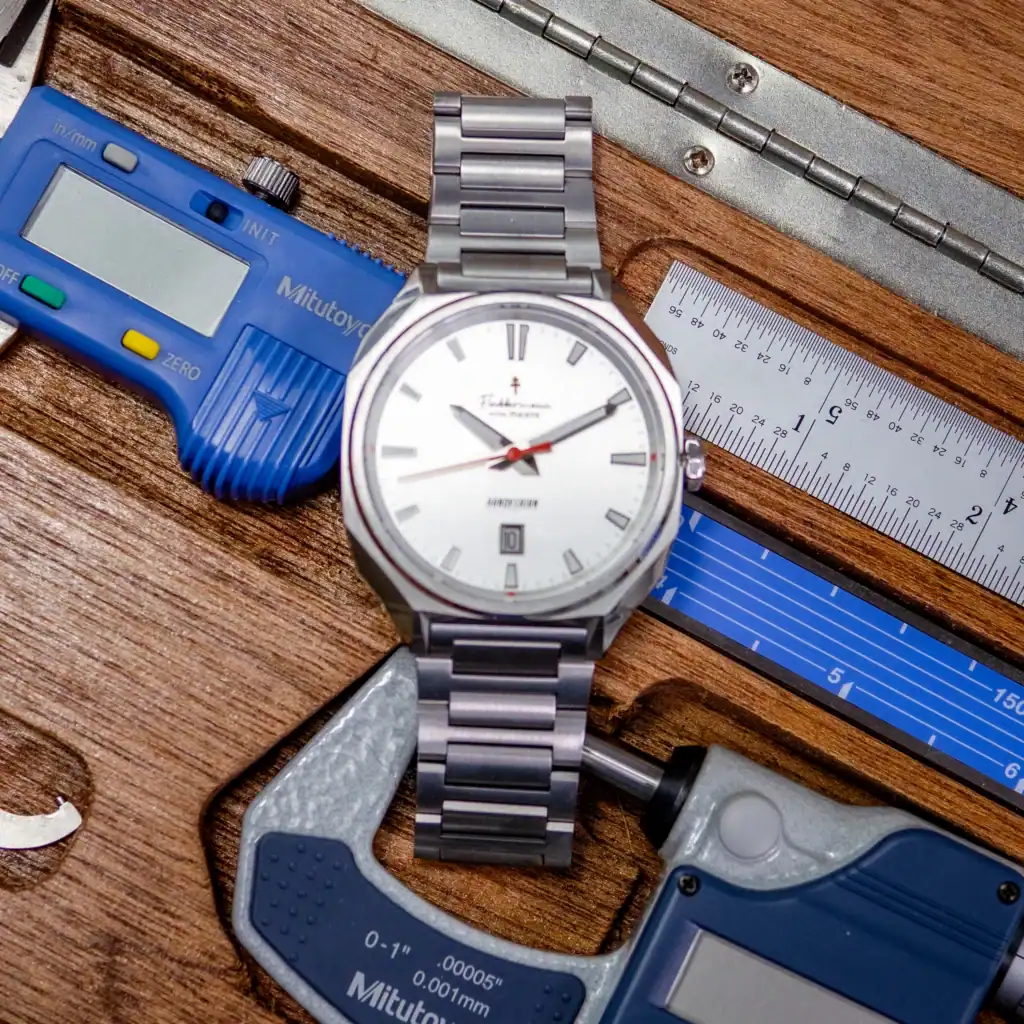
Both automatic and hand-wound watches are mechanical. Neither uses a battery. Both run on a mainspring, a coiled piece of metal that stores energy and releases it slowly to power the movement. The only real difference between them is how that mainspring gets wound in the first place.
Hand-wound, the original method
A hand-wound watch, sometimes called manual wind, is wound by turning the crown yourself, typically once a day or every couple of days depending on the movement’s power reserve. This is the older, more traditional way mechanical watches have worked since long before automatic movements existed. There’s a ritual to it that some people genuinely enjoy, a small daily habit that keeps you connected to the watch rather than just wearing it passively.
Hand-wound watches also tend to run slightly thinner than automatic ones, since there’s no rotor mechanism taking up space inside the case. That’s part of why hand-wound movements are common in dress watches and other pieces where a slim profile matters.
Automatic, the self-winding version
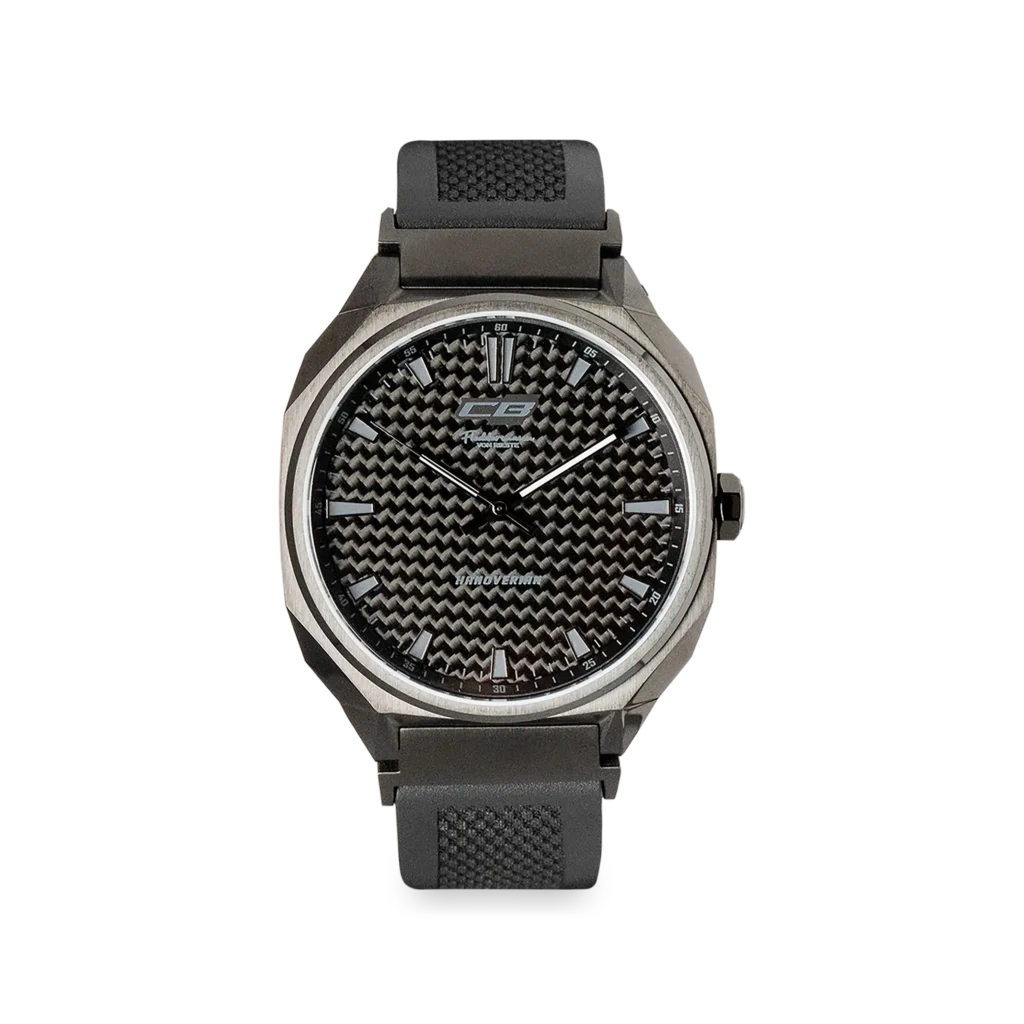
An automatic watch, also called self-winding, adds a weighted rotor inside the movement that spins as your wrist moves throughout the day, and that motion winds the mainspring for you. Wear it regularly and you never have to think about winding it manually at all. Set it down for a few days and it’ll wind down and stop, same as any mechanical watch would, but a quick shake or a day back on your wrist usually gets it running again.
Automatic movements are slightly thicker than hand-wound ones because of the rotor, but for most people, the convenience of never manually winding outweighs that difference.
Which one should you actually buy
Neither is objectively better. It depends on what you want out of wearing the watch.
If you want a watch you barely think about, one that just works day to day without a daily ritual attached to it, automatic is the easier choice. That’s exactly why the Hanoverian, our everyday automatic sport watch, tends to be where most first-time buyers start.
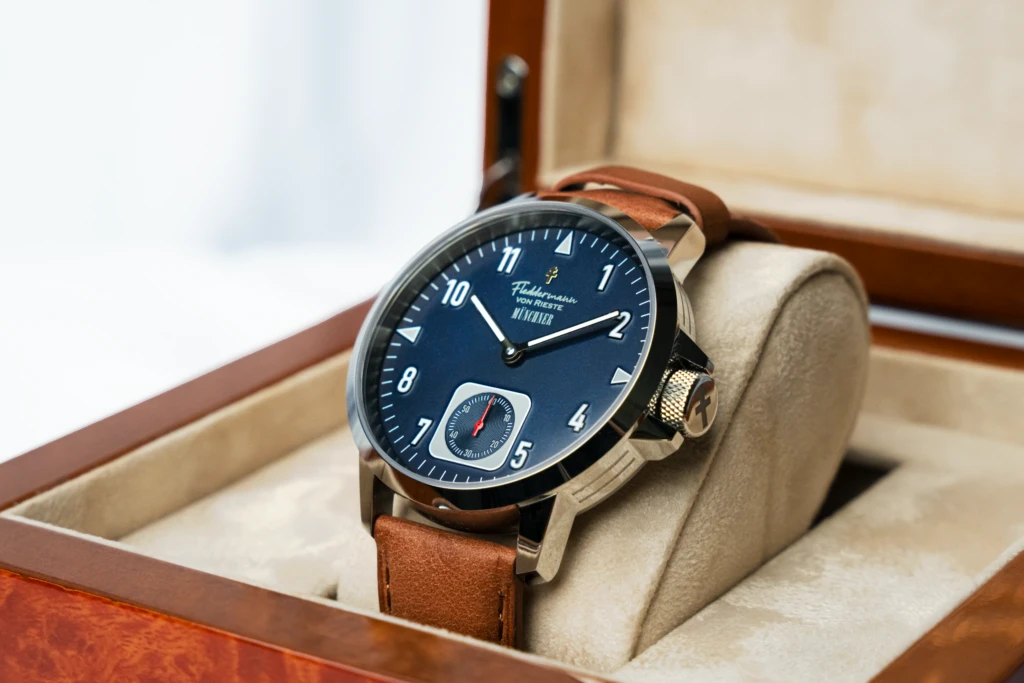
If you like the idea of a small daily habit, winding the watch each morning as part of getting ready, or you want the slimmest possible case for a dress watch, hand-wound is worth considering. The Münchner, our small seconds watch, is hand-wound, and that choice was deliberate, tied to its more traditional design and its slimmer dress-watch proportions.
A quick way to remember it
Hand-wound means you power it. Automatic means your wrist powers it for you. Both are genuinely mechanical, both are serviceable for decades with proper care, and neither uses a battery. The difference is really about daily ritual versus daily convenience, not about which one is the more serious watch.
Frequently Asked Questions
Is an automatic watch the same as a self-winding watch?
Yes, those terms describe the exact same thing. Automatic and self-winding are used interchangeably to describe a mechanical watch that winds itself through the natural motion of your wrist.
Do hand-wound watches need to be wound every day?
Most need winding every one to three days, depending on the movement’s power reserve. Check your specific watch’s power reserve to know how often it actually needs attention.
Can you wind an automatic watch by hand if you want to?
Many automatic movements allow manual winding through the crown as well, though not all do. Check your specific watch’s instructions, since forcing a crown that isn’t designed for manual winding can cause damage.
Which is easier to maintain, automatic or hand-wound?
Both require similar long-term service, typically every several years, regardless of how they’re wound day to day. The winding method doesn’t significantly affect long-term maintenance needs.
Where to go from here
If you want the everyday, automatic experience, the Hanoverian is our answer to that. If the hand-wound ritual and a slimmer dress profile sound more like you, the Münchner is where I’d point you instead. And if you want the fuller picture before deciding, I wrote a longer plain-English guide to your first mechanical watch that goes further into what to look for.
Or just email me at adam@fvrwatch.com and tell me how you actually plan to wear it. That usually answers the question faster than any guide can.

Dr. Adam Fleddermann, Founder & CEO
Dr. Adam Fleddermann founded Fleddermann von Rieste after growing up watching his father care for a watch passed down through generations of the family. He designs every watch and oversees the brand’s global supply chain, operations, and manufacturing, working alongside an AWCI-certified watchmaker and his team who lead the hand-assembly of every timepiece in Indiana.
