
How to Start a Watch Collection Without Going Broke
Sept 8, 2026
Written by Dr. Adam Fleddermann, Founder & CEO of Fleddermann von Rieste, who designs every watch and oversees manufacturing and operations.
I talk to a lot of people who want to start collecting watches and stop themselves before they begin, because they’ve convinced themselves it’s a rich person’s hobby. It isn’t, and I’d know, since I run a family owned watch company built on the exact opposite idea. You don’t need six figures or a safe deposit box. You need a plan, a little patience, and a clear sense of what you’re actually trying to build

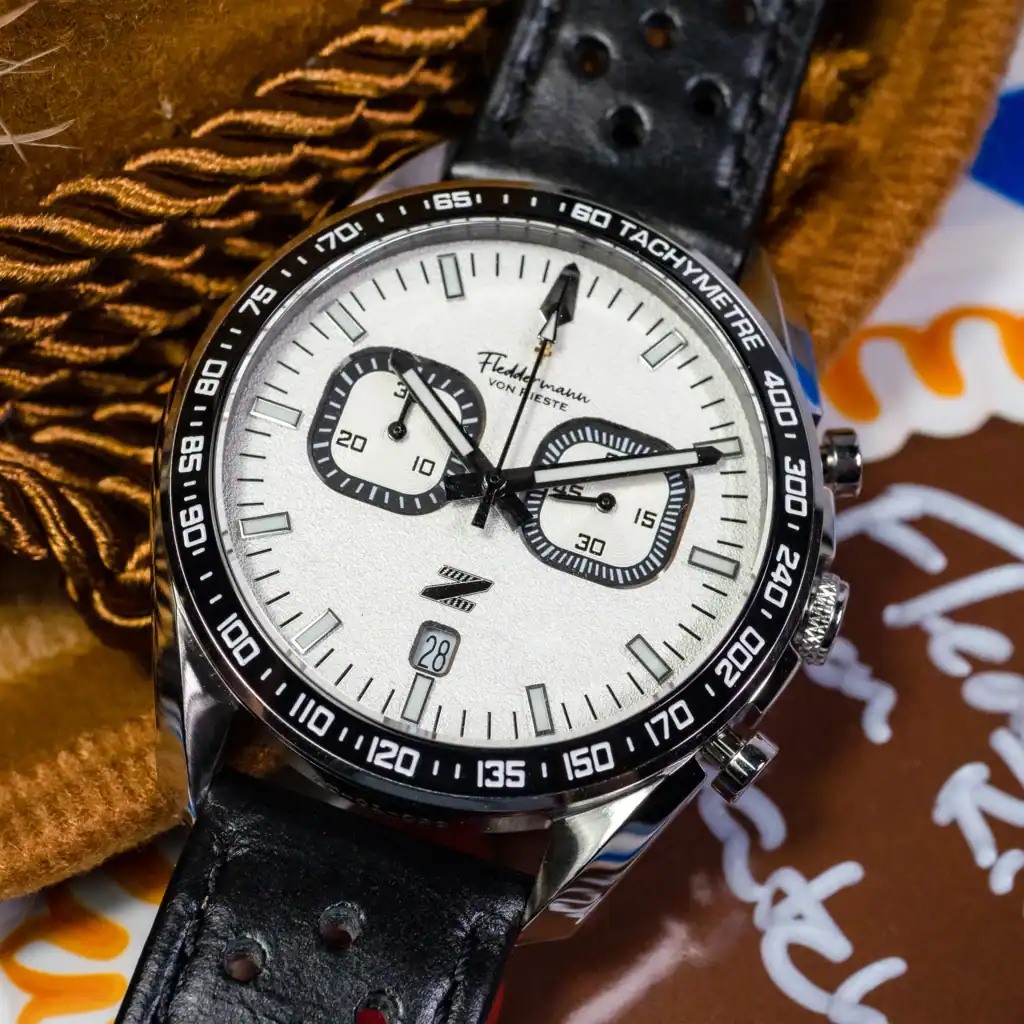
Start with one watch you’ll actually wear
The single biggest mistake I see is someone buying three watches in their first month because they’re excited, then wearing none of them regularly because none was chosen carefully. Don’t do that. Buy one watch, wear it constantly, and let it teach you what you actually like before you spend another dollar.
Most first-time collectors are best served by a versatile everyday automatic watch, something that moves comfortably between a workday, a dinner out, and a weekend, rather than a specialized piece built for one narrow occasion. An affordable mechanical watch under $1,000 is a smart, low risk place to start a collection, and it gives you real mechanical character without the price tag of something you’re not ready to commit to yet.

Set a budget tier and stay in it, at least at first
Watch collecting has real price tiers, and it’s worth knowing them before you start, so you’re not comparing a $400 watch to a $4,000 one and feeling like you got a bad deal.
Under $500, you’re generally looking at quartz movements or entry-level mechanical pieces, with real tradeoffs in materials and finishing. Between $500 and $1,000, you start finding genuine automatic and hand-wound mechanical watches with proper stainless steel cases and sapphire crystal, hand-assembled rather than mass-produced on a line. Above $1,500, movements and finishing get more complex, and so does the price.
There’s no wrong tier to start in. There’s only the wrong move of buying above your actual budget because a watch looked good in a photo. Pick a tier, stay in it for your first piece or two, and expand once you know what you value.
Buy for wear, not for resale
A lot of collecting advice online treats watches like an investment vehicle, something you buy low and flip high. I’d steer you away from that thinking entirely, at least at the affordable end of the market. Very few watches under a few thousand dollars appreciate in any meaningful way, and chasing resale value usually means buying watches you don’t actually like wearing.
Buy what you’ll put on your wrist. A watch that sits in a box because you’re afraid to scratch it or because you’re waiting for it to go up in value isn’t doing its job. The whole idea behind attainable legacy watches, the phrase I use for what we build, is that a watch earns its place by being worn, not by being preserved.
Know the difference between quartz and mechanical before you buy
This trips up a lot of new collectors. A quartz watch runs on a battery and keeps excellent time with almost no maintenance. A mechanical watch, whether hand wound or automatic, runs on a wound mainspring instead, and it’s less accurate but more alive, the kind of thing where you can feel the craft in your hand. Neither is better. They’re different experiences, and knowing which one you actually want before you buy will save you from a return or a watch that ends up in a drawer.
Think about what you want the collection to become
This is the part most guides skip. Ask yourself early whether you’re building a rotation of watches for different moods and occasions, or whether you’re building toward one or two serious pieces you’ll keep for decades and eventually hand down. Both are legitimate goals, but they lead to very different buying decisions. If it’s the second one, an American assembled watch built to be serviced and passed on, rather than replaced every few years, is worth prioritizing from the start.
Where we fit into all this
I’ll be straightforward about why I’m the one writing this. Every Fleddermann von Rieste watch, the Hanoverian, the Zeitfahren, the Munchner, and the Einheit, is hand-assembled and regulated right here in Indiana, using 316L stainless steel and sapphire crystal, priced from $395 to $1,800. We built this company on the idea that a first watch, or a tenth, shouldn’t require a fortune to be real, well made, and worth keeping. If that’s the kind of collecting you’re after, we’re a reasonable place to start looking, though this advice holds regardless of where you end up buying.
Where to go from here
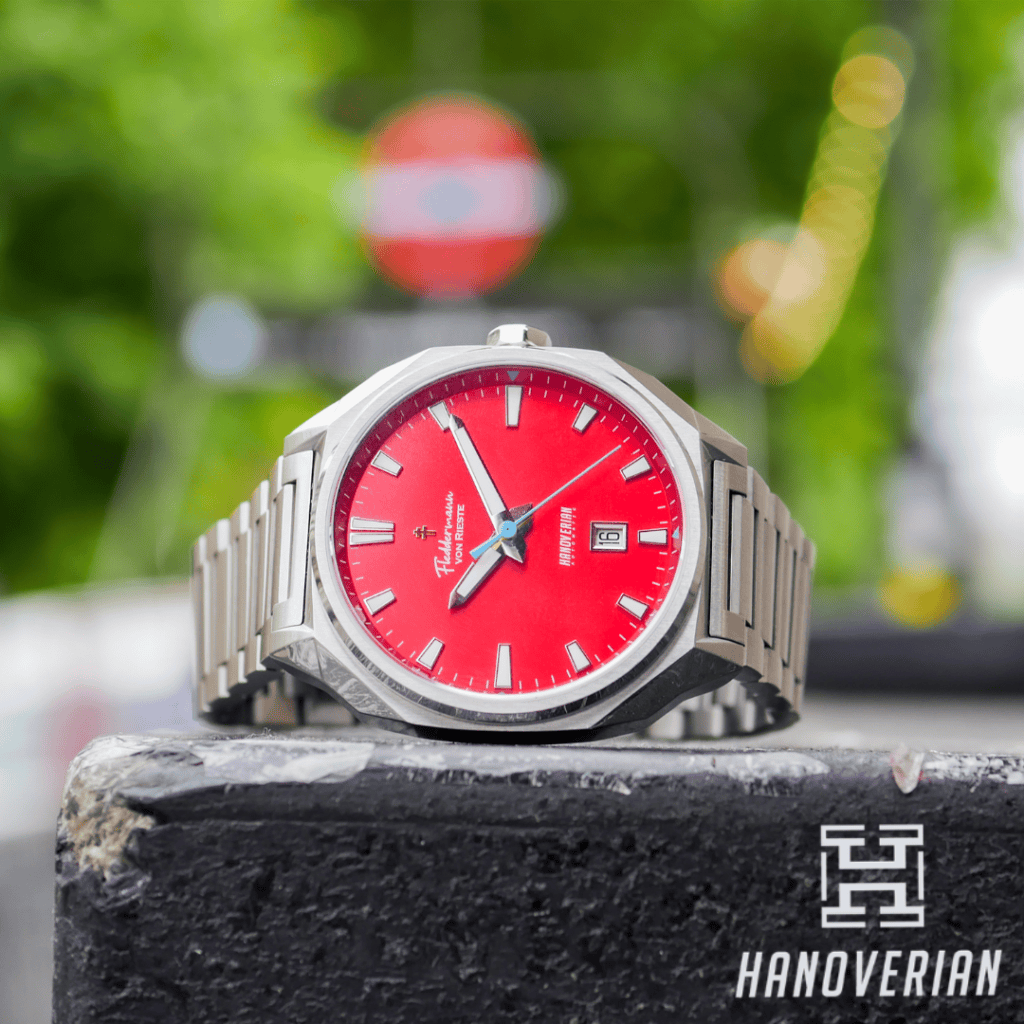
If you want a deeper walk through your first mechanical watch specifically, I wrote a longer guide on choosing your first mechanical watch that goes further into movement types and what to look for. And if you want to see where an everyday automatic watch built for exactly this purpose lands, the Hanoverian is our answer to that question.
Or just email me at adam@fvrwatch.com and tell me what you’re thinking about starting with. I’d rather talk you through it than have you guess.

Frequently Asked Questions
How many watches do I need to start a collection?
One. A single, versatile everyday watch teaches you more about your own taste than three watches bought at once ever will. Expand only once you know what you’re missing.
Is it better to buy new or used when starting out?
Both are reasonable. New gives you a warranty and full service history from day one. Used can offer more watch for the money, but requires more homework on condition and authenticity. If you’re new to collecting, new is usually the simpler, lower-risk starting point.
Should I buy a watch as an investment?
At the affordable end of the market, no. Buy for wear and enjoyment. Very few watches under a few thousand dollars meaningfully appreciate, and chasing resale value tends to lead to a collection you don’t actually enjoy wearing.
What’s a reasonable budget for a first mechanical watch?
Somewhere between $500 and $1,000 gets you a genuine automatic or hand-wound mechanical watch with real materials, sapphire crystal and stainless steel, without stretching into territory you’re not ready to commit to.
Where to start
We may not be your grandfather’s watch. But with time, we hope to be your grandson’s, and that’s not a thing you get to be by shading the truth about where your parts come from.
If you want to see what the bench in Indiana turns out, take a look at the Hanoverian, our 41mm everyday automatic. Or skip all that and email me at adam@fvrwatch.com with the hardest version of any question above. I’d rather answer it than have you wonder.
And if the reason you’re reading this is that you’re trying to buy something built to hand down, I wrote a separate post on what makes a watch an heirloom, which is a different question from where it was put together.

Dr. Adam Fleddermann, Founder & CEO
Dr. Adam Fleddermann founded Fleddermann von Rieste after growing up watching his father care for a watch passed down through generations of the family. He designs every watch and oversees the brand’s global supply chain, operations, and manufacturing, working alongside an AWCI-certified watchmaker and his team who lead the hand-assembly of every timepiece in Indiana.
