
Sapphire vs. Mineral Crystal: Why It Matters More Than You Think
September 17, 2026
Written by Dr. Adam Fleddermann, Founder & CEO of Fleddermann von Rieste, who designs every watch and oversees manufacturing and operations.
Here’s a spec most people skim right past when they’re shopping for a watch, and it’s one of the few that actually affects how the watch looks five years from now, not just today. The crystal, the piece of material covering the dial, comes in a few different types, and the difference between them is bigger than most buyers realize.
What the crystal actually does
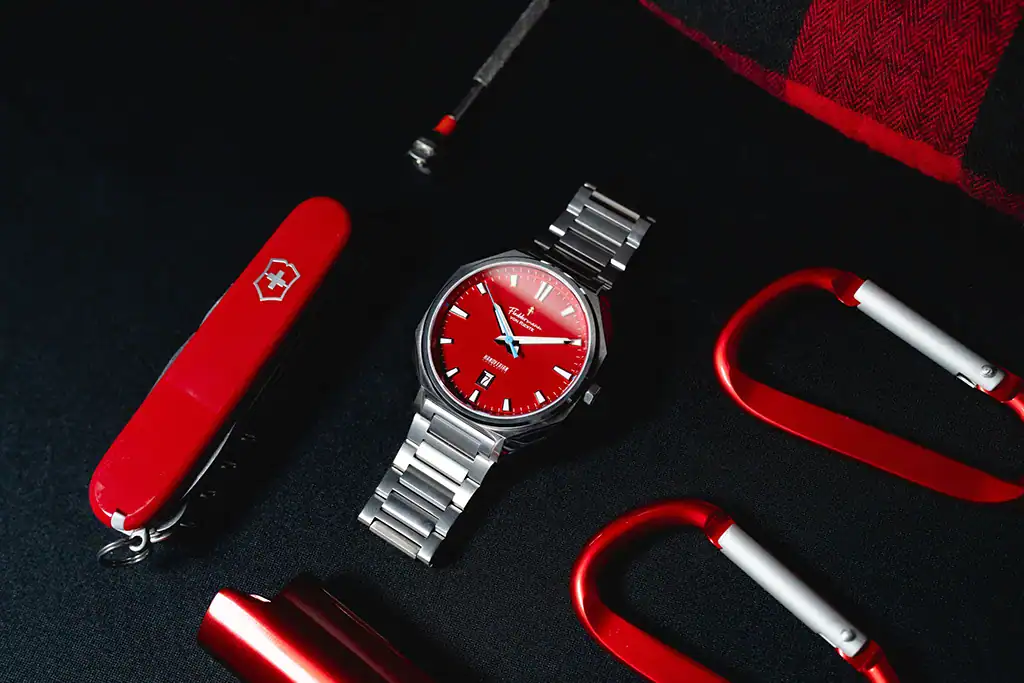
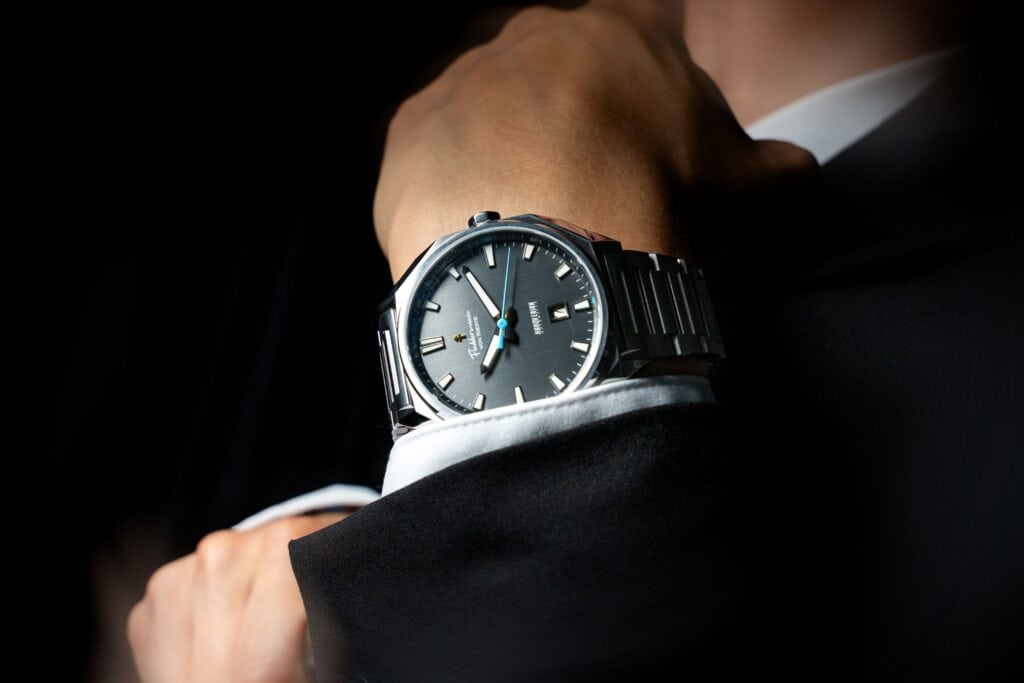
The crystal is the window between you and the dial. It takes every scratch, every knock against a doorframe, every accidental brush against a car key in your pocket, so the dial underneath doesn’t have to. A good crystal disappears, staying clear and unmarked for years. A bad one turns into a haze of fine scratches within months, and no amount of cleaning brings that clarity back.
Mineral glass: cheap, common, and it shows
Mineral glass is treated glass, harder than ordinary glass but still soft compared to the alternatives. It’s inexpensive to produce, which is exactly why so many watches use it, and it does an adequate job for a while. The problem shows up over time. Mineral glass scratches relatively easily, and once it does, there’s no fixing it short of replacing the crystal entirely. A watch that looked sharp on day one can look tired within a year or two of normal wear.
Sapphire crystal: harder to make, harder to scratch
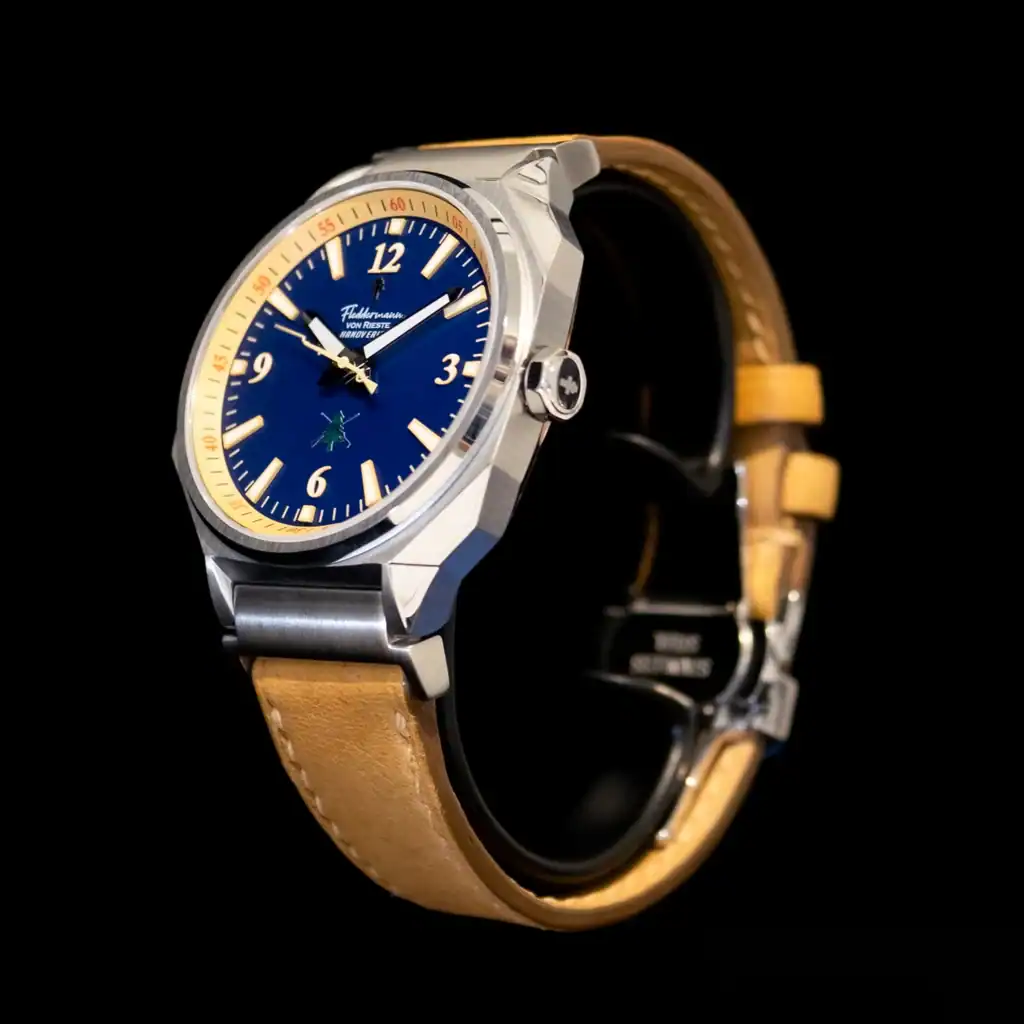
Sapphire crystal is lab grown corundum, the same mineral family as natural sapphire, and it’s dramatically harder than mineral glass, close to diamond on the hardness scale that matters here. That hardness is exactly why it resists scratching so well. Keys, coins, everyday knocks that would leave a mark on mineral glass mostly just bounce off sapphire.
It costs more to produce, and it’s harder to cut and polish, which is exactly why some brands skip it at lower price points. But it’s also the reason a sapphire crystal watch still looks new after years of actual daily wear, not just careful, occasional wear.
Why every Fleddermann von Rieste watch uses sapphire
We don’t treat sapphire crystal as an upgrade you pay extra for. Every Hanoverian, every Zeitfahren, every Munchner, every Einheit uses sapphire crystal as the baseline, alongside 316L stainless steel and 10 ATM water resistance. It’s part of what an American assembled watch built to actually be worn, not preserved in a drawer, requires. A watch you intend to hand down eventually can’t afford a crystal that clouds over in a couple of years.
It’s a genuine cost to us, sapphire is more expensive and slower to work with than mineral glass, but it’s the kind of detail I think you deserve to know about rather than discover the hard way after your first scratch.
The one tradeoff worth knowing
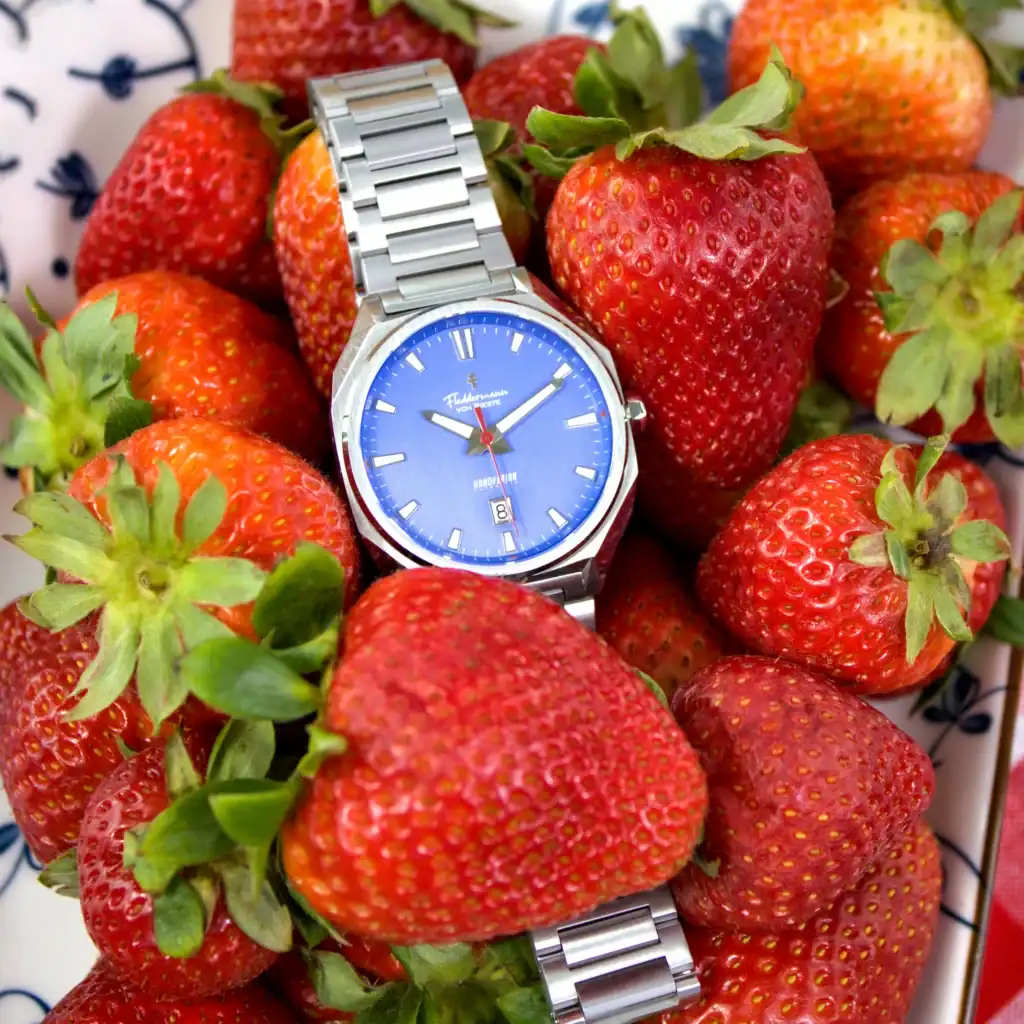
Sapphire isn’t perfect. Its hardness, the same property that makes it scratch resistant, also makes it slightly more brittle under a direct, sharp impact compared to mineral glass, which can flex a little more before it fails. In practice, this is a rare scenario for how most people actually wear a watch day to day, but it’s worth knowing rather than pretending sapphire is invincible. Scratch resistance and impact resistance aren’t quite the same property, and no material wins at both simultaneously.
Frequently Asked Questions
Can sapphire crystal still scratch?
In practical terms, almost never from daily wear. Only materials close to sapphire’s own hardness, like other sapphire or diamond, are likely to leave a mark. Mineral glass scratches from ordinary things like keys and countertops. Sapphire generally doesn’t.
Is sapphire crystal worth the extra cost?
If you intend to wear the watch daily for years, yes. The clarity and scratch resistance compound over time in a way that’s obvious the moment you compare a five-year-old mineral glass watch to a five-year-old sapphire one side by side.
Does sapphire crystal make a watch more fragile?
Not in any way that matters for normal wear. It’s slightly more prone to cracking under a hard, direct impact compared to mineral glass, but this is a rare scenario in everyday use, and the tradeoff strongly favors sapphire for most owners.
How can I tell if a watch has sapphire or mineral crystal?
Check the spec sheet directly, most brands list crystal type clearly. A rough field test, sapphire won’t scratch when lightly dragged across ceramic, while mineral glass often will, though this isn’t something I’d recommend testing on a watch you don’t already own.
Where to go from here
Every watch we build uses sapphire crystal as standard, not an upgrade, so if you want to see it in person, the Hanoverian is a good place to start. And if durability generally is what brought you here, I wrote a related piece on water resistance and what 10 ATM actually means that covers the other half of this same idea.
Or email me at adam@fvrwatch.com if you’ve got a watch you’re trying to evaluate. I’ll tell you what I’d actually look for.

Dr. Adam Fleddermann, Founder & CEO
Dr. Adam Fleddermann founded Fleddermann von Rieste after growing up watching his father care for a watch passed down through generations of the family. He designs every watch and oversees the brand’s global supply chain, operations, and manufacturing, working alongside an AWCI-certified watchmaker and his team who lead the hand-assembly of every timepiece in Indiana.
