
Small Seconds Explained: The Little Dial with Big History
September 24, 2026
Written by Dr. Adam Fleddermann, Founder & CEO of Fleddermann von Rieste, who designs every watch and oversees manufacturing and operations.
There’s a small, quiet detail on some watch dials that most people glance past without a second thought, a little sub-dial off to the side, usually near six o’clock, with its own hand ticking away independently from the rest of the watch. That’s the small seconds complication, and it’s older, and more interesting, than most people realize.

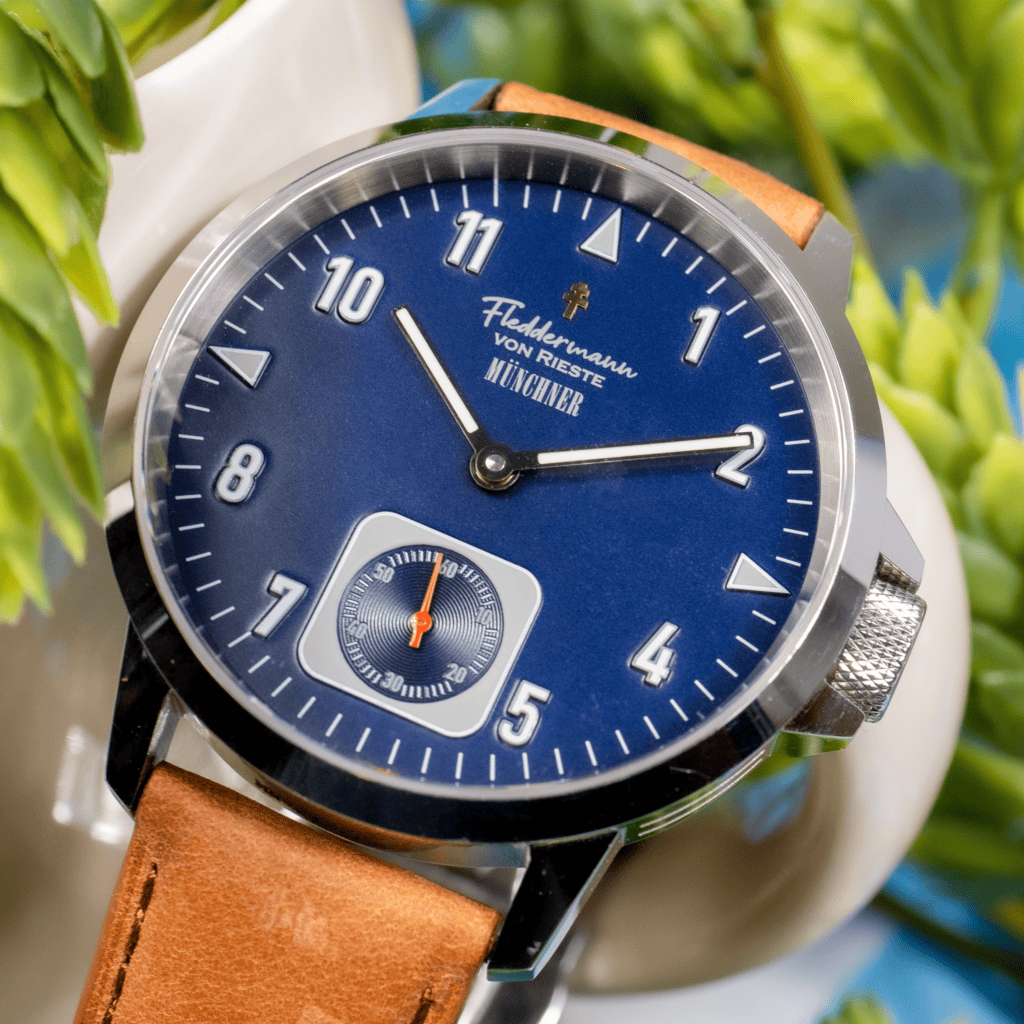
What small seconds actually is
On a standard three-hand watch, the seconds hand shares the center of the dial with the hour and minute hands, all pivoting from the same point. A small seconds watch does something different. The seconds hand gets its own dedicated sub-dial, offset from center, running independently while the hours and minutes keep to the main dial. It’s a design choice, not just a decoration, and it comes directly from how certain movements are mechanically built.
Where it actually comes from
Small seconds isn’t a modern styling trend. It’s closer to the original layout of mechanical watchmaking than the centered seconds hand most people consider standard today. Early pocket watches and the first generations of wristwatches commonly used small seconds, simply because of how the gear train inside the movement was arranged. The centered seconds hand, what’s called a sweep second, actually required an additional mechanical step to route the seconds indication back to the center of the dial. Small seconds isn’t the workaround. In a lot of ways, it’s the original.
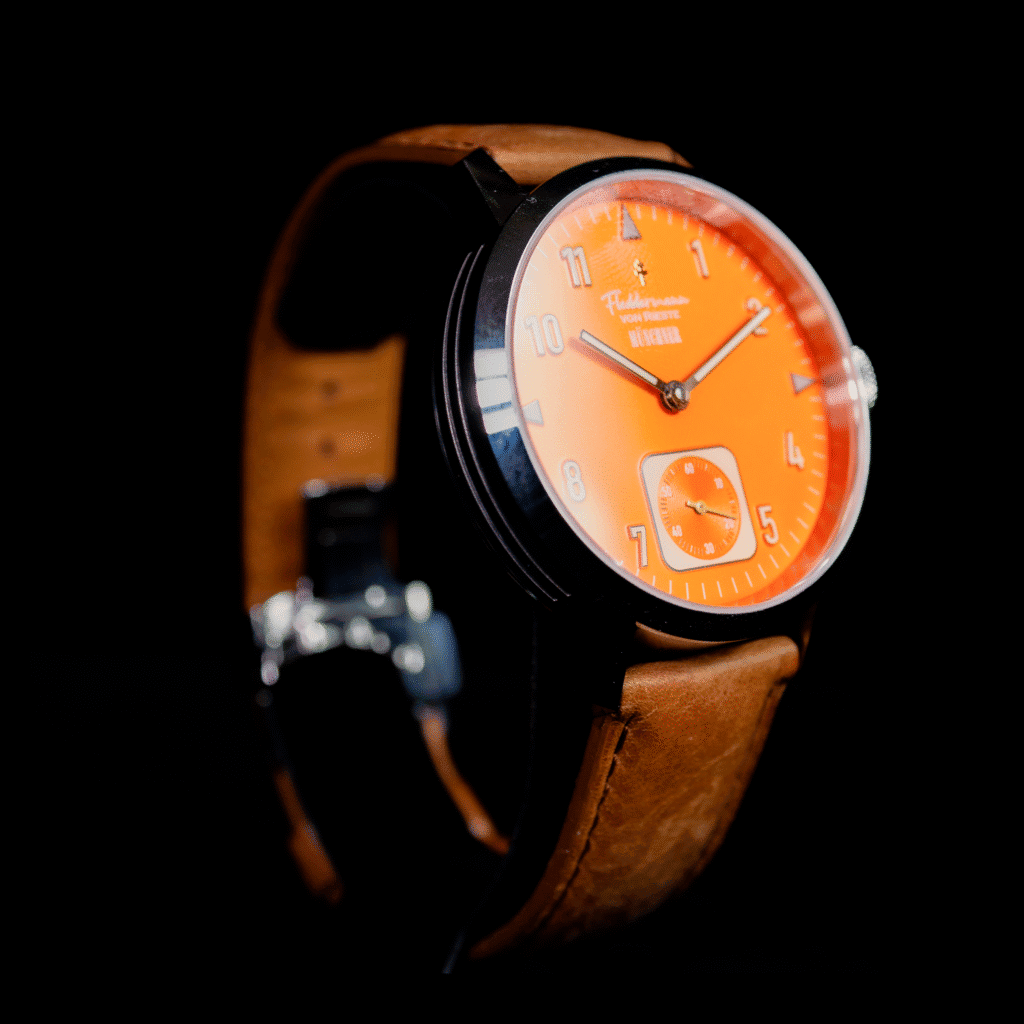
Why it nearly disappeared
As movements evolved and sweep seconds became easier and cheaper to produce at scale, most mainstream watches shifted toward a centered seconds hand, since it’s simpler to read at a glance and became what most people expect a watch to look like. Small seconds didn’t vanish, but it became the choice of watches with a more deliberate, traditional character rather than the default layout.
Why it still matters today
A small seconds dial does something a centered seconds hand can’t. It creates visual asymmetry on an otherwise symmetrical dial, a small, ticking detail that rewards a closer look rather than announcing itself immediately. It’s also, honestly, a quiet signal of mechanical character, since small seconds tends to show up more often on movements built with traditional architecture in mind rather than movements optimized purely for mass production.
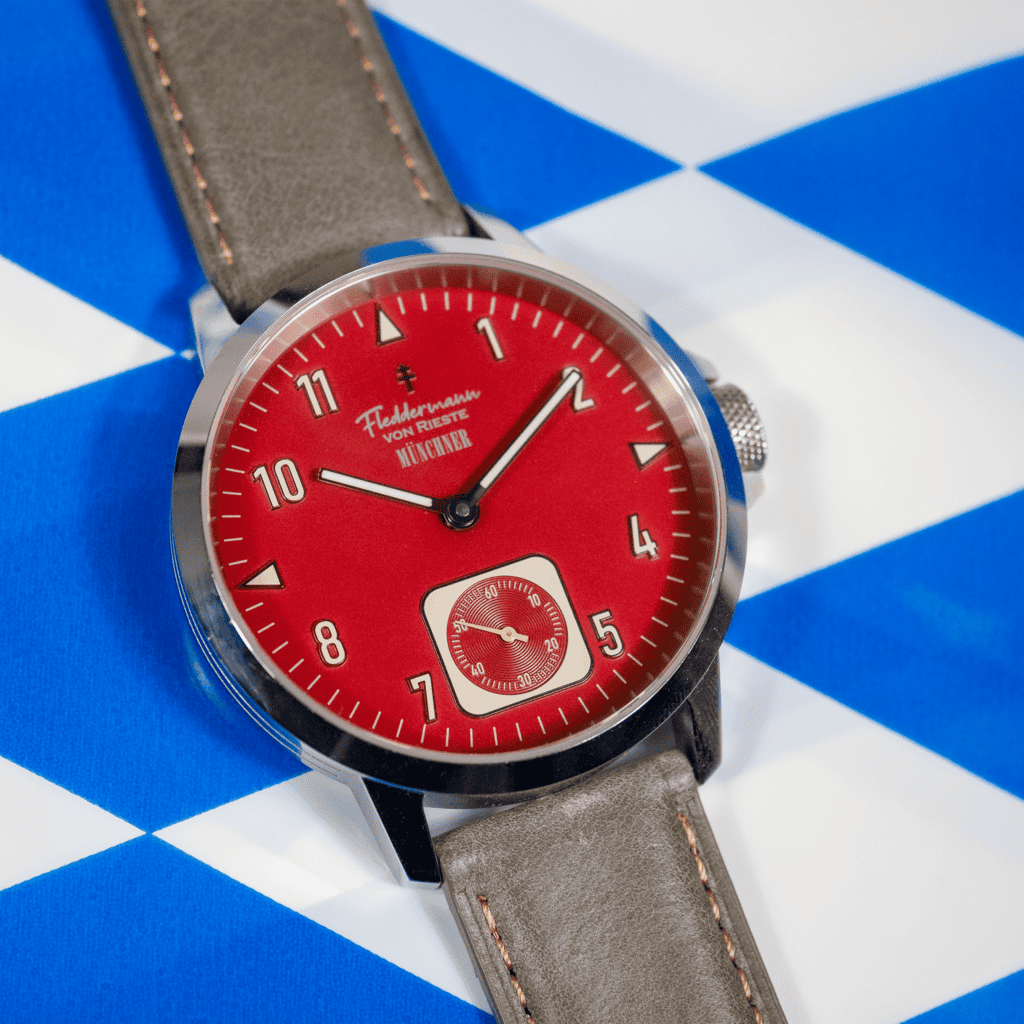
Where it shows up in our line
The Münchner is our small seconds watch, built around exactly this idea. It’s a hand-wound mechanical watch, and the small seconds sub-dial sits at the heart of the design rather than as an afterthought, paired with a 44mm case and a dial built to give that offset seconds hand real presence rather than burying it. It’s the most traditionally built piece in our lineup, hand-assembled and regulated here in Indiana using the same 316L stainless steel and sapphire crystal as the rest of the collection.
If you want to see what small seconds looks like when it’s the actual design intent rather than a leftover detail, the Münchner is the clearest example we make.
Frequently Asked Questions
Is a small seconds watch less accurate than one with a centered seconds hand?
No. The accuracy comes from the movement itself, not from where the seconds hand is positioned on the dial. Small seconds and centered seconds are simply different ways of displaying the same information.
Is small seconds only found on expensive watches?
Not necessarily. It shows up across a wide range of price points, though it’s more common on watches built around traditional mechanical architecture rather than mass-market quartz pieces, which tend to default to a centered seconds hand for simplicity.
Why do some watches use small seconds instead of a sweep second hand?
It often comes down to the mechanical layout of the movement itself. Some traditional movement architectures naturally place the seconds indication off-center, and small seconds became an intentional design choice for brands that wanted to preserve that traditional character rather than route the seconds hand back to center.
Is the Münchner hand-wound or automatic?
The Münchner is a hand-wound mechanical watch, which fits naturally with its small seconds layout and traditional design intent.
Where to go from here
If you want to see small seconds in person, the Münchner is where that idea comes to life in our lineup. And if you’re still working out the broader difference between hand wound and automatic watches, I wrote a plain-English guide to your first mechanical watch that covers that ground more fully.
Or email me at adam@fvrwatch.com. I could talk about small seconds dials longer than most people would want to listen.

Dr. Adam Fleddermann, Founder & CEO
Dr. Adam Fleddermann founded Fleddermann von Rieste after growing up watching his father care for a watch passed down through generations of the family. He designs every watch and oversees the brand’s global supply chain, operations, and manufacturing, working alongside an AWCI-certified watchmaker and his team who lead the hand-assembly of every timepiece in Indiana.
